
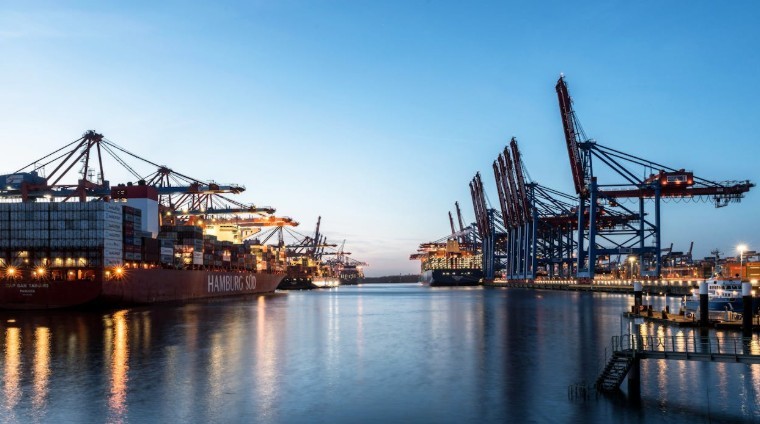
Saudi Arabia has launched five new container shipping services to safeguard cargo flows and reduce dependency on the Strait of Hormuz, as geopolitical risks continue to impact vessel movement.
The initiative, led by Saudi Ports Authority (Mawani), introduces a combined capacity of 63,594 TEUs, reinforcing the Kingdom’s shift toward Red Sea–centric logistics routing.
Service deployment and carrier alignment
The newly launched services are backed by major global carriers:
GULF SHUTTLE - MSC Mediterranean Shipping Company
REDEX - CMA CGM
JADE - Hapag-Lloyd
AE19 - Maersk
SE4 - Multi-carrier / regional integration service
This alignment ensures immediate network integration across Asia–Middle East–Europe trade lanes, rather than isolated capacity addition.
• Total capacity added: 63,594 TEUs
• Key shift: Persian Gulf to Red Sea routing
• Risk mitigation: Reduced Hormuz exposure
• Network impact: Expanded global connectivity
Maritime impact: structural shift in routing
The expansion reflects a clear operational trend:
Red Sea routes are becoming primary trade lanes, not backup options
Carriers gain flexibility to bypass high-risk Gulf transit zones
Port rotation patterns may gradually shift toward western Saudi ports
This reduces concentration risk and improves schedule predictability in a volatile environment.
Export impact: gradual but strategic upside
While the immediate increase in exports will be incremental rather than sudden, the structural benefits are significant:
Improved connectivity can support mid-single digit export growth (3–5%) in the near term
Faster and more reliable routing enhances competitiveness of Saudi petrochemicals, plastics, and non-oil exports
Reduced transit uncertainty encourages long-term contract stability with global buyers
Over time, as volumes scale and services stabilize, the impact could expand further—especially as Saudi Arabia pushes diversification under Vision 2030.
Strategic positioning: beyond short-term disruption
This move directly supports Saudi Arabia’s ambition to become a global logistics hub:
Strengthening Red Sea connectivity
Reducing reliance on a single chokepoint
Aligning with global carriers for scalable growth
Building redundancy into national supply chains
It also positions Saudi ports as viable alternatives to traditional Gulf transshipment hubs.
If Hormuz risks persist, the following trends are likely:
Increased cargo diversion toward Red Sea ports
Expansion of similar services by other carriers
Gradual rebalancing of GCC trade flows
Higher investment in inland logistics linking Red Sea ports to industrial zones
In the long term, this could reshape regional shipping patterns, with Saudi Arabia emerging as a dual-coast logistics powerhouse.
Saudi Arabia’s launch of five new shipping services is not just a capacity addition—it is a strategic response to evolving maritime risk.
By strengthening Red Sea connectivity and aligning with global carriers, the Kingdom is building a more resilient, flexible, and future-ready trade network, capable of sustaining growth even under geopolitical pressure.
Popular Posts

Explore Topics



Comments