
Suspected Kharg Island oil spill raises fears over Iran oil exports and Strait of Hormuz crisis
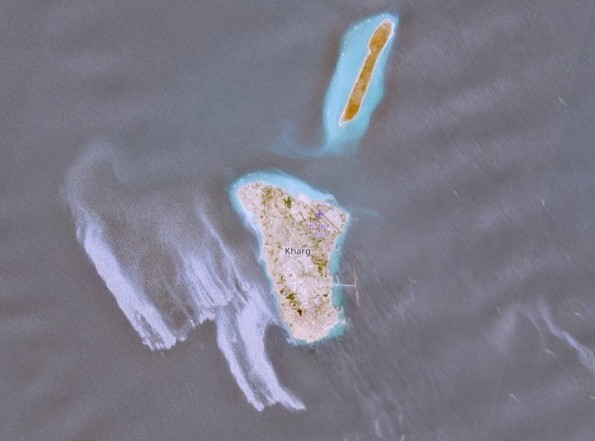
Satellite images emerging from the Gulf region are triggering fresh concerns over a possible large-scale oil spill near Kharg Island, Iran’s most critical oil export hub. Unlike the usual conflict visuals involving missile strikes, warships, or drones, the latest images show a massive gray-white slick spreading across the sea near the island, raising fears of a serious environmental and energy supply crisis.
Images captured between May 6 and May 8 by European Sentinel-1, Sentinel-2, and Sentinel-3 satellites reportedly indicate that the suspected spill covers nearly 45 square kilometers. The scale of the slick has intensified speculation because Kharg Island handles nearly 90% of Iran’s oil exports and serves as the country’s primary offshore oil storage and loading terminal.
The timing of the suspected spill is critical. The Gulf region is already facing severe geopolitical pressure amid rising military tension around the Strait of Hormuz and increased enforcement activity targeting Iranian crude exports. Industry observers say any disruption near Kharg Island directly affects Asian oil buyers, particularly China, which remains one of the largest destinations for Iranian crude cargoes moving through shadow tanker networks.
Several possible causes are now being discussed across maritime and energy circles.
One theory suggests the spill may have originated from a damaged tanker operating near Iranian waters during recent naval escalation. Another possibility is that an offshore storage facility or loading infrastructure near Kharg Island was hit during military stand-offs in the Gulf region. Some analysts also believe years of sanctions pressure and operational stress on Iran’s oil infrastructure could have increased the risk of accidental leakage.
However, one of the most controversial claims emerging from U.S. sources is that Iran may be deliberately dumping oil into the sea because storage capacity has reached critical levels under ongoing export restrictions and naval pressure. According to this theory, Iran’s offshore floating storage system may be under severe strain as new crude production continues while export movement faces restrictions. No official confirmation has been issued regarding this allegation.
The suspected spill also highlights the growing role of the so-called “shadow fleet” in Iranian oil exports. Hundreds of aging tankers linked to opaque ownership structures, ship-to-ship transfers, AIS signal manipulation, and offshore crude storage operations have become central to Iran’s sanctioned oil trade over recent years. Any operational disruption involving these vessels increases both geopolitical and environmental risks in the Gulf.
The environmental implications could be severe if the spill is officially confirmed. The Gulf’s marine ecosystem is highly sensitive due to limited water circulation and dense tanker traffic. Large-scale oil contamination could damage fisheries, desalination infrastructure, shipping routes, and coastal ecosystems across multiple Gulf countries.
The economic consequences may be even broader.
The Strait of Hormuz remains one of the world’s most important energy chokepoints, carrying a major share of global crude oil and LNG exports. Any escalation involving Iranian export infrastructure immediately impacts tanker insurance costs, freight rates, and global oil market sentiment. Traders are already monitoring the situation closely as war-risk premiums for vessels operating in the Gulf continue to rise.
The situation also exposes a major contradiction in the global energy market. While oil prices and commercial gas costs are rising sharply due to supply fears, large quantities of crude may simultaneously be leaking or being wasted into the sea. The incident demonstrates how modern geopolitical conflicts increasingly damage not only military targets but also environmental stability and global supply chains.
If verified officially, the Kharg Island spill may become one of the most strategically significant maritime environmental incidents linked to the Iran oil conflict in recent years.
Popular Posts


Explore Topics



Comments