
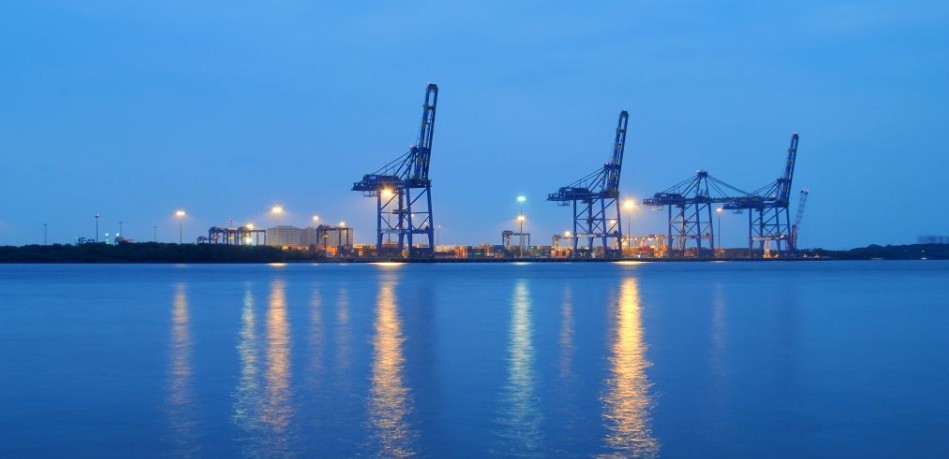
Recently on 14th March 2026 – Indian Prime Minister Narendra Modi inaugurated the Adani-operated Haldia Bulk Terminal, marking a strategic upgrade in India’s eastern maritime infrastructure and bulk cargo handling efficiency.
The terminal, located at Haldia Dock Complex under Shyama Prasad Mookerjee Port, has an annual handling capacity of 4 million metric tonnes (MMTPA) and is developed under a 30-year DBFOT concession model.
It is India’s first fully automated dry bulk terminal on the Hooghly River, designed to handle coal and key industrial commodities with direct rail evacuation and mechanised cargo handling, reducing cargo loss and turnaround time.
Importance of Haldia terminal
Eastern India handles nearly 60% of the country’s dry bulk imports, including coal, limestone and bauxite.
The new terminal directly supports:
Power plants
Steel and aluminium industries
Industrial clusters across West Bengal, Odisha and Jharkhand
With Haldia already handling ~49.5 million tonnes annually, capacity addition improves throughput efficiency rather than just volume expansion.
Logistics impact: cost, speed and losses
India’s logistics cost remains high at ~13–14% of GDP, compared to 8–9% in developed economies.
The Haldia terminal addresses key inefficiencies:
Eliminates manual handling (jetty dumping)
Reduces cargo loss and dust pollution
Enables faster rail evacuation → lower dwell time
This terminal would be a support to Lower landed cost for coal and bulk commodities. Improved vessel turnaround and reduced congestion in eastern ports.
Part of larger maritime strategy under Modi
This project aligns with multiple initiatives driven by the Modi government:
Sagarmala Programme for port-led industrialisation
PM Gati Shakti for multimodal connectivity integration
National Logistics Policy for target logistics cost reduction
Eastern India has historically lagged behind western ports like Mundra.
Projects like Haldia terminal signal a shift toward balanced port development and preparation for future projects like deep-sea ports.
The Haldia Bulk Terminal is not just a capacity addition—it represents a shift toward automated, cost-efficient and integrated logistics infrastructure, which India needs to compete globally.
Popular Posts

Explore Topics



Comments