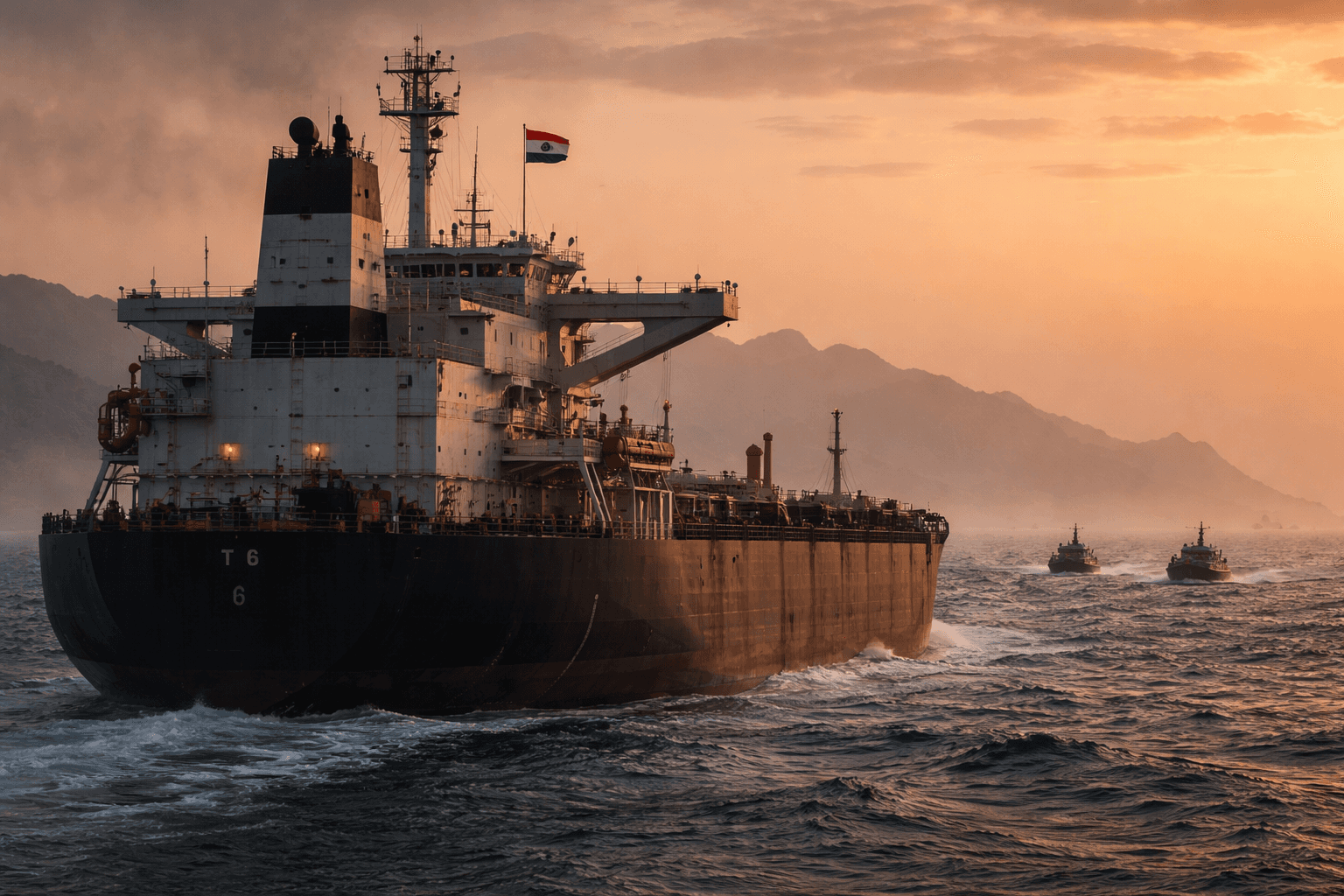
Two Indian-flagged vessels — crude oil tanker Sanmar Herald and bulk carrier Jag Arnav — came under gunfire from Iran’s Islamic Revolutionary Guard Corps (IRGC) while transiting the Strait of Hormuz on 18–19 April 2026, forcing both ships to abort passage and turn back.
The vessels were en route to India carrying crude oil and urea cargo respectively when IRGC patrol boats fired warning shots, damaging bridge windows but causing no crew injuries.
The incident occurred amid a rapidly deteriorating security environment in the Strait, where Iran has intermittently restricted transit following escalation in the broader 2026 regional conflict. Maritime traffic through the chokepoint — which typically handles ~20–25% of global oil flows — has already dropped sharply due to security risks and war-risk insurance constraints.
Indian authorities responded by summoning the Iranian envoy and registering formal protest over the safety of Indian-flagged vessels.
Operationally, the firing incidents triggered immediate voyage disruptions, with multiple vessels delaying or aborting transit, increasing voyage uncertainty, freight volatility, and rerouting risks for India-bound energy cargoes.
The episode reinforces the Strait of Hormuz as a high-risk maritime corridor, with direct implications for tanker availability, insurance premiums, and supply chain stability for Indian refiners and importers.
Popular Posts

Explore Topics


Comments