
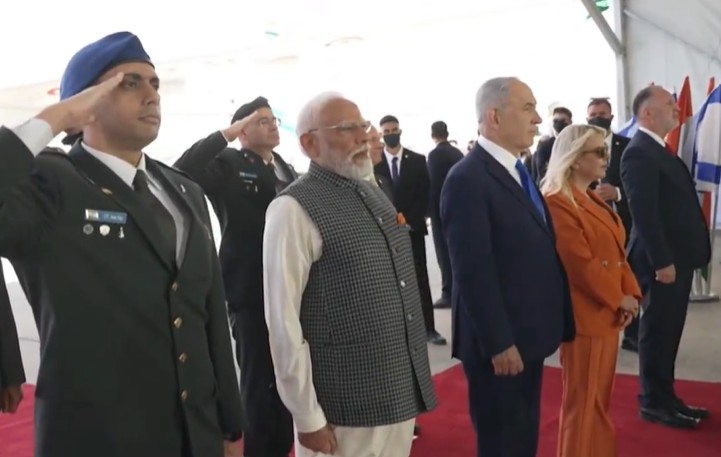
Why Prime Minister Modi’s 2026 Visit Matters
Prime Minister Narendra Modi’s state visit to Israel on 25 February 2026 underscores a deepening strategic partnership between the two nations — not just in defence but increasingly in economics, technology, and trade cooperation.
Historical foundations: from diplomatic ties to strategic partnership
India and Israel established full diplomatic relations in 1992. Since then, the bilateral relationship has evolved from cautious engagement into a strategic partnership encompassing agriculture, defence, water technology, and innovation.
Key Milestones
· 1992: Diplomatic relations established
· 2017: First ever Indian PM visit to Israel
· 2022: Adani Ports acquires Haifa Port — a major maritime development (covered later)
· 2026: Second Indian PM visit, FTA talks, expanded economic agenda
This evolution reflects political trust built over decades and growing economic interdependence.
Bilateral Trade: Data & Trends
India and Israel’s trade has grown steadily -
In FY2025, bilateral trade crossed ~US$3.75 billion, with India as Israel’s second-largest Asian trading partner in merchandise trade.
India’s exports to Israel included gems & jewellery, machinery, electronic equipment, chemicals and agricultural products.
India imported electrical machinery, precious stones, fertilizers and defence equipment from Israel.
Despite geopolitical uncertainties, trade has diversified year-on-year beyond traditional staples like diamonds and chemicals into tech-heavy sectors — electronics, medical devices, and high-value machinery.
Maritime trade & strategic port cooperation
Haifa Port: India’s strategic footprint
A game-changer in India–Israel maritime cooperation has been Adani Group’s acquisition of Haifa Port in Israel for about ~US$1.18 billion in 2022.
Situated on the Mediterranean:
· Haifa Port handles a large share of Israel’s cargo traffic and cruise ship operations.
· Its deep-water access makes it a vital logistics hub linking Europe, Asia and the Middle East.
· India’s involvement here gives New Delhi a critical maritime foothold beyond the Indian Ocean.
This port engagement is also connected to multilateral infrastructure visions like the India–Middle East–Europe Economic Corridor (IMEC) — aimed at enhancing connectivity between the Indian subcontinent and Europe via maritime and overland routes.
Defence & Technology: A maritime dimension
Defence cooperation, including maritime systems and naval technology, forms a significant pillar -
India is one of the largest buyers of Israeli defence equipment — often used in naval and coastal security systems.
This cooperation strengthens capabilities for safeguarding maritime trade routes — critical for a country where over 95% of trade by volume moves via sea.
FTA Negotiations: A new economic frontier
In February 2026, India and Israel launched first-ever FTA negotiations, a key highlight of PM Modi’s visit aimed at lowering trade barriers and boosting investment flows.
This FTA could:
· Expand market access for Indian and Israeli goods
· Stimulate high-tech collaboration (IT, AI, telecommunications)
· Attract foreign direct investment (FDI) in logistics and supply chain sectors
· Cement maritime trade linkages through streamlined customs and port-to-port cooperation
Why Israel and India are said to have a war forged partnership
The relationship between India and Israel was not built in conferences or photo opportunities — it was forged in moments of battlefield urgency.
When many others refused: how Israel helped India in 1971 and Kargil 1999
Two wars stand out:
· The 1971 Indo-Pak War (leading to the creation of Bangladesh)
· The 1999 Kargil War
In both conflicts, when several major powers hesitated or denied urgent military supplies to India, Israel stepped forward.
The 1971 War: Silent support in a High-stakes conflict
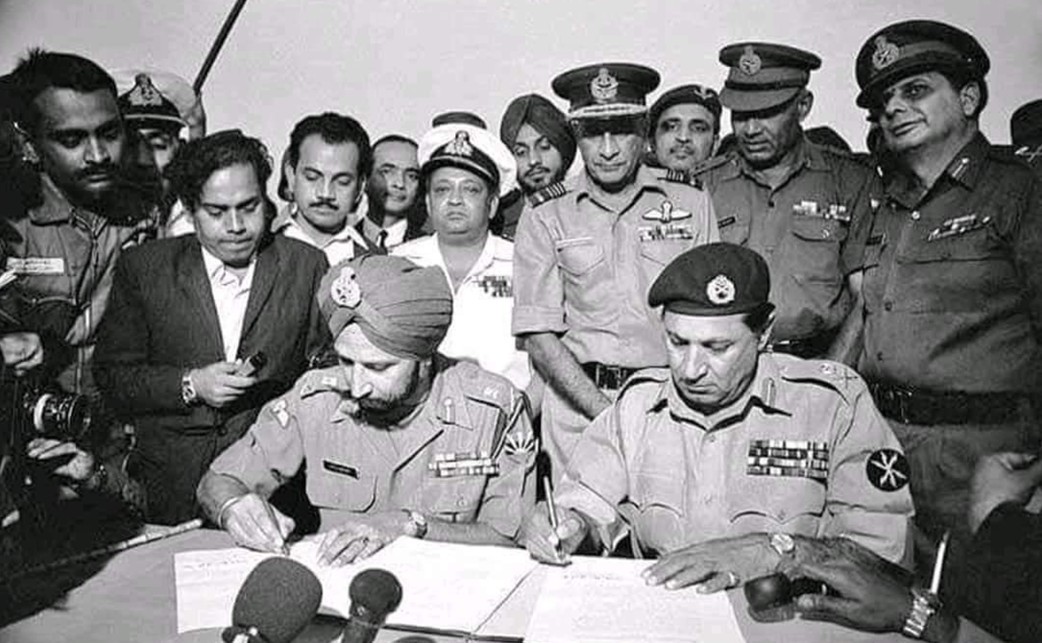
What Israel supplied in 1971
Under Prime Minister Indira Gandhi, India quietly reached out to Israel.
Historical accounts and declassified discussions indicate Israel supplied:
· Artillery shells
· Mortar ammunition
· Certain types of military hardware and spare parts
· Emergency ammunition replenishment
Israel gave these supply from its own emergency stock , when it just fought 7 days war and was on verge of a new all side attack .
The support was discreet. There were no public announcements. But within Indian strategic circles, it is always remembered.
Why It Mattered
· India avoided ammunition shortages during a fast-moving campaign.
· It reduced dependence on politically reluctant Western suppliers.
· It established the foundation of mutual strategic trust.
Within 13 days, the war ended with Pakistan’s surrender and the birth of Bangladesh — one of India’s most decisive military victories.
The 1999 Kargil War: Critical Weapons in real time
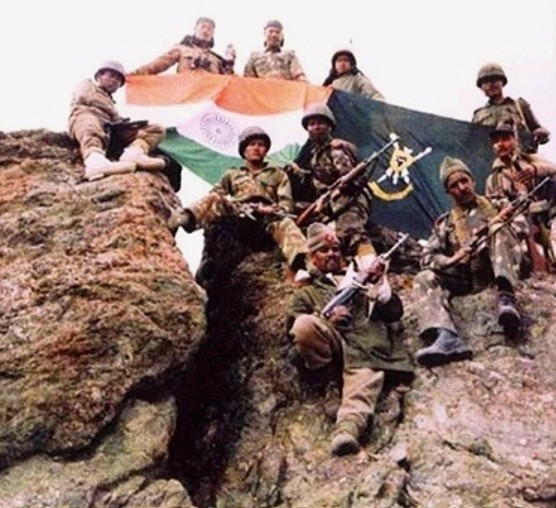
What Israel supplied during Kargil war in 1999
Israel’s support during Kargil was more direct and technologically significant than in 1971.
Key supplies included:
Laser-Guided Bomb Kits - were fitted onto Indian Air Force Mirage 2000 aircraft.
Unmanned Aerial Vehicles (UAVs)
Artillery & Ammunition Support
Artillery shells
Specialized ammunition
Emergency battlefield supplies
Why other countries hesitated
During both wars, India faced geopolitical complexities:
In 1971:
· The US supported Pakistan.
· Cold War alignments complicated supply chains.
· Diplomatic pressure was intense.
In 1999:
· Post-nuclear test sanctions were still affecting India.
· Countries were wary of escalation between two nuclear states.
· Export controls slowed military transfers.
Israel, however, prioritized strategic cooperation over political hesitation.
Israel’s assistance in 1971 and 1999 signaled :
· Reliability during crisis
· Speed in decision-making
· Operational flexibility
· Strategic alignment without public grandstanding
For India, it meant having a partner willing to act when others were cautious.
For Israel, it meant building long-term defence cooperation with one of Asia’s largest military powers.
Top Business Entry Points (for Israel and India) | |
Israel in India: | India in Israel: |
Semiconductor design & electronic components | Pharmaceuticals & healthcare products |
Cybersecurity platforms & digital infrastructure | IT services & software engineering |
Defence manufacturing & tech transfer | Engineering goods, agriculture exports |
Green energy & hydrogen value chains | Logistics & infrastructure development |
Agri-tech and water management solutions |
|
Challenges and Regional Stability
Regional tensions can influence trade and maritime security:
Conflicts in West Asia — especially involving Iran — pose indirect maritime risks for trade flows and logistics chains. But current analyses suggest likely continuation of trade even amid instability, as India seeks balanced diplomacy.
India has consistently called for dialogue and diplomacy, signaling its traditional stance while safeguarding its strategic and trade interests.
India and Israel’s relationship today is multi-layered — extending far beyond traditional diplomacy into trade, maritime infrastructure, defence, and technology. The 2026 state visit, key FTA talks, and ongoing maritime investments mark this partnership as one of strategic depth with significant implications for regional trade architectures. With maritime channels as a backbone, this alliance is poised for deeper economic integration and shared progress in the decades ahead.
Popular Posts
Explore Topics



Comments