
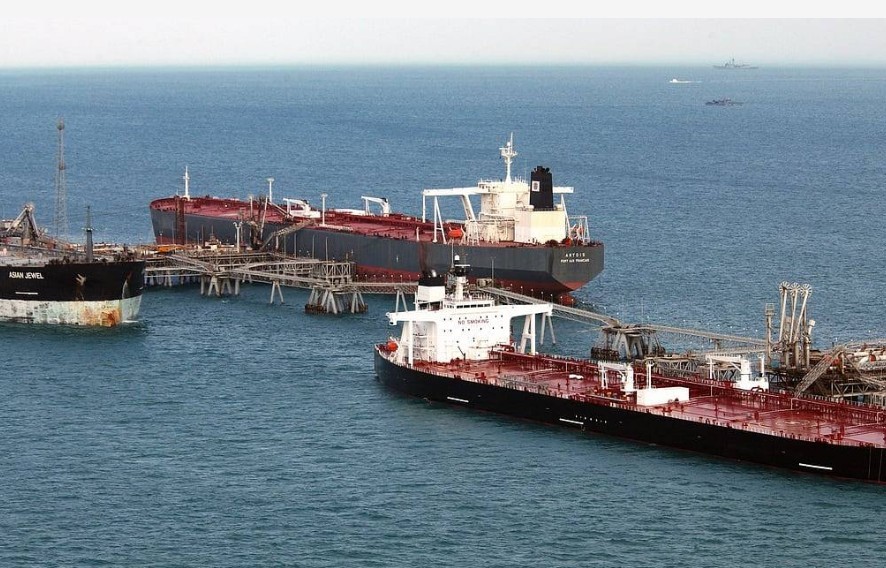
The Middle East has long been the centre of the global oil trade, and tensions in the region often ripple through international shipping, energy markets, and the wider global economy. In 2026, escalating conflict involving Iran, United States, and regional actors has once again drawn attention to the vulnerability of maritime energy routes—especially the strategically critical Strait of Hormuz.
The strategic importance of the Middle East in global energy trade
The Middle East holds some of the world’s largest proven oil reserves and supplies a major share of international energy markets. A large portion of this oil moves through the narrow Strait of Hormuz, located between Iran and Oman. This maritime corridor is considered one of the most important energy chokepoints in the world.
Approximately 20 million barrels of oil pass through the Strait of Hormuz every day, representing about 20% of global petroleum consumption and roughly a quarter of the world’s seaborne oil trade.
In maritime terms, around 100 cargo vessels transit the strait daily, and 60–70% of these ships are oil or gas tankers transporting crude oil, LNG, and petroleum products.
The oil flowing through the strait primarily comes from major Gulf exporters including Saudi Arabia, Iraq, the United Arab Emirates, Kuwait, Qatar, and Iran. Much of this energy supply is destined for Asian markets. In fact, over 80% of crude oil shipments through the strait go to Asia, with countries like China, India, Japan, and South Korea among the largest buyers.
Because of this concentration of supply and trade routes, disruptions in the region quickly translate into volatility across global energy markets.
Historical lessons: how conflicts affected oil prices and the global economy
History shows that geopolitical conflict in the Middle East has repeatedly shaken global energy markets.
One of the most famous examples is the 1973 oil crisis, when Arab oil producers imposed an embargo during the Arab–Israeli war. Oil prices surged dramatically—rising nearly 300% within months, from around $3 to almost $12 per barrel.
The sudden spike in energy prices triggered inflation, economic slowdown, and recessionary pressures across many industrial economies.
Another example occurred during the Iran–Iraq War in the 1980s, when both countries targeted oil tankers in the Persian Gulf in what became known as the “Tanker War.” Attacks on vessels increased insurance costs, disrupted shipping routes, and forced many tanker operators to avoid the region.
These historical precedents demonstrate how sensitive the global economy is to disruptions in Middle Eastern shipping lanes.
The current situation
The latest escalation involving Iran and the United States has intensified concerns about shipping safety in the Strait of Hormuz. Military strikes, threats to close the strait, and attacks on vessels have significantly disrupted maritime traffic in the region.
Recent reports indicate that oil flows through the strait have sharply declined and many tankers are avoiding the area due to security risks. Some ships have been attacked, while others are waiting offshore for safer conditions before transiting the route.
Insurance costs for ships entering the region have also surged. War-risk insurance premiums for tankers have increased several times over, adding hundreds of thousands of dollars to the cost of a single voyage.
Meanwhile, oil prices have already begun to rise as traders anticipate possible supply disruptions if the conflict escalates further.
Impact on the maritime industry
The maritime sector is often the first industry to feel the consequences of geopolitical conflict. When security risks increase in strategic waterways, shipping companies face several operational challenges:
1. Higher insurance costs
War-risk insurance premiums rise dramatically during conflicts, making tanker operations more expensive.
2. Route diversions
Some ships may reroute around longer passages such as the Cape of Good Hope if key chokepoints become unsafe.
3. Vessel delays and congestion
When ships avoid high-risk areas or wait for naval escorts, congestion builds near ports and chokepoints.
4. Reduced tanker availability
When fewer vessels operate in conflict zones, tanker supply tightens and freight rates rise.
These disruptions can ripple across the global supply chain, affecting not just oil transport but also petrochemicals, fertilizers, and other energy-dependent commodities.
What would happen if the conflict escalates further?
If tensions escalate into a full-scale regional conflict or the Strait of Hormuz becomes effectively closed, the consequences could be severe.
Since around one-fifth of the world’s oil supply passes through the strait, any prolonged disruption could create a major supply shock.
Oil prices could surge above $100 per barrel, fuelling inflation worldwide and increasing transportation and manufacturing costs.
Energy-importing economies—particularly in Asia—would be among the hardest hit because they rely heavily on Middle Eastern crude shipments.
Shipping markets would also experience volatility. Tanker freight rates would likely spike as ships take longer routes and supply tightens. Insurance costs could continue to climb, while ports across Asia and Europe could face delays as energy cargo flows slow down.
Oil remains one of the most important commodities in the global economy. It fuels transportation, power generation, manufacturing, and logistics. As a result, disruptions in energy shipping lanes can have cascading effects across multiple industries.
Higher oil prices increase fuel costs for airlines, trucking companies, and shipping lines, which ultimately raise the price of goods worldwide. Inflation rises, economic growth slows, and governments may need to intervene with strategic reserves or policy measures to stabilize markets.
The Middle East continues to occupy a central position in global energy logistics. As long as large volumes of oil move through narrow maritime chokepoints such as the Strait of Hormuz, geopolitical tensions in the region will remain a major risk for global shipping and economic stability.
The events of 2026 illustrate how quickly a regional conflict can disrupt tanker routes, increase shipping costs, and threaten energy supplies. While global markets have developed contingency routes and strategic reserves, the scale of energy flows through this narrow waterway means that any prolonged disruption could still trigger significant economic consequences.
In my view, the current situation highlights an important structural vulnerability in the global energy system. Diversifying energy sources, expanding alternative export routes, and strengthening maritime security cooperation will be crucial steps if the world hopes to reduce its dependence on such fragile chokepoints in the future.
Popular Posts


Explore Topics



Comments