
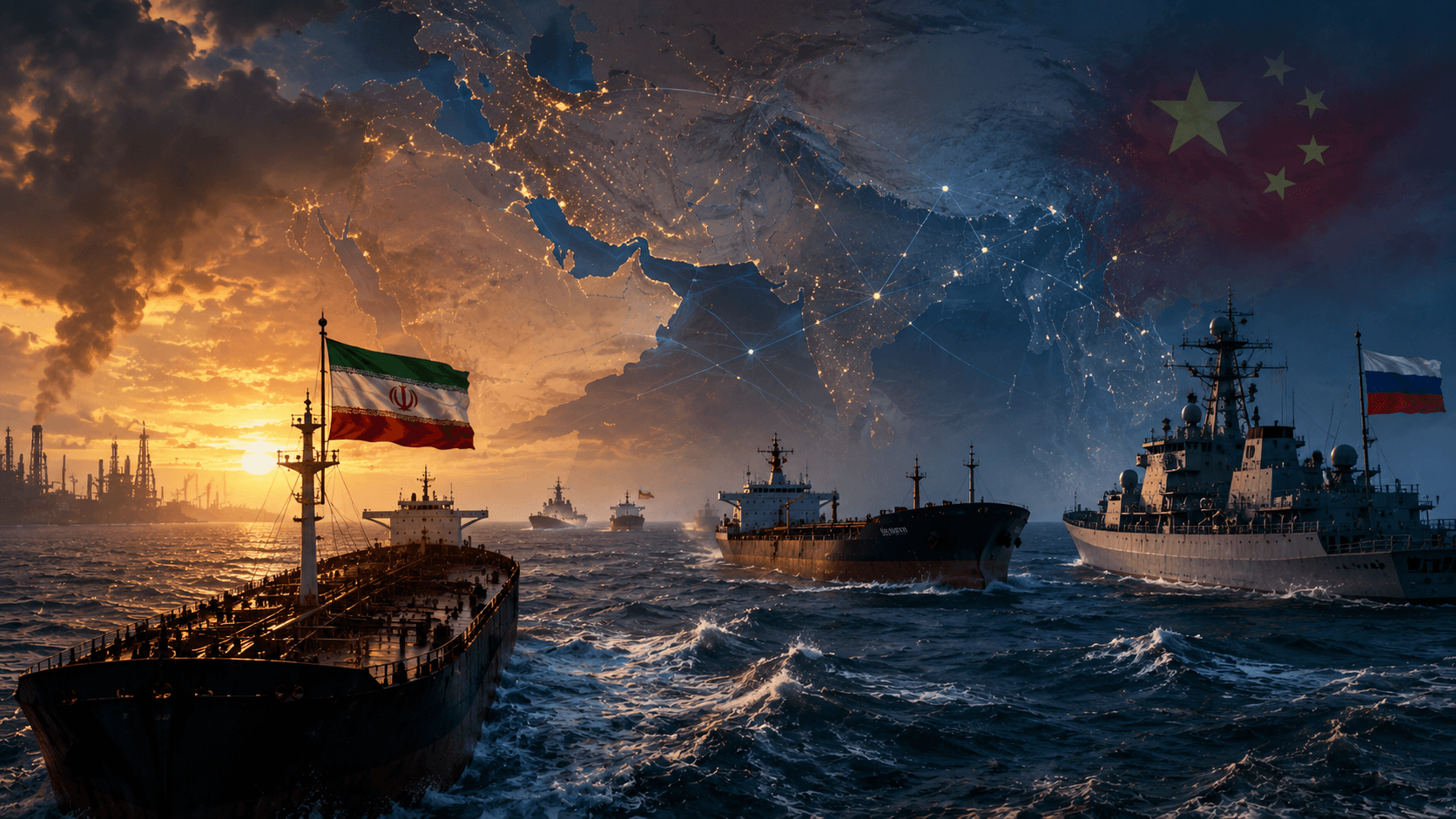
Growing strategic coordination between Iran, Russia, and China is increasingly reshaping global maritime trade routes, energy shipping patterns, and naval power balance across the Strait of Hormuz, one of the world’s most critical shipping chokepoints.
The geopolitical alignment intensified after the escalation of the Iran-US conflict in early 2026, when shipping traffic through the Strait of Hormuz dropped sharply due to military tensions, naval restrictions, and security risks. According to shipping data cited by Reuters, vessel movements through the strait declined from an average of 125-140 daily transits to nearly 11 vessels per day during peak disruption periods.
Russia and China have openly strengthened maritime coordination with Iran during the crisis. In February 2026, the three countries conducted joint naval exercises named “Maritime Security Belt 2026” in the Strait of Hormuz and northern Indian Ocean. The drills involved warships, escort operations, anti-piracy exercises, drone coordination, and maritime security operations aimed at protecting regional trade routes.
The strategic partnership became more visible in April when Russia and China vetoed a United Nations Security Council resolution seeking stronger international maritime intervention in the Strait of Hormuz. Both countries argued the proposal unfairly targeted Iran while ignoring broader regional security concerns.
China’s position remains especially important because it is one of the largest buyers of Iranian crude oil. Despite tensions, Chinese-linked tankers have continued limited movements through the Gulf region, while some shipping reports suggested Iran considered allowing preferential access to Chinese and Russian-linked vessels during periods of restricted navigation.
For the maritime industry, the geopolitical shift is creating major operational and commercial consequences. War-risk insurance premiums for vessels operating in the Gulf have surged, tanker charter rates have increased sharply, and many operators have rerouted cargoes to reduce exposure to the region. Shipping companies are also facing crew safety concerns, delays, and mounting fuel costs due to longer alternative routes.
The situation is also accelerating the emergence of alternative trade corridors and non-Western maritime cooperation frameworks. Russia and China are increasingly promoting a “multipolar maritime order,” including greater BRICS naval coordination and reduced dependence on Western-controlled shipping systems and payment mechanisms.
Analysts believe the evolving Russia-China-Iran alignment could permanently influence future tanker routing decisions, naval security arrangements, energy supply chains, and global freight markets. Even if tensions ease, the 2026 Hormuz disruption has exposed how geopolitical alliances can directly reshape maritime trade flows and global shipping economics within weeks.
Popular Posts
Explore Topics



Comments