
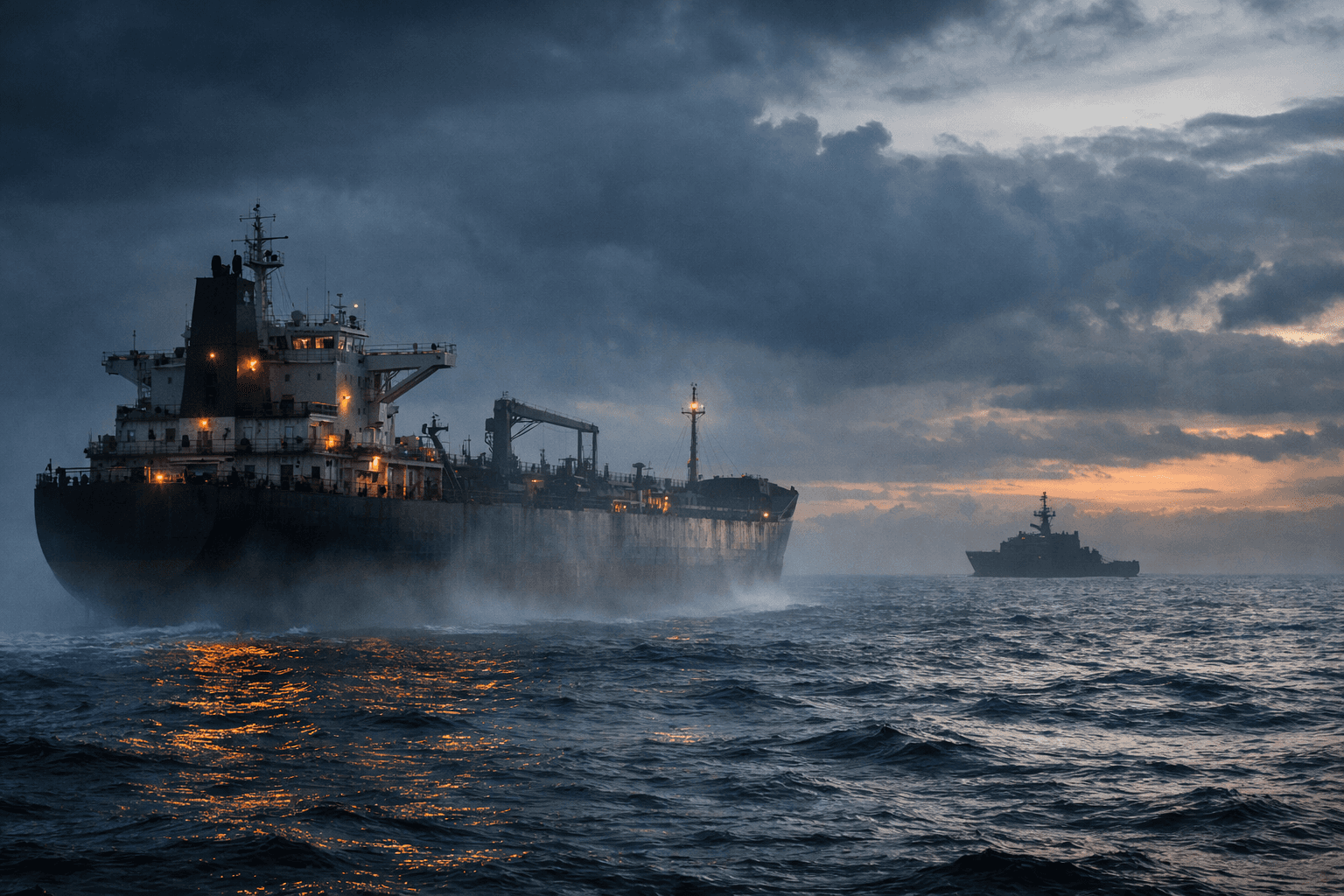
On February 25, 2026, the U.S. Department of the Treasury’s Office of Foreign Assets Control (OFAC) unleashed a major new sanctions package targeting Iran’s covert maritime oil network, commonly known as the “shadow fleet”, that has quietly kept Tehran’s energy exports flowing despite Western sanctions. This decisive move aims to choke off hundreds of millions of dollars in revenue Tehran uses to fund its weapons programs, regional proxies, and internal repression.
We have mentioned an earliest blog on understanding shadow fleet.
What is Shadow Fleet – These are ships / oil tanker which are tough to track, since the names and details are changed and are used to transport Iran Oil and Gas to other countries. These vessels are used to evade sanctions, they operate with limited insurance, they have less access to ports and can also do ship to ship transfer – a tactical way to avoid being tracked.
Treasury’s Latest Sanctions: What was targeted?
12 Key Shadow Fleet Tankers
OFAC designated 12 vessels identified as repeatedly transporting Iranian crude, fuel oil, LPG, and petrochemicals — shipments worth hundreds of millions of dollars. These tankers have been active from 2023 into 2026, moving Iranian energy to global markets. Designated vessels include:
HOOT — delivered Iranian LPG to Bangladesh in 2025
OCEAN KOI — transported millions of barrels of high-sulphur fuel oil (HSFO) since May 2025
NORTH STAR — carried nearly two million barrels of HSFO in late 2025
FELICITA — moved millions of barrels of HSFO and naphtha since 2023
ATEELA 1 & 2 — transported petroleum products for Iran’s national oil company
NIBA, LUMA, REMIZ, DANUTA I, ALAA — hauled LPG and crude to markets including Bangladesh, Pakistan, Türkiye, and East Asia
These tankers are now subject to sanctions that block any property in U.S. jurisdiction and prohibit transactions with U.S. persons.
Networks behind the ships
The sanctions did not stop at vessels. OFAC also hit nine individuals and entities in Iran, Türkiye, and the United Arab Emirates (UAE) that facilitate procurement of sensitive machinery and precursor chemicals for Iran’s Islamic Revolutionary Guard Corps (IRGC) and Ministry of Defence — especially for ballistic missile and advanced conventional weapons programs.
Companies like Utus, Arya, and Altis are singled out for financial transfers supporting Iran’s weapons procurement, while individuals tied to Qods Aviation Industries (which supplies UAV technologies) were also sanctioned for traveling to Russia and Venezuela to provide technical support.
How this will impact Iran
Cutting Off Revenue for Weapons and Regional Influence
Treasury Secretary Scott Bessent emphasized that Iran uses global financial systems to sell illicit oil, launder proceeds, and fund weapons programs and proxy groups — rather than addressing its people’s economic needs. This sanctions package is part of the broader maximum pressure campaign to diminish Tehran’s capacity to finance destabilizing activities.
Legal and Financial Impacts
All assets of sanctioned vessels, entities, and individuals in the U.S. are frozen.
U.S. persons are prohibited from doing business with them.
Foreign financial institutions risk secondary sanctions for facilitating transactions that aid these networks.
Violations can lead to civil and criminal penalties.
The shadow fleet is part of a larger geopolitical puzzle — a sanctions-evasion maritime system that has expanded to include hundreds of tankers shifting flags and identities to skirt restrictions. Analysts estimate this network now represents a significant portion of global oil tanker capacity used to move sanctioned crude outside formal channels.
Recent enforcement actions include U.S. naval interdictions in the Indian Ocean — such as the capture of tankers like MT Bertha and Veronica III, tracked from the Caribbean to Asia — showing how the shadow fleet spans continents and risk zones.
Global and Energy Market Implications
This sanctions wave comes amid ongoing tensions around Iran’s nuclear activities and heightened U.S. enforcement efforts. By hitting both the transport vessels and the support networks behind them, Washington aims to squeeze Tehran’s access to hard currency, disrupt clandestine trade flows, and make sanctions evasion less sustainable.
For global energy markets, this means:
Increased volatility in sanctioned oil trade routes
Heightened enforcement actions at sea
More scrutiny on shipping, insurance, and port services tied to opaque trade
Potential ripple effects in Asia and Middle Eastern trade flows
In the complex world of sanctions and global energy trade, these ghost ships are now squarely in the spotlight.
Above data has been referred from website - https://home.treasury.gov/news/ The above data has been taken from https://home.treasury.gov/news/press-releases/sb0405
Popular Posts

Explore Topics


Comments