
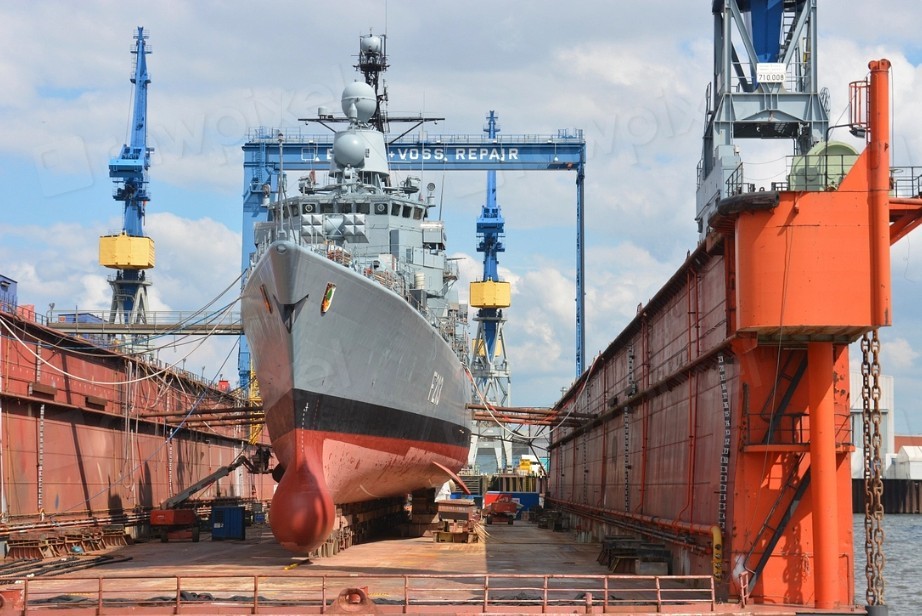
The recent 60 Minutes feature on U.S. shipbuilding has pushed a long-known industry issue into the national spotlight—but the underlying problem is far deeper than shipyards alone.
At its core, this is not just a manufacturing gap. It is a systemic breakdown of maritime logistics capability.
Scale gap: the numbers tell the story
The contrast with Asia is stark:
China produces ~1,000 commercial ships annually, while the U.S. builds only a handful (around 3)
Ships that take ~6 months in Asia can take twice as long in the U.S. and cost up to 5x more
Even at leading U.S. yards like Philadelphia, output remains extremely limited—1–2 vessels per year versus weekly production cycles in South Korea
This is not a cyclical slowdown. It is a structural decline.
Where the system is breaking
The 60 Minutes report highlights multiple fault lines:
1. Industrial capacity erosion
Decades of underinvestment have reduced the number of capable shipyards dramatically. Aging infrastructure and outdated equipment continue to slow production.
2. Workforce shortage
Shipbuilding remains labour-intensive, but the U.S. faces a shortage of skilled welders, pipefitters, and technicians. Training pipelines are slow and insufficient to scale operations.
3. Supply chain dependence
Critical components—engines, propellers, systems—are often imported. This increases cost, extends build timelines, and reduces industrial independence.
4. Policy contradictions
Tariffs on steel, immigration restrictions, and regulatory constraints are raising input costs while the government simultaneously pushes for domestic shipbuilding expansion.
The LNG paradox: a logistics failure
One of the most striking revelations is operational, not industrial.
The U.S., despite being a major LNG exporter, does not build its own LNG carriers. In fact, there are no U.S.-built LNG ships available for domestic trade
Under the Jones Act, cargo moving between U.S. ports must use U.S.-built vessels—creating an absurd situation where:
The U.S. exports LNG globally
But cannot efficiently move LNG domestically
This is not just inefficiency—it is a strategic logistics gap.
Can investment close the gap?
South Korea’s Hanwha Group has stepped in with a major bet on U.S. shipbuilding, investing billions into the Philadelphia yard with plans to scale production significantly.
The strategy is clear:
Increase volume → reduce per-unit cost
Transfer technology → improve efficiency
Expand workforce → rebuild capacity
But scaling from 1–2 ships per year to 20+ is not just a capital challenge—it requires rebuilding an entire ecosystem.
The real issue: shipbuilding follows trade
A critical insight from industry experts is often overlooked:
Shipbuilding does not drive maritime power—trade and logistics do.
Countries like China didn’t become shipbuilding leaders by focusing only on yards. They built:
Integrated logistics networks
Port infrastructure
Financing systems
Consistent cargo demand
Ships are the output of that system—not the starting point.
Market and geopolitical implications
The implications go beyond the U.S.:
Global ship supply remains concentrated in Asia
Freight markets become dependent on limited shipbuilding regions
Strategic vulnerability increases during conflicts (e.g., Hormuz disruptions)
Energy transport security becomes a geopolitical risk
In simple terms, who builds ships controls trade resilience.
The U.S. shipbuilding crisis is not just about losing industrial capacity—it is about losing control over maritime logistics infrastructure.
The attention from 60 Minutes signals a shift from industry concern to national priority. But awareness alone will not close a gap built over decades.
Rebuilding shipbuilding requires more than policy announcements or foreign investment. It demands reconstructing the entire maritime ecosystem—cargo, ports, workforce, supply chains, and demand.
Popular Posts

Explore Topics



Comments