The U.S. Department of State regularly issues travel advisories to inform American citizens about safety and security risks in foreign destinations. The Caribbean, one of the most popular vacation regions for U.S. tourists, is no exception, its advisories are based on real security data, natural disaster risks, and other on-ground factors that could impact travellers’ safety.
As of early 2026, several Caribbean destinations have advisories ranging from Level 1 to Level 3 suggesting Americans exercise caution—or in some cases reconsider travel—based on evolving conditions such as crime, civil unrest, and health infrastructure.
Understanding U.S. travel advisory levels
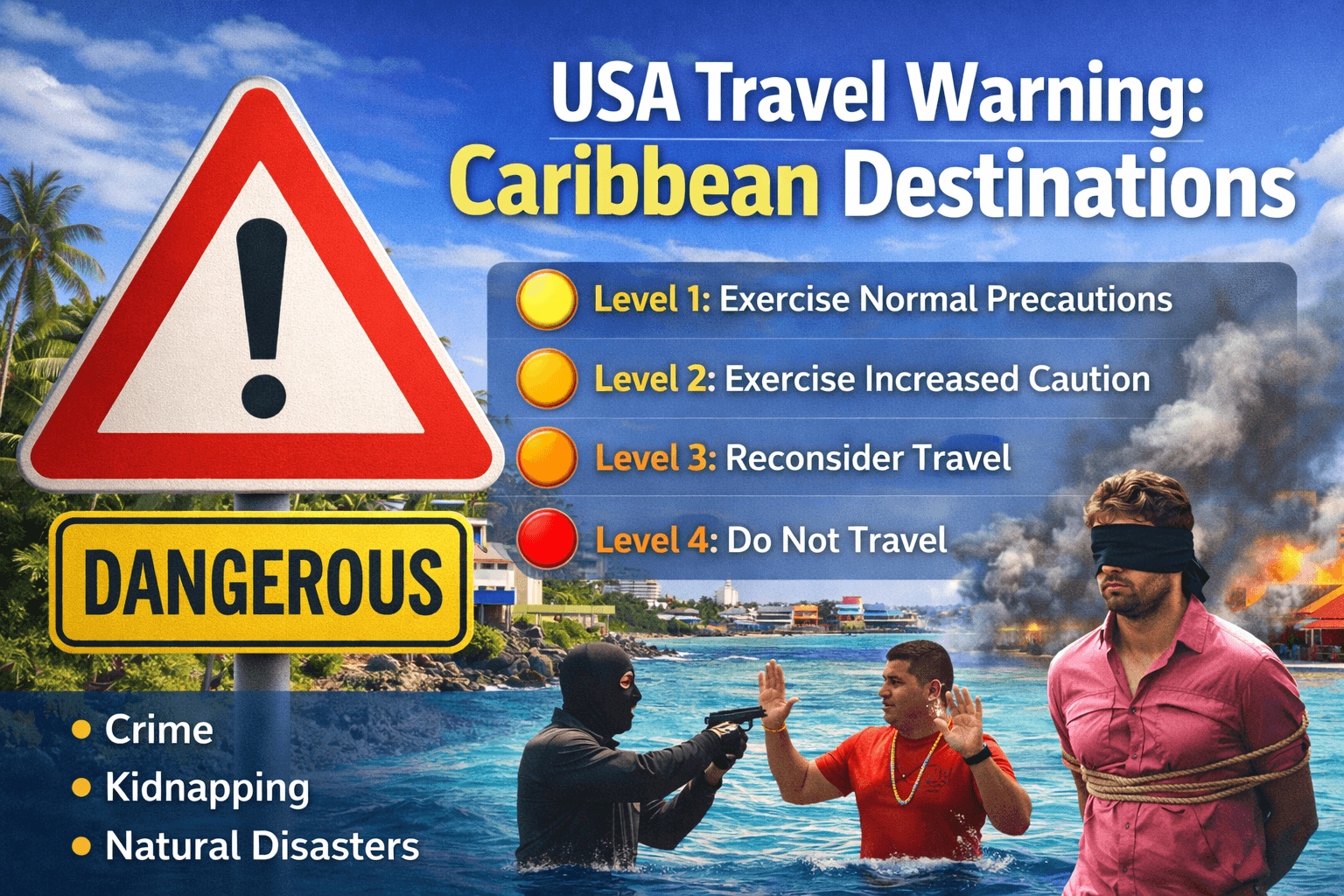
The U.S. Department of State uses a four-tier system:
Level 1: Exercise normal precautions
Level 2: Exercise increased caution
Level 3: Reconsider travel
Level 4: Do not travel
These levels reflect risks from crime, terrorism, civil unrest, health, and other safety concerns.
Caribbean Advisory Snapshot (2026)
Level 2 — Exercise increased caution
The Bahamas:
Crime such as armed robbery, burglary, and sexual assault can occur — especially in Nassau and Freeport.
Boating and jet ski activities have led to serious injuries and safety incidents.
United States government employees are prohibited from using personal watercraft rentals due to safety concerns.
Dominican Republic:
The U.S. travel advisory warns of increased violent crime in urban tourist areas.
Travelers are advised to stay alert, avoid displaying valuables, and use local tourist police if needed.
Cuba and Turks & Caicos:
These islands also fall under Level 2 due to crime and specific local risks.
Level 3 — reconsider travel
Jamaica:
Violent crime including armed robbery, homicide, and sexual assault remains higher than in the U.S., even in areas frequented by tourists.
Natural disaster recovery (e.g., from hurricanes) has affected infrastructure and services in places like Black River and Montego Bay.
U.S. embassy advisories recommend avoiding walking or driving at night and using extra vigilance in all areas.
Trinidad & Tobago:
A nationwide State of Emergency declared due to rising violent crime highlighted kidnapping and gang activity risks.
Certain neighbourhoods in the capital, Port of Spain, are specifically designated as higher-risk zones where U.S. government employees are barred from travel.
Level 4 - Do not travel
Haiti:
Though not covered in detail in the official State Department list today, Haiti has consistently been under the highest risk advisory due to pervasive gang violence, kidnappings, and political instability. This has placed it in the “Do Not Travel” category in recent advisory cycles.
While many Caribbean destinations remain popular and beautiful travel spots, U.S. travel advisories reflect real safety challenges in parts of the region. From crime concerns in urban centers to regulatory and natural disaster risks, travellers should prepare carefully and stay informed. The Caribbean still offers incredible experiences — but informed planning is essential for a safe, enjoyable trip.
For the latest updates, always refer to the official U.S. Department of State travel advisory page before booking or departing.
Image credit - AI
Popular Posts

Explore Topics


Comments