
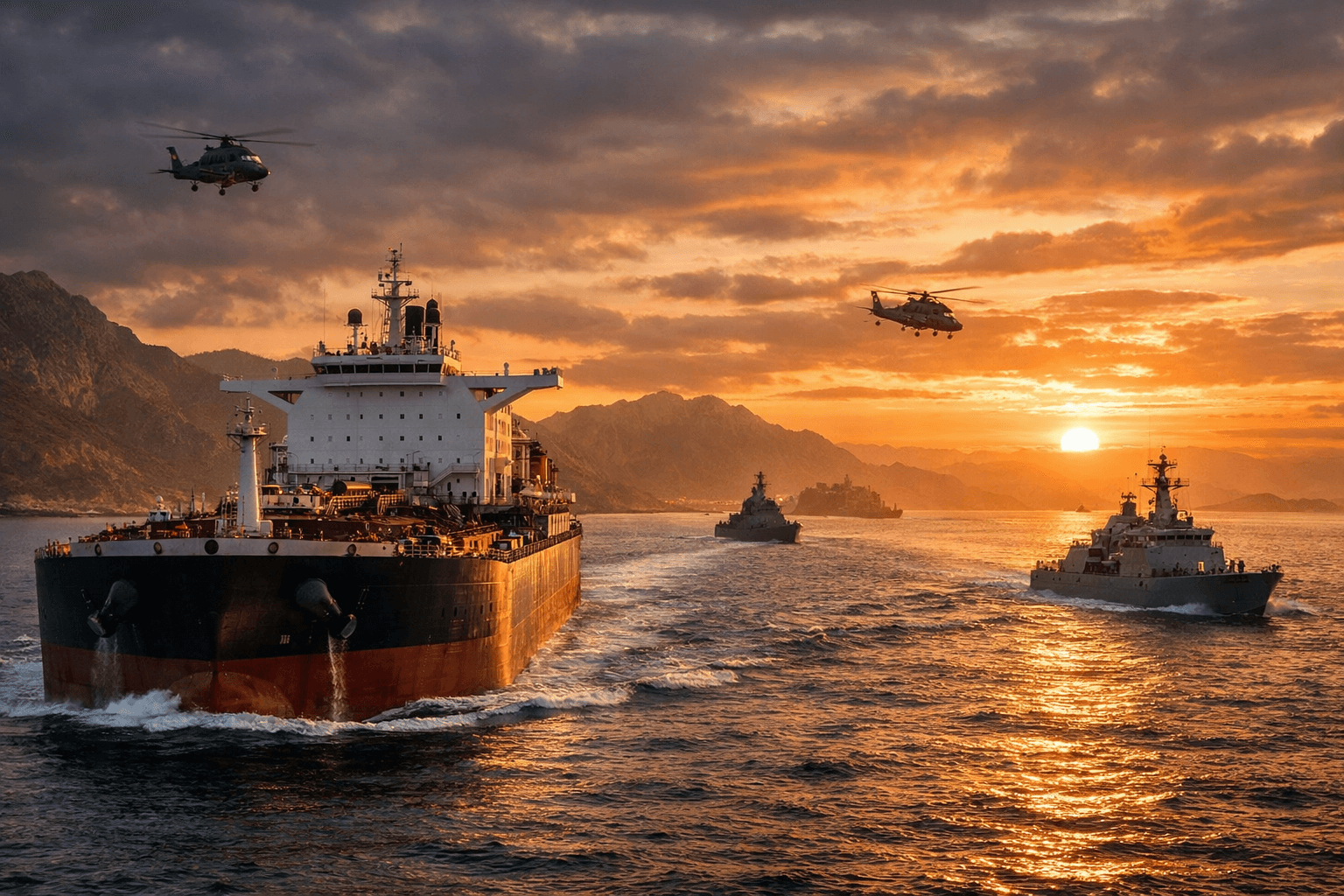
The shipping crisis in the Strait of Hormuz intensified in early March 2026 after several maritime insurers withdrew war-risk coverage for vessels operating in the Persian Gulf. Notices issued by major Protection & Indemnity (P&I) clubs stated that war-risk insurance for ships entering the Gulf would be terminated from 5 March, leaving vessels exposed to missile, drone, and conflict-related damage without standard coverage.
Once the insurance cancellations took effect, tanker traffic through the strait dropped sharply. Shipowners, charterers, and energy traders began delaying voyages because operating in a war zone without insurance is commercially unviable. As a result, oil and LNG tanker movements through the Strait of Hormuz nearly stalled, with several vessels remaining stranded or waiting outside Gulf waters.
Vessel damage and operational losses
The disruption is not theoretical. Several commercial vessels have already been damaged by strikes in the Gulf region during the escalation. Tankers carrying crude oil and refined products have reported drone attacks, fires, and near-miss incidents. These attacks forced shipping companies to suspend voyages or reroute vessels away from the region.
Industry estimates suggest that even a single damaged crude tanker can generate losses exceeding $200–250 million, once hull value, cargo, salvage operations, and environmental liabilities are included. A modern Very Large Crude Carrier (VLCC) itself is typically valued between $90 million and $120 million, while the crude cargo onboard may be worth $120 million or more depending on oil prices.
This means the total financial exposure per ship can easily cross $250 million if a vessel is destroyed or severely damaged during transit.
Insurance shock and rising premiums
Even before insurers withdrew coverage, war-risk premiums had surged dramatically. In some cases the cost of war-risk insurance increased fivefold within days, reflecting the sudden rise in geopolitical risk.
Without insurance, shipowners face three major risks:
Hull loss – damage or sinking of the vessel
Cargo loss – crude oil or LNG cargo worth over $100 million
Environmental liability – cleanup costs and legal claims if oil spills occur
For many shipping companies, the potential financial exposure from a single attack is simply too high to operate without protection.
The $20 billion U.S. reinsurance intervention
To restore confidence in maritime trade, the United States government announced an emergency financial backstop. The U.S. International Development Finance Corporation (DFC) will provide up to $20 billion in reinsurance coverage for maritime losses in the Gulf region.
The program was ordered after oil and gas tanker transit through the Strait of Hormuz effectively halted. The reinsurance facility will operate on a rolling basis and will initially cover:
Hull and machinery losses
Cargo damage
Political and conflict-related risks
The objective is to support private insurers and encourage them to resume coverage for vessels transporting crude oil, LNG, and other commodities through the Gulf.
Shipping industry reaction
While shipping companies welcomed the reinsurance support, many operators remain cautious. Insurance protection alone does not remove the physical security risk for crews and vessels.
Until naval protection, convoy systems, or a reduction in hostilities occurs, many shipowners are expected to delay sending tankers through the Strait of Hormuz despite the new insurance backstop.
Market implications
The crisis has already triggered significant disruption in global energy logistics:
Oil tanker transit through the strait has slowed dramatically
Energy exporters are facing storage pressure as cargoes cannot leave the Gulf
Freight and insurance costs for Gulf shipments have surged
For the maritime industry, the situation demonstrates how geopolitical conflict can quickly turn a major shipping corridor into a high-risk financial zone where the cost of a single incident can exceed hundreds of millions of dollars.
Until insurance markets stabilize and security risks decline, the Strait of Hormuz will remain one of the most expensive and dangerous maritime routes for global shipping.
Popular Posts


Explore Topics



Comments