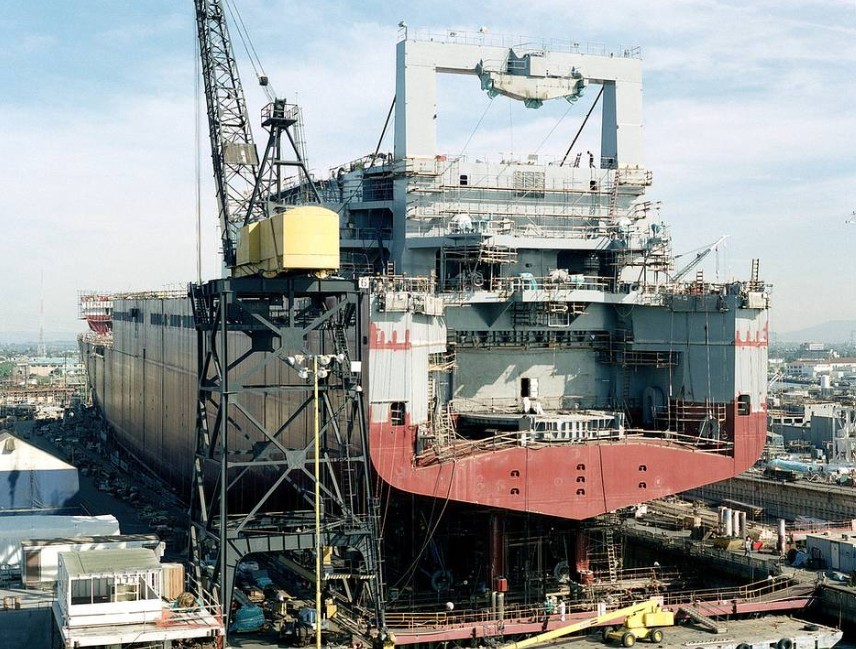
On January 8, 2026, the U.S. Department of Labor (DOL) announced that it is awarding nearly $13.8 million in targeted funding to support the development of shipbuilding workforce training in the United States.
This is a focused effort under the Bureau of International Labor Affairs to bolster the nation’s maritime industry by developing skilled workers, apprenticeships, and advanced training programs — especially in shipbuilding trades.
Why This Investment Matters
For decades, the U.S. shipbuilding industry has gradually declined in global commercial output, even though the nation remains one of the largest maritime trading powers in the world. China alone produces over half of the world’s commercial vessels, while the U.S. builds a very small fraction of global ship tonnage.
This creates a strategic gap: the U.S. relies heavily on foreign shipyards for commercial fleets, while domestic shipbuilding skills and capacity have weakened over time. The recent funding seeks to begin reversing that trend by investing directly in talent, the foundation of any industry’s future.
The distribution for funding
The nearly $14 million grant is split between two key institutions:
$8 million to Delaware County Community College (Pennsylvania), partnering with shipyards and international collaborators to develop cutting-edge curricula and training methods.
$5.8 million to the Massachusetts Maritime Academy (Massachusetts), one of the nation’s oldest maritime training institutions, to expand hands-on learning and apprenticeship programs.
These programs will not only teach traditional skills like welding, steelwork, electrical systems, and ship carpentry, but also emphasize advanced techniques and technologies relevant to modern shipbuilding.
Glorified history of USA shipbuilding
During World War II, the United States became the world’s dominant shipbuilder almost by necessity. With the need for mass logistic throughput across two oceans, U.S. shipyards produced thousands of vessels with remarkable speed, exemplified by building a Liberty cargo ship in only four days at the height of wartime production.
This industrial capability wasn’t just about economics it was about strategic sovereignty.
But after the war, a different trend took hold. With European industry rebuilding and Asian nations investing heavily in manufacturing, U.S. commercial shipbuilding faded. By the early 2000s, the United States produced virtually no commercial ship tonnage, focusing instead on military vessels and niche builds.
Over decades, inefficiency, high costs, and lack of industrial policy caused American shipyards to shrink, while Asia, particularly South Korea, Japan, and now China, rose to dominate global commercial shipbuilding.
The $13.8 million investment in shipbuilding skills is more than an education programme, it’s a signal that maritime industrial policy is returning to the strategic agenda of a major global economy. In an era where shipping routes, freight dynamics, and trade power are rapidly evolving, having the industrial skills to build and maintain ships is as vital as owning the ships themselves.
For the global shipping industry, this marks a potential shift from passive participation to active strategic engagement, where nations rebuild capacity not just on paper, but through people, skills, and long-term planning.
Popular Posts

Explore Topics



Comments