
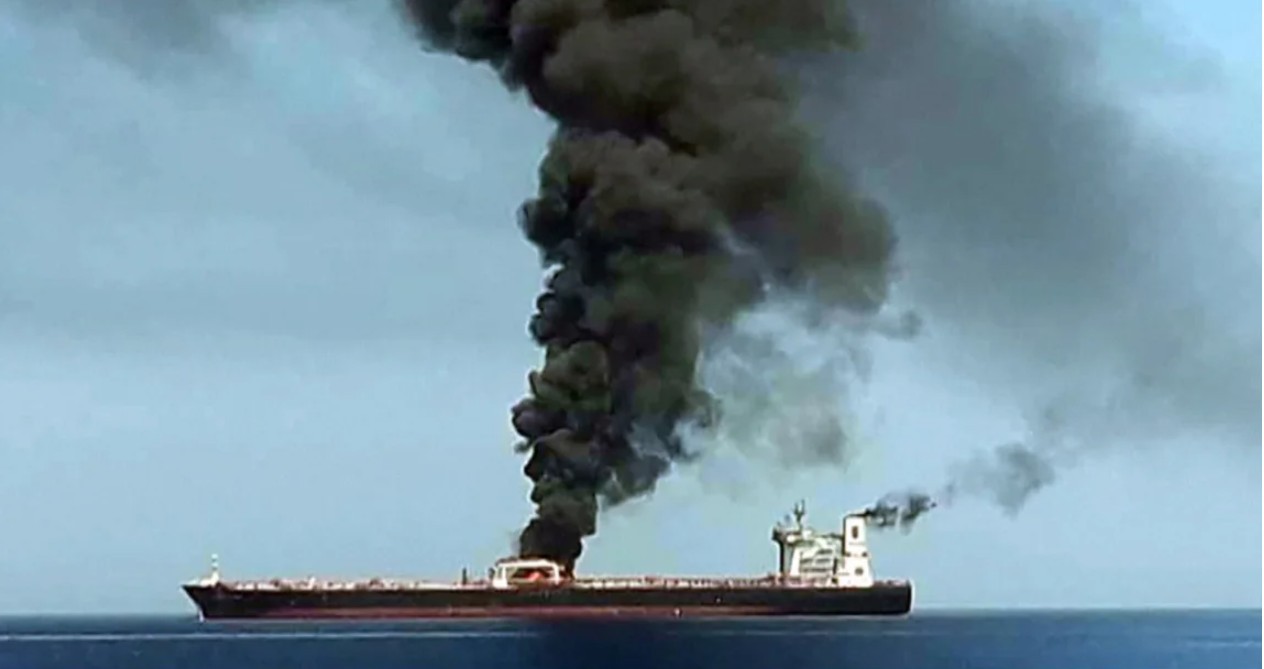
Recently, a Palau-flagged oil tanker named Skylight was targeted about five nautical miles north of Khasab Port, close to the Strait of Hormuz. The vessel carried 20 crew members - including 15 Indian nationals and 5 Iranian nationals.
Four crew members were injured with varying severity and were taken to medical facilities.
All 20 onboard were safely evacuated after the strike.
Oman’s Maritime Security Centre coordinated the emergency response.
Authorities have not yet officially confirmed who fired on the tanker, and the exact weapon used remains unclear, though the strike comes amid heightened hostilities in the region.
The attack on Skylight is not just another maritime incident — it is the first significant tanker strike near Oman since the recent escalation involving the United States, Israel, and Iran.
This event comes in the backdrop of broader conflict, including:
Joint U.S.–Israeli strikes on Iran, which killed the country’s Supreme Leader and senior commanders.
Iranian retaliatory missile and drone operations across the Gulf region.
Shipping & Insurance Disruption -
Many vessels have already halted transits, and marine insurers have withdrawn coverage for voyages through high-risk waters, increasing operational costs dramatically.
Economic Shockwaves:
Elevated oil prices lift production costs worldwide, stoke inflation, and threaten global energy security — especially for energy-importing countries like India that rely on Gulf hydrocarbons.
On the ground: Regional ripple effects
Maritime traffic is hesitant or rerouting as ships seek safer routes or anchor offshore.
Tensions between militaries and navies in the Gulf have grown, with warnings for commercial ships to avoid the Hormuz chokepoint.
Collateral damage in Oman and UAE has been reported as the wider conflict unfolds.
Popular Posts

Explore Topics



Comments