
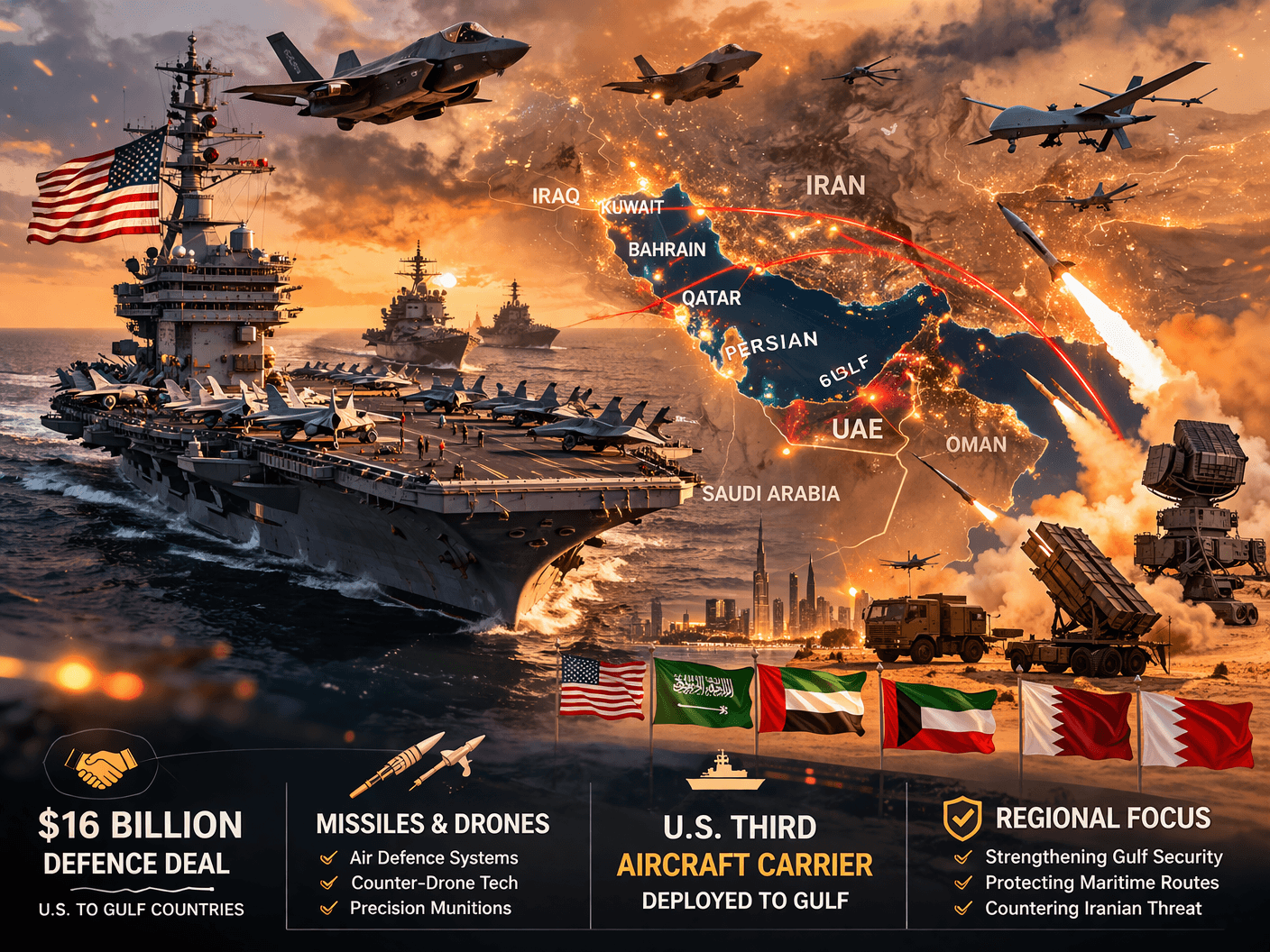
The United States has accelerated both military deployments and emergency arms transfers to Gulf allies as the regional conflict with Iran intensifies.
Multi-billion dollar defense deal - Washington has approved over $16–16.5 billion in arms sales to key Gulf partners including UAE, Kuwait, and Jordan.
UAE: ~$8.4 billion (missiles, air defense systems, counter-drone tech)
Kuwait: ~$8 billion (advanced radar and missile defense upgrades)
Jordan: smaller aviation and munitions package
The packages include:
Air-to-air missiles and precision munitions
Counter-drone systems (critical due to Iranian UAV attacks)
Integrated radar and missile defense networks
Gulf states have faced sustained missile and drone strikes targeting infrastructure and military assets, creating urgent demand for interception capability.
Emergency defense posture shift
The deals are being pushed under “emergency approval mechanisms”, bypassing normal timelines due to ongoing hostilities. Iranian strikes have hit Bahrain, Kuwait, UAE and energy facilities. Hundreds of missiles and drones intercepted across the Gulf. Existing defense systems are under pressure, with interceptor shortages emerging across the region.
Parallel to arms transfers, the US is reinforcing naval presence in the Gulf:
Additional carrier strike group deployment underway (third carrier presence signal)
Thousands of personnel and mariners being positioned for rapid response
Focus on protecting sea lanes, bases, and energy infrastructure
This aligns with broader US strategy:
Secure Strait of Hormuz and Gulf shipping routes
Deter further Iranian escalation
Support allied air and missile defense networks
The combined military buildup is directly linked to:
Energy infrastructure protection
Maritime corridor security (Hormuz & Gulf lanes)
Stabilizing disrupted oil and container flows
However increased militarization raises risk of escalation in shipping zones. Insurance premiums and freight volatility remain elevated. Ports and offshore assets remain potential targets
The current phase marks a dual-track US strategy:
Immediate defense reinforcement through multi-billion arms transfers
Forward military positioning via expanded naval deployment
Together, these moves aim to stabilize Gulf security—but also underline the region’s shift toward a high-intensity, militarized operating environment, with direct implications for global energy and maritime trade flows.
Popular Posts

Explore Topics



Comments