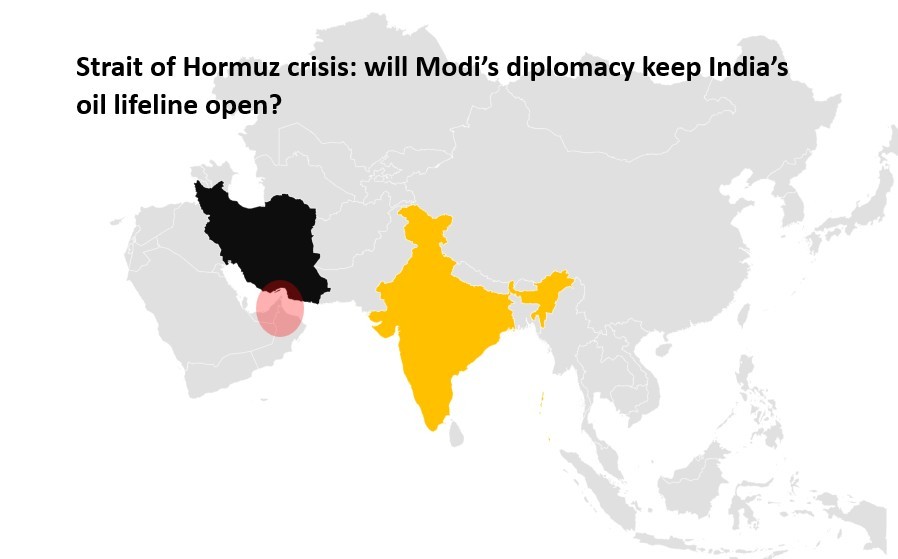
The escalating Iran–US conflict has begun affecting shipping lanes from the Persian Gulf to the Indian Ocean. For India—one of the world’s largest crude importers—the crisis has quickly become both a maritime security issue and a diplomatic challenge.
In early 2026, three Iranian naval vessels — IRIS Dena, IRIS Lavan, and IRIS Bushehr, sailed toward the Indian Ocean region for naval events linked to India’s fleet review and exercises. However, the geopolitical situation deteriorated rapidly.
Soon after the conflict intensified, IRIS Dena was sunk by a US submarine near Sri Lanka, dramatically escalating tensions in regional waters.
India grants refuge to an Iranian warship
Amid the crisis, Iran requested emergency assistance from India for one of its ships. The Iranian naval vessel IRIS Lavan, carrying around 183 sailors and cadets, reported technical issues and asked permission to enter an Indian port.
India approved the request on 1 March, and the ship eventually docked at Kochi naval base on 4 March.
India’s External Affairs Minister S. Jaishankar later explained that the decision was taken on humanitarian grounds, noting that the ships had originally been travelling for a fleet review but had “got caught on the wrong side of events” as the conflict escalated.
Diplomatic engagement with Iran
Following the naval incidents and growing attacks on merchant shipping in the Strait of Hormuz, India stepped up diplomatic engagement with Tehran.
Jaishankar reportedly held multiple discussions with Iran’s foreign minister, focusing on the safety of Indian ships and the protection of India’s energy supply routes.
Subsequently, Indian officials indicated that Iran signalled it would allow Indian-flagged vessels to transit the Strait of Hormuz, a critical route through which a large share of India’s crude imports move.
Despite ongoing attacks in the region, the Suezmax tanker Shenlong carrying Saudi crude successfully sailed through the strait and reached Mumbai port.
During the high-risk passage through the conflict zone, the vessel reportedly temporarily switched off its AIS tracking signal, a tactic sometimes used by ships navigating sensitive waters.
A test of India’s diplomatic balancing
India now finds itself balancing relations between competing powers while safeguarding its energy lifelines. The decision to offer refuge to an Iranian naval ship, combined with high-level diplomatic engagement with Tehran, appears to have helped maintain some level of shipping access through the Strait of Hormuz.
However, attacks on merchant vessels continue and the situation remains volatile.
The arrival of the tanker Shenlong shows that oil supply routes to India are still functioning—but only under fragile conditions.
Popular Posts

Explore Topics


Comments