
Saudi Arabia’s East–West pipeline: a 40-year-old strategy reshaping oil routes amid Hormuz tensions
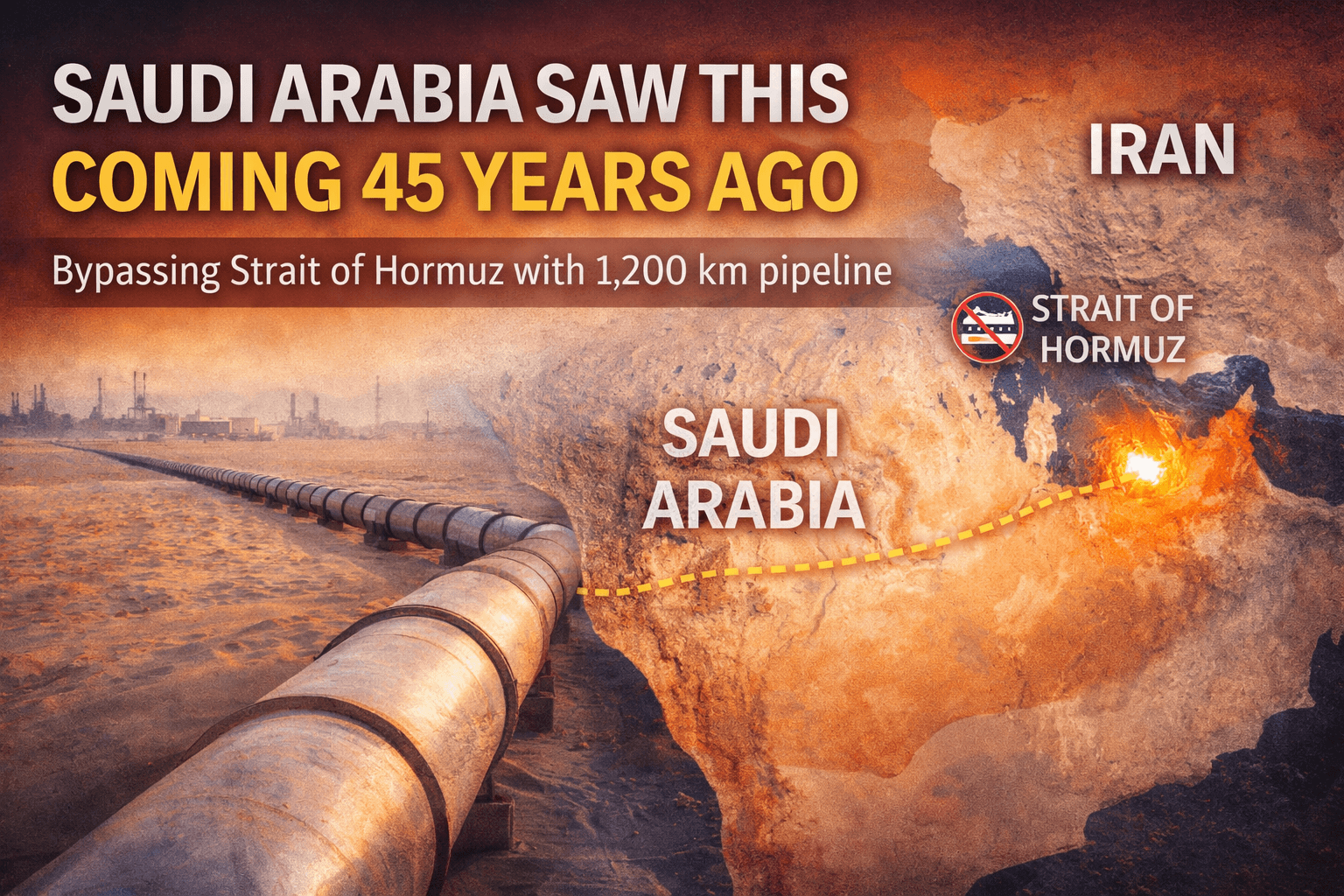
As tensions rise around the Strait of Hormuz, attention is shifting to a long-standing Saudi infrastructure asset that reduces dependence on the chokepoint—the East–West Pipeline.
Developed in the early 1980s, this cross-country pipeline connects oil fields in Saudi Arabia’s Eastern Province to the Red Sea port of Yanbu, effectively bypassing the Strait of Hormuz. Built during the Iran–Iraq war era, the project was designed to mitigate precisely the kind of geopolitical risk currently impacting global shipping.
Operated by Saudi Aramco, the pipeline has a capacity of around 5–7 million barrels per day, making it one of the world’s most critical alternative oil routes. While not newly “activated,” its strategic importance has sharply increased in 2026 as maritime threats escalate in the Gulf.
With repeated tanker incidents and rising war-risk premiums, reliance on Hormuz is being reassessed. Saudi Arabia’s ability to redirect crude flows to the Red Sea provides a significant buffer against disruption.
Unlike reactive rerouting in shipping, this is a pre-built land-based hedge—highlighting how long-term infrastructure planning can outperform short-term crisis response in global energy logistics.
Popular Posts

Explore Topics



Comments