
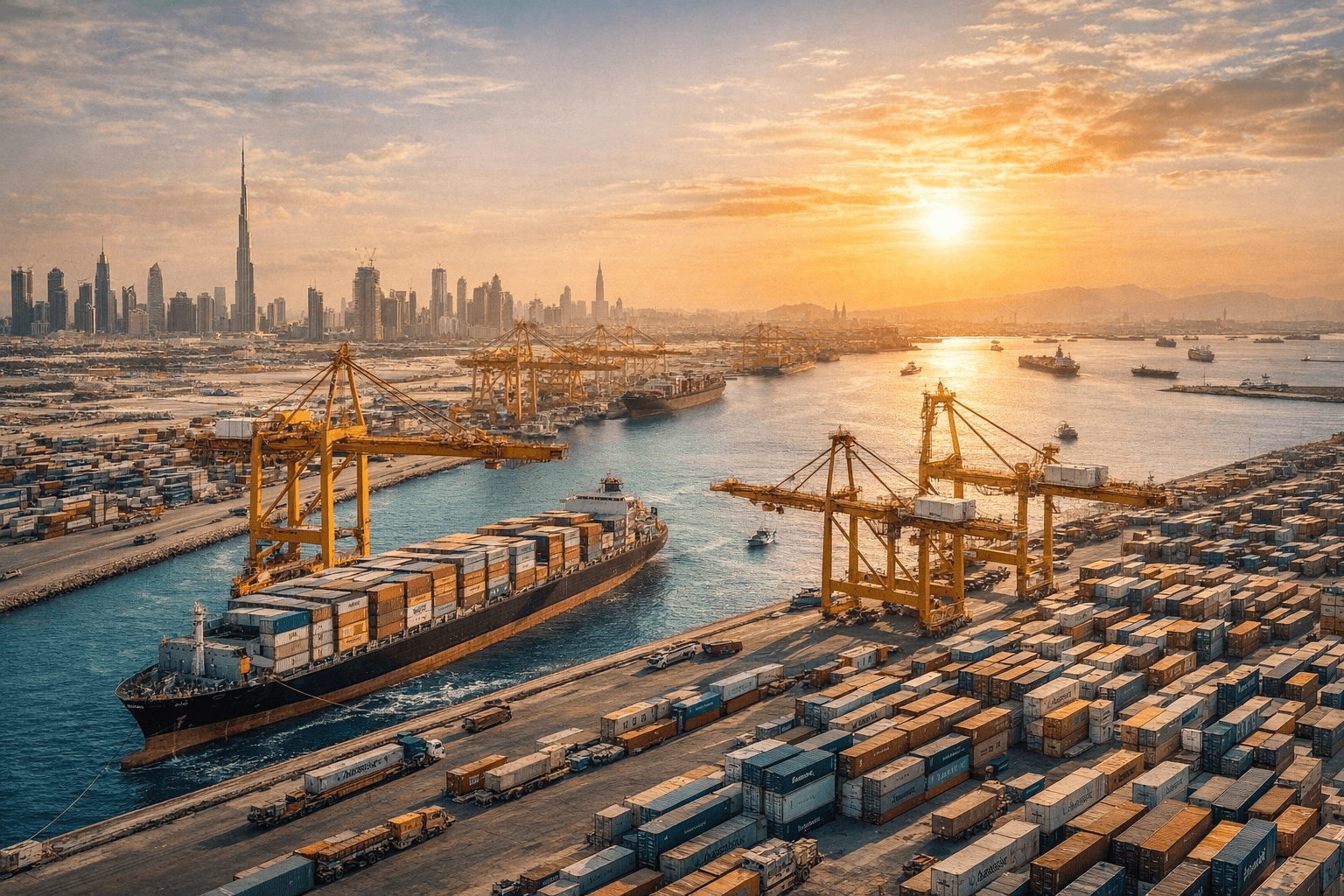
The ongoing US–Israel–Iran conflict has triggered systemic disruption across Middle East maritime corridors, with simultaneous pressure on the Strait of Hormuz (east) and Red Sea–Bab-el-Mandeb (west). Together, these chokepoints have effectively isolated Gulf shipping.
1. North-East (Iran–Iraq zone / Hormuz entry)
Status: Severely disrupted / partially non-operational
Strait of Hormuz: Effectively closed or restricted, halting tanker movements and container traffic
Iraq (Basra exports): Near halt, force majeure declared; exports collapsed from ~3.3 mbpd to ~0.9 mbpd
Vessel attacks reported in transit corridor; ships damaged and traffic suspended
Impact: Core oil export gateway blocked; upstream supply chains frozen.
2. Northern Gulf (Kuwait, Bahrain, Qatar)
Status: Largely shut / suspended
Kuwait (Shuaiba Port): Operations suspended; vessels evacuated
Bahrain (Khalifa Bin Salman Port): Operations suspended; refinery also hit
Qatar: Maritime navigation temporarily halted
Impact: Full shutdown cluster; zero reliability for liner or tanker calls.
3. Central Gulf (UAE hubs)
Status: Operational but degraded
Jebel Ali: Operational but reduced traffic, with fire incidents and congestion risks
Fujairah & Khor Fakkan: Operational but targeted (drone strikes reported recently)
Port disruption indicators rising across UAE terminals
Impact: Functioning as fallback hubs, but under capacity pressure and security risk.
4. South-East (Oman – bypass corridor)
Status: Operational, strategic rerouting hubs
Sohar, Salalah, Duqm: Active transshipment alternatives
Used for cargo diversion from Gulf due to Hormuz closure
Impact: Critical relief valves, but not scalable for full Gulf substitution.
5. South-West (Yemen / Bab-el-Mandeb / Red Sea entry)
Status: High-risk / partially avoided
Red Sea route: Volatile due to militant attacks and renewed threats
Many carriers rerouting via Cape of Good Hope; Suez traffic reduced
Impact: Western gateway unstable, dual chokepoint crisis (Hormuz + Red Sea).
6. North-West (Saudi Red Sea & Egypt)
Status: Operational with surge demand
Yanbu (Saudi Arabia): Export volumes surged (~3 mbpd) as Hormuz alternative
Jeddah / Ain Sokhna: Handling diverted cargo flows
Impact: Only stable large-scale export corridor, but capacity constrained and exposed to attack risk.
7. System-wide shipping condition
~140 container vessels stranded or idling in Gulf waters
Major carriers (Maersk, MSC, CMA CGM) suspending Gulf services
Freight rates up 3–4x, with severe insurance surcharges
Ports outside conflict zones (India, Red Sea, East Africa) seeing spillover congestion
Port situation
Non-operational / shut: Kuwait, Bahrain, Qatar, parts of Iraq
Restricted / high-risk: Iran corridor, Strait of Hormuz, Red Sea
Operational but stressed: UAE ports
Functional alternatives: Oman hubs, Saudi Red Sea ports
The Middle East is currently in a “dual chokepoint failure” scenario, where both eastern and western maritime gateways are compromised—creating the most severe shipping disruption in the region since WWII-level conflicts.
Popular Posts

Explore Topics



Comments