
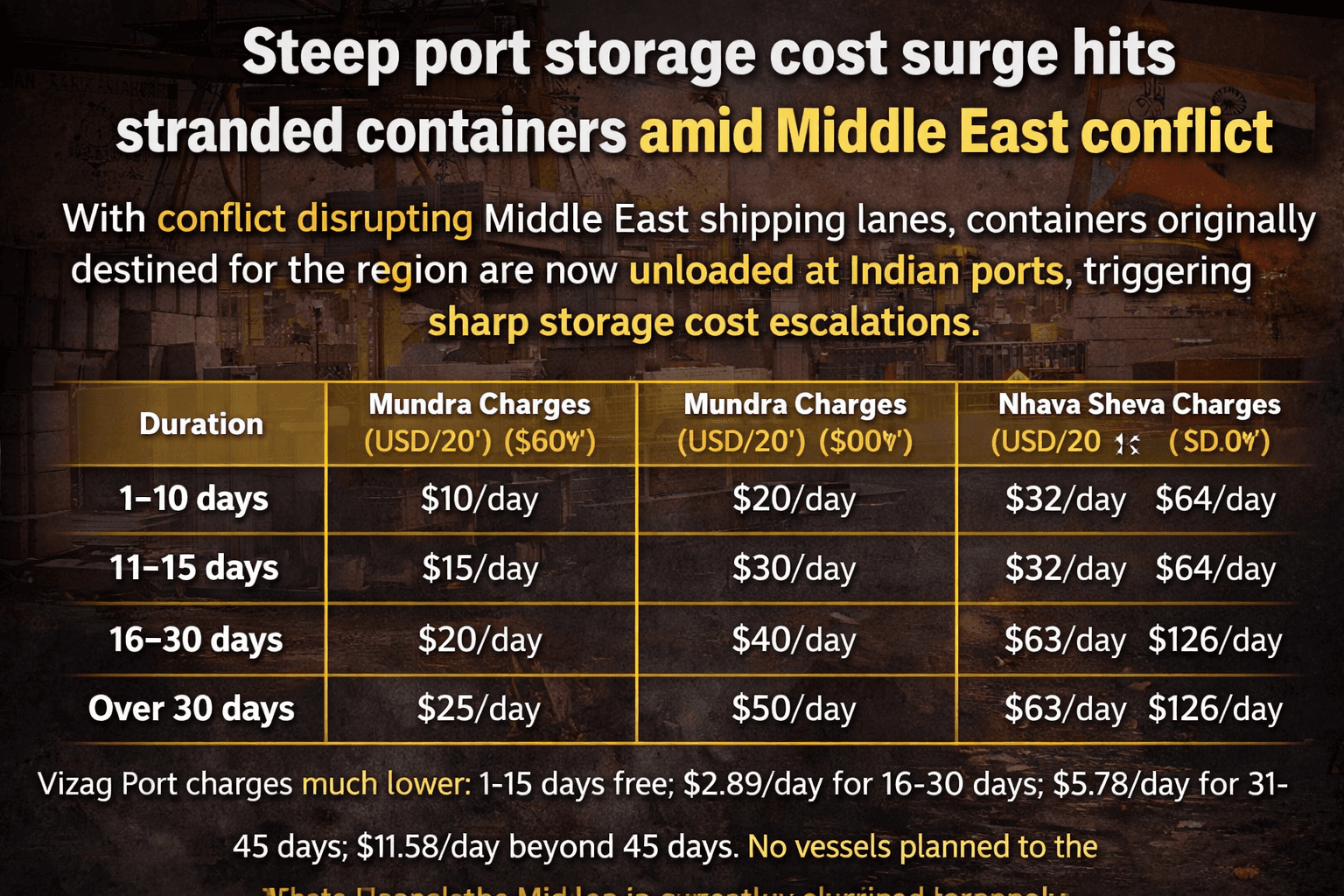
Ongoing Middle East disruptions have forced multiple vessels to offload containers at Indian ports such as Mundra Port and Nhava Sheva Port, instead of their intended destinations. With no immediate vessel connections planned, containers are now stuck—triggering steep storage charges that are ultimately passed on to exporters.
Storage charges comparison – Indian ports (USD/day)
Mundra Port
Duration | 20’ Container | 40’ Container |
1–10 days | $10 | $20 |
11–15 days | $15 | $30 |
16–30 days | $20 | $40 |
Above 30 days | $25 | $50 |
Nhava Sheva Port
Duration | 20’ Container | 40’ Container |
1–15 days | $32 | $64 |
Above 15 days | $63 | $126 |
Visakhapatnam Port (low-cost benchmark)
Duration | 20’ Container | 40’ Container |
1–15 days | FREE | FREE |
16–30 days | $2.89 | $5.78 |
31–45 days | $5.78 | $11.56 |
Above 45 days | $11.58 | $23.16 |
The cost differential is stark. At Nhava Sheva, a 40’ container can incur $126/day beyond 15 days, compared to just $5.78/day at Vizag for a similar period. These charges are billed by ports to shipping lines and passed directly to exporters, sharply inflating logistics costs.
With cargo originally bound for Middle East ports now stranded, exporters face rising detention risks, working capital blockage, and uncertain delivery timelines. The absence of vessel planning further compounds the issue, leaving cargo owners with limited options.
Prolonged storage at high-tariff ports could erode export margins entirely, especially for low-value bulk and commodity shipments.
Popular Posts

Explore Topics




Comments