Iron Maiden becomes first and Sino Ocean becomes second ship to pass through the Strait of Hormuz
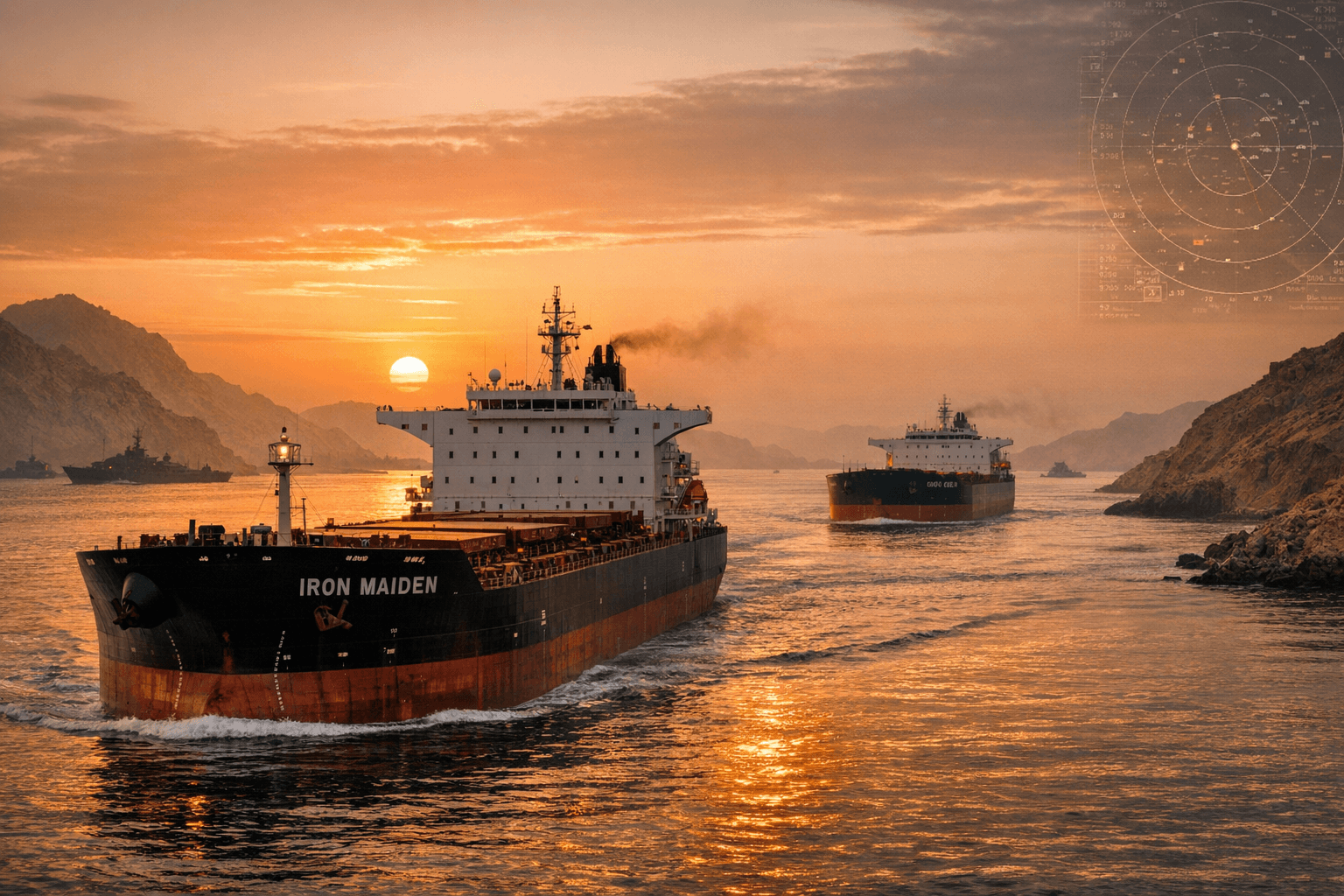
Two bulk carriers — Iron Maiden and Sino Ocean — recently managed to pass through the Strait of Hormuz while signalling Chinese links through their AIS transponders.
This development gives a sort of satisfaction to shippers and consignee that some movement has started through Strait of Hormuz.
Why ships are declaring Chinese identity
Due to the ongoing regional conflict involving Iran, the United States, and Israel, shipping activity in the area has dramatically reduced. Iran has warned that vessels associated with Western countries could be targeted, creating fear among shipowners and operators.
To reduce the risk of attacks, several vessels have reportedly changed their AIS (Automatic Identification System) signals to display messages such as:
“Chinese Owner”
“All Chinese Crew”
“Chinese Crew Onboard”
The assumption is that ships linked to China may face lower risk because of Beijing’s relatively neutral position in the conflict and its diplomatic ties with Iran.
The two vessels that recently crossed the strait
1. Iron Maiden
The bulk carrier Iron Maiden became one of the first ships to attempt a passage through the strait during the recent crisis. According to ship-tracking data, the vessel changed its AIS destination signal to “CHINA OWNER” while moving through the waterway.
The vessel reportedly hugged the Omani coastline while transiting the strait — a route sometimes used by ships attempting to minimize exposure in high-risk zones.
2. Sino Ocean
Another bulk carrier, the Liberia-flagged Sino Ocean, also successfully exited the Strait of Hormuz after loading cargo at the UAE port of Mina Saqr.
Like Iron Maiden, the vessel signalled a Chinese connection during the passage, becoming the second ship in the same week to adopt such an identification strategy.
A new tactic in high-risk shipping zones
This situation highlights how shipping companies and ship masters are adapting to rising geopolitical risks.
AIS manipulation and identity signalling are not entirely new practices in global shipping, but their use is increasing in conflict zones. According to ship-tracking platforms, at least ten vessels have modified their AIS signals in the past week to suggest Chinese ownership or crew while navigating the region.
The goal is simple: reduce the chances of being targeted.
However, maritime analysts warn that this tactic may only work temporarily and could create further confusion for naval forces monitoring the area.
The passage of vessels like Iron Maiden and Sino Ocean demonstrates how commercial shipping is adapting in real time to geopolitical tensions.
While the strategy of signalling Chinese ownership may allow some ships to transit safely for now, the broader situation in the region remains volatile.
For the maritime industry, the events unfolding in the Strait of Hormuz serve as a reminder that geopolitical tensions can quickly reshape global shipping routes, risk assessments, and operational strategies.
Popular Posts

Explore Topics


Comments