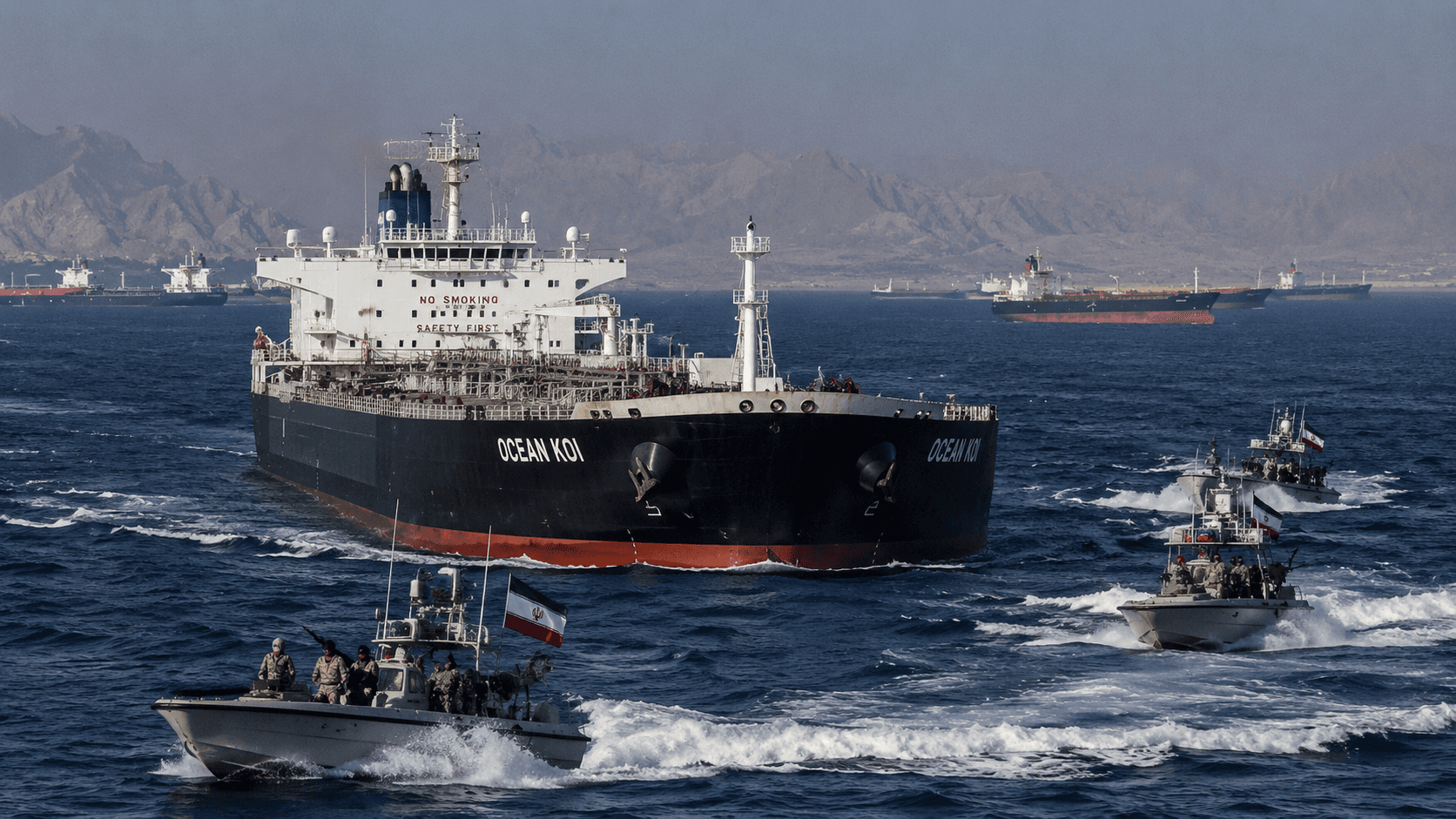
The detention of the tanker Ocean Koi by Iranian forces in the Gulf of Oman has once again highlighted the growing risk faced by commercial shipping in the Strait of Hormuz, one of the world’s most critical energy trade corridors. Iranian state media claimed the Barbados-flagged tanker was carrying Iranian oil and attempting to disrupt the country’s exports during ongoing regional tensions.
The incident is the latest addition to a long list of tanker seizures, drone attacks, and vessel interceptions linked to tensions involving Iran, the United States, and Western sanctions enforcement.
Shipping markets have witnessed repeated disruptions in the region over the past decade. In 2024, Iran seized the container vessel MSC Aries near the Strait of Hormuz after alleging links to Israel. In the same year, Iran also captured the tanker St Nikolas, a vessel previously involved in a major U.S.-Iran oil dispute connected to sanctioned crude cargo movements.
The pattern goes back even further. In 2022, Iran seized two Greek tankers during heightened sanctions tensions. In 2021, the Israeli-linked tanker Mercer Street was attacked by drones near Oman. Earlier incidents included the attempted seizure of Alpine Eternity in 2015 and multiple sabotage attacks on commercial tankers near Fujairah and the Gulf of Oman.
Industry analysts say the latest Ocean Koi detention reflects the increasing complexity of the so-called “shadow fleet” trade. Iran has relied heavily on older tankers, ship-to-ship cargo transfers, AIS signal manipulation, and frequent vessel renaming to continue oil exports despite sanctions. Many of these operations involve cargo transfers near Southeast Asia before shipments move toward China.
The maritime risk environment has intensified further in 2026 following U.S. enforcement actions targeting Iranian oil movements. Reports indicate that dozens of vessels have already been delayed, searched, or rerouted due to military activity around the Strait of Hormuz and Gulf of Oman.
For global shipping lines, tanker operators, and marine insurers, the biggest concern is no longer a single isolated seizure. The growing fear is that commercial shipping in the region is entering a prolonged “high-risk operating zone” where political retaliation, sanctions enforcement, and military escalation could directly impact vessel movement, freight rates, war-risk premiums, and oil supply chains.
With nearly one-fifth of the world’s oil trade historically moving through the Strait of Hormuz, any sustained disruption could rapidly affect global energy prices and tanker availability. The detention of Ocean Koi may therefore become another warning sign that maritime security risks in the Middle East are entering a more unpredictable phase.
Popular Posts


Explore Topics

Comments