
Recently on 5th & 6th February 2026, the Indian Coast Guard (ICG) intercepted three vessels approximately 100 nautical miles west of Mumbai, uncovering an international oil smuggling network that relied on mid-sea ship-to-ship transfers to conceal cargo origin and evade customs duties. Below are the details of three vessels
Name | Al Jafzia | Asphalt Star | Stellar Ruby |
IMO | 9171498 | 9463528 | 9555199 |
Flag country | Nicaragua (reported, previously changed) | Mali | Iran |
Sanctions status | Listed under US Treasury OFAC sanctions linked to illicit Iranian oil trade. | ||
The discovery was initiated not by chance, but through technology-enabled maritime surveillance systems that flagged anomalous vessel behaviour within India’s Exclusive Economic Zone (EEZ).
According to official statements, the operation began when an AI-supported digital surveillance platform detected a motor tanker exhibiting suspicious movement patterns, prompting further data pattern analysis and digital tracing which revealed additional suspect vessels converging on the tanker, a strong indicator of illicit oil transfer at sea.
Specialist ICG boarding teams confirmed the findings through verification of digital data, vessel documents, and crew interrogation, ultimately detaining all three ships for legal proceedings.
Maritime Domain Awareness (MDA)
At the core of these successes is India’s Maritime Domain Awareness (MDA) framework, a network designed to collect, integrate, and analyse vast amounts of maritime data to build a real-time operational picture of sea zone activity.
1. Coastal Surveillance Network (CSN)
India’s Coastal Surveillance Network — part of MDA — uses a chain of shore-based radars, Automatic Identification System (AIS) receivers, satellite feeds, and VHF communication links to track vessel movements around India’s 7,500+ km coastline and EEZ. After the 26/11 attacks, this infrastructure was prioritised and expanded to close critical blind spots along the coast.
2. Data fusion & analysis centres
The Information Management and Analysis Centre (IMAC) — a nodal maritime data fusion hub — aggregates shipping data such as AIS, Long Range Identification and Tracking (LRIT), coastal radar inputs, and satellite information to detect abnormal or suspicious patterns. IMAC’s creation can be directly traced to post-26/11 reforms aimed at preventing maritime infiltration and other threats emerging from the sea.
3. Aircraft, UAVs, and Sea-patrols
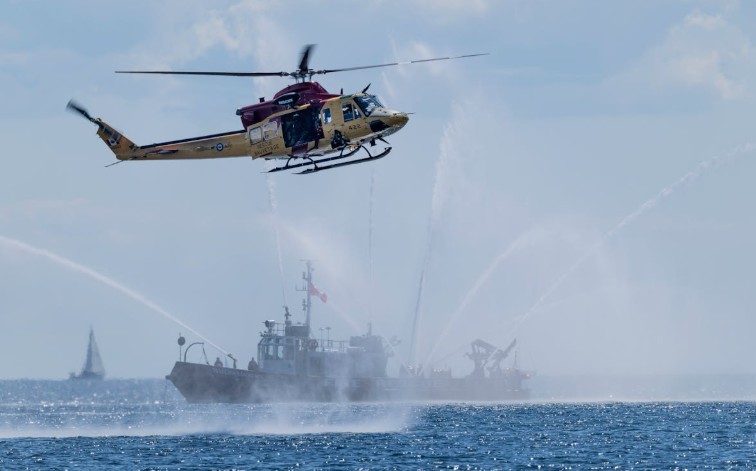
ICG aircraft like the Dornier Do-228, fixed-wing patrol planes, and rotary helicopters — increasingly complemented by UAVs and Remotely Piloted Aerial Systems (RPAS) — extend the surveillance footprint well beyond coastal radars, enabling long-range detection and real-time tracking in the EEZ.
By integrating these assets with AI-enhanced pattern recognition, the Coast Guard’s monitoring systems can rapidly differentiate between normal maritime traffic and activities that may signal illegal trade or smuggling operations.
A Legacy of reforms post the 26/11
The 26/11 Mumbai terror attacks in 2008 exposed critical vulnerabilities in India’s coastal security. Terrorists had entered Mumbai by sea, exploiting gaps in maritime surveillance. This event triggered a comprehensive coastal security evolution, including:
Establishment of the Coastal Surveillance Network of radars and sensors.
Formation of IMAC and later the National Maritime Domain Awareness (NMDA) centre for integrated tracking.
Since its establishment in 1977 and formal chartering in 1978, the ICG has helped seize contraband valued at over ₹1,120 crore while evolving into a modern maritime enforcement agency operating in a complex, digitised marine domain.
Popular Posts


Explore Topics


Comments