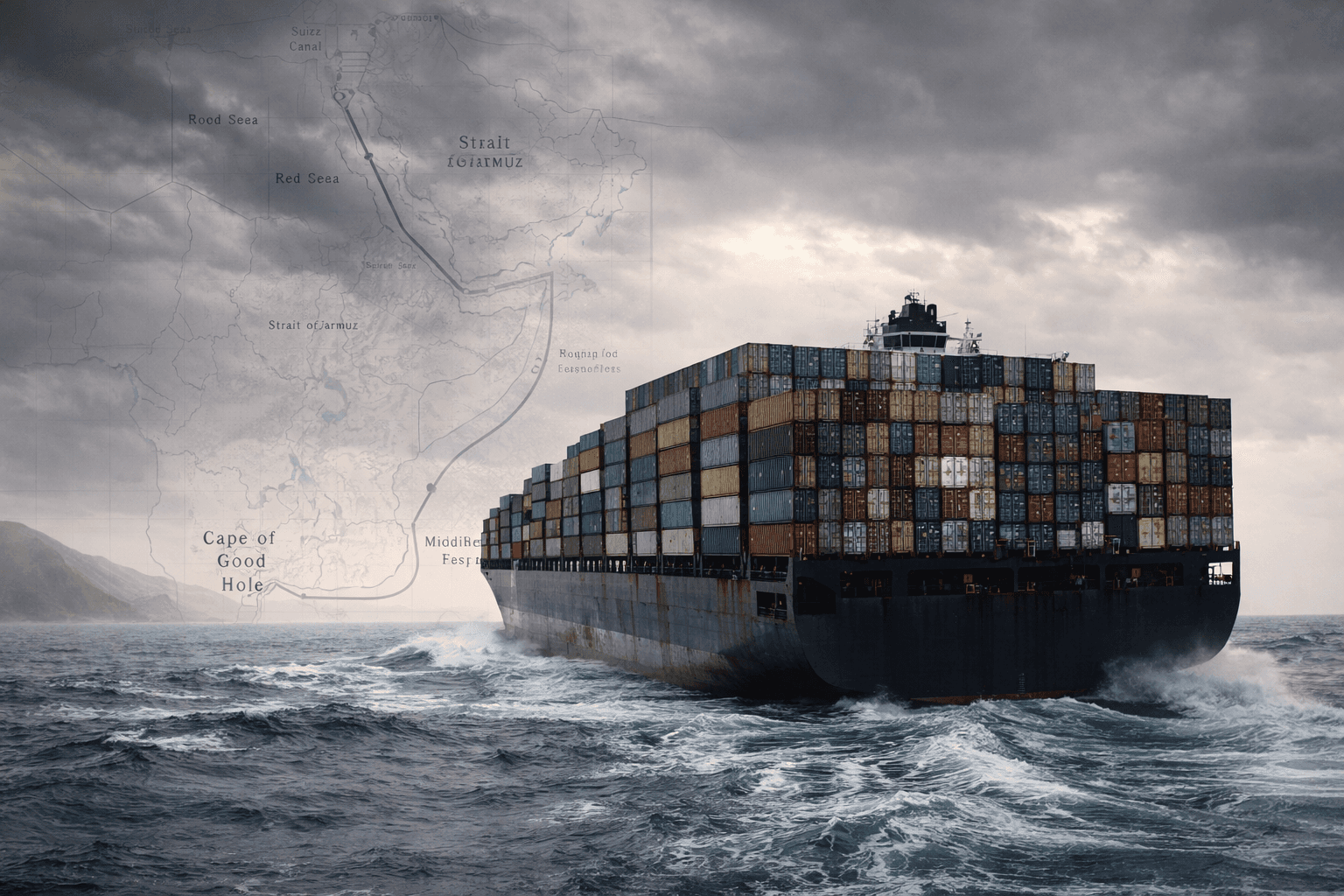
The recent escalation of conflict in the Middle East — including strikes on Iran and the de facto closure of the Strait of Hormuz — has pushed global container and oil shipping into major reroutes and operational suspensions. Key industry players have issued advisories and taken decisive action to protect crews, vessels, and cargo, abandoning high-risk passages like the Red Sea and Suez Canal corridor.
What major carriers are doing and what they have stated in last 48 hours -
Maersk
Maersk has officially suspended transit through both the Strait of Hormuz and the Red Sea/Suez Canal corridor until further notice, citing crew and cargo safety over route risk.
It has paused Trans-Suez sailings and is rerouting key services—including ME11 (Middle East-India to Mediterranean) and MECL (Middle East-India to East Coast US) — around the Cape of Good Hope at Africa’s southern tip.
The company reaffirmed that safety is the top priority and that current security conditions make Hormuz crossings untenable for the time being.
Mediterranean Shipping Company (MSC)
MSC has instructed its vessels in the Gulf region to proceed to designated safe shelter ports and suspended all cargo bookings bound for or transiting the high-risk area.
The company is withholding Gulf and Suez transits until the security situation stabilizes.
CMA CGM
CMA CGM has issued multiple advisories, including a suspension of reefer (refrigerated) bookings in Middle East ports due to operational risks.
It is sheltering vessels already in the region and rerouting other units away from the Red Sea/Suez Canal, using the longer Cape of Good Hope route.
CMA CGM also issued conflict surcharges in several Middle Eastern and North African markets to account for the disruption.
Hapag‑Lloyd
Hapag-Lloyd has diverted sailings from the Red Sea and shifted routes via the Cape amid growing violence and shipping threats, delaying any planned return to Suez corridor transits.
War-risk surcharges have also been implemented to offset increased operational costs and insurance risk.
Ripple effects expected to start again for congestion and freight
The World Shipping Council has warned that pauses and reroutes will ripple across global trades, since longer Africa-around voyages increase transit times and disrupt schedule reliability.
Maritime insurers are cancelling war-risk cover for ships in the region, further pressuring carriers to avoid the Red Sea and Hormuz corridors.
Freight rates from Asia to key hubs like Dubai have more than doubled due to these disruptions.
This represents a major shift in global maritime logistics, with far-reaching implications for trade costs, transit times, and supply chain stability — effects that are continuing to evolve with the security situation.
Popular Posts

Explore Topics



Comments