
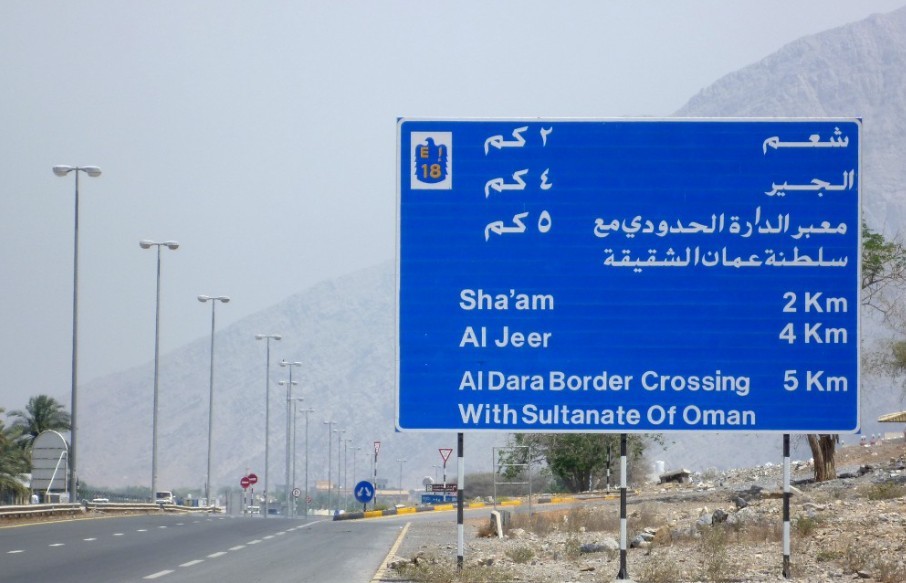
The activation of the Dubai–Oman Green Corridor marks a structural upgrade in GCC logistics, introducing a pre-cleared, road-based cargo movement system linking Omani seaports directly to Dubai’s inland distribution network.
The corridor connects ports such as Sohar and Duqm to Dubai via the Al Wajajah Border Crossing and final clearance at the Hatta Border Crossing, creating a streamlined dual-clearance model.
Route, distance and transit mechanics
The operational route is straightforward but strategically efficient:
Sohar Port >> Al Wajajah Border >> Hatta >> Jebel Ali Port
Approximate road distance: 320–350 km
Transit time (border-to-port): 5–7 hours under normal conditions
The corridor primarily utilizes Oman’s Route 15/Route 1 highway network and the UAE’s E44 (Dubai–Hatta Road), both high-capacity freight corridors designed for heavy truck movement.
How the corridor changes cargo flow
The key shift is procedural, not physical.
Primary customs clearance completed at origin (Oman ports)
Containers are sealed and digitally tracked
Minimal intervention at Al Wajajah entry point
Final clearance at Hatta, enabling direct entry into Dubai mainland and free zones
This effectively reduces duplication of inspections and eliminates traditional border bottlenecks.
Benefits in this situation
For logistics operators and cargo owners, the impact is immediate:
Transit time reduction of 24–48 hours compared to conventional routing via UAE seaports
Lower port congestion exposure at Jebel Ali
Reduced demurrage and detention risks
Predictable trucking schedules with fewer border uncertainties
The corridor also creates a viable alternative to traditional UAE-first import routing, particularly during peak congestion periods.
Strategic relevance for regional trade
This is not just a bilateral facilitation—it is a network-level upgrade for GCC supply chains.
Key implications:
Cargo diversification: Oman ports gain relevance as alternative entry gateways
Risk distribution: Reduced dependence on a single hub like Jebel Ali
Cost optimization: Potential savings on port handling, storage, and inland movement
Scalability: Supports future cargo growth without immediate port expansion pressure
For UAE importers, especially those serving northern emirates and Dubai mainland, routing via Oman can now be commercially viable.
Limitations of this corridor
Despite the advantages, the corridor is currently selective:
Not all HS codes are eligible
Certain cargo categories still require full inspection
Compliance and documentation accuracy remain critical
Corridor performance will depend on consistent coordination between Oman and UAE customs systems
In short, this is a facilitated lane, not a universal fast-track.
The Dubai–Oman Green Corridor reflects a broader shift in regional logistics strategy—from centralized hub dependency to distributed, multi-entry supply chains.
By enabling inland clearance integration and cross-border cargo continuity, the UAE and Oman are effectively building a resilient logistics architecture ahead of demand.
The corridor is a calculated move toward faster, more flexible, and risk-diversified cargo movement in the GCC.
If scaled effectively, it has the potential to reshape regional trade flows—positioning Oman as a complementary gateway and reinforcing Dubai’s role as a distribution hub, not just a port.
In a market where time, predictability, and resilience define competitiveness, this corridor delivers on all three.
Popular Posts

Explore Topics




Comments