
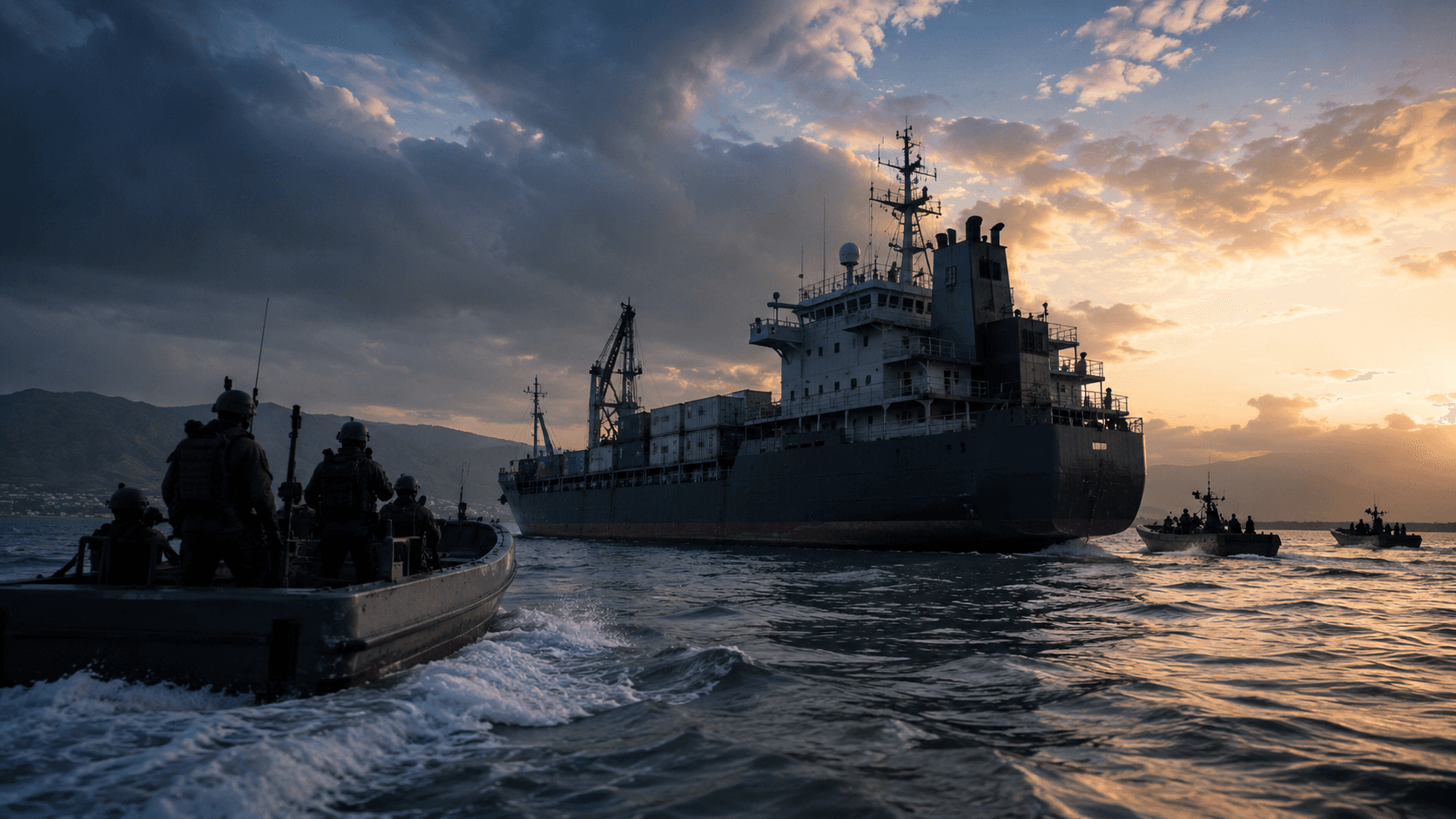
The seizure of a Chinese-linked “floating armory” vessel by Iranian forces near the Strait of Hormuz has intensified concerns over maritime security in one of the world’s most critical shipping chokepoints. The incident occurred near Fujairah, UAE, close to the entrance of the Strait of Hormuz, where commercial shipping traffic has already been under pressure due to ongoing regional tensions.
According to maritime security reports, the vessel identified as Hui Chuan was boarded by unauthorized personnel while anchored around 38 nautical miles northeast of Fujairah before being redirected toward Iranian territorial waters. The UK Maritime Trade Operations (UKMTO) also issued an alert confirming that a commercial vessel had been seized and was moving toward Iran.
The ship is reportedly operated by Hong Kong-based maritime security firm Sinoguards and functioned as a “floating armory” — vessels used by private maritime security companies to store weapons, ammunition, and deploy armed guards for ships transiting piracy-prone waters in the Gulf of Oman, Red Sea, and Indian Ocean. Such vessels play a critical role in protecting merchant ships from piracy and regional maritime threats.
Interestingly, the seizure comes despite earlier Iranian statements suggesting Chinese-linked vessels would be allowed safe passage through Hormuz due to China’s continued economic and energy relationship with Tehran. China remains one of the largest buyers of Iranian crude oil, making the incident geopolitically sensitive.
Sinoguards stated that the vessel was undergoing “documentation and compliance inspection” inside Iranian waters and confirmed there were no injuries to crew members. However, maritime analysts believe the move signals Iran’s increasing control over shipping movements in and around Hormuz amid the ongoing regional conflict.
The incident also follows several recent attacks and seizures involving commercial vessels in the Strait of Hormuz region, including attacks on oil tankers and cargo ships linked to multiple countries. Shipping traffic through the corridor has declined sharply in recent weeks, with insurers raising war-risk premiums and shipowners reassessing Gulf transit operations.
Industry observers warn that targeting floating armory vessels could have wider operational consequences for merchant shipping. Since these platforms support onboard armed security teams, any disruption to their operations may reduce available maritime protection capacity for vessels sailing through high-risk routes between the Middle East, East Africa, and Asia.
The latest seizure once again highlights how the Strait of Hormuz remains not only an energy chokepoint but also a growing geopolitical pressure zone where commercial shipping, private security operations, and regional military strategies are increasingly intersecting.
Popular Posts


Explore Topics



Comments