
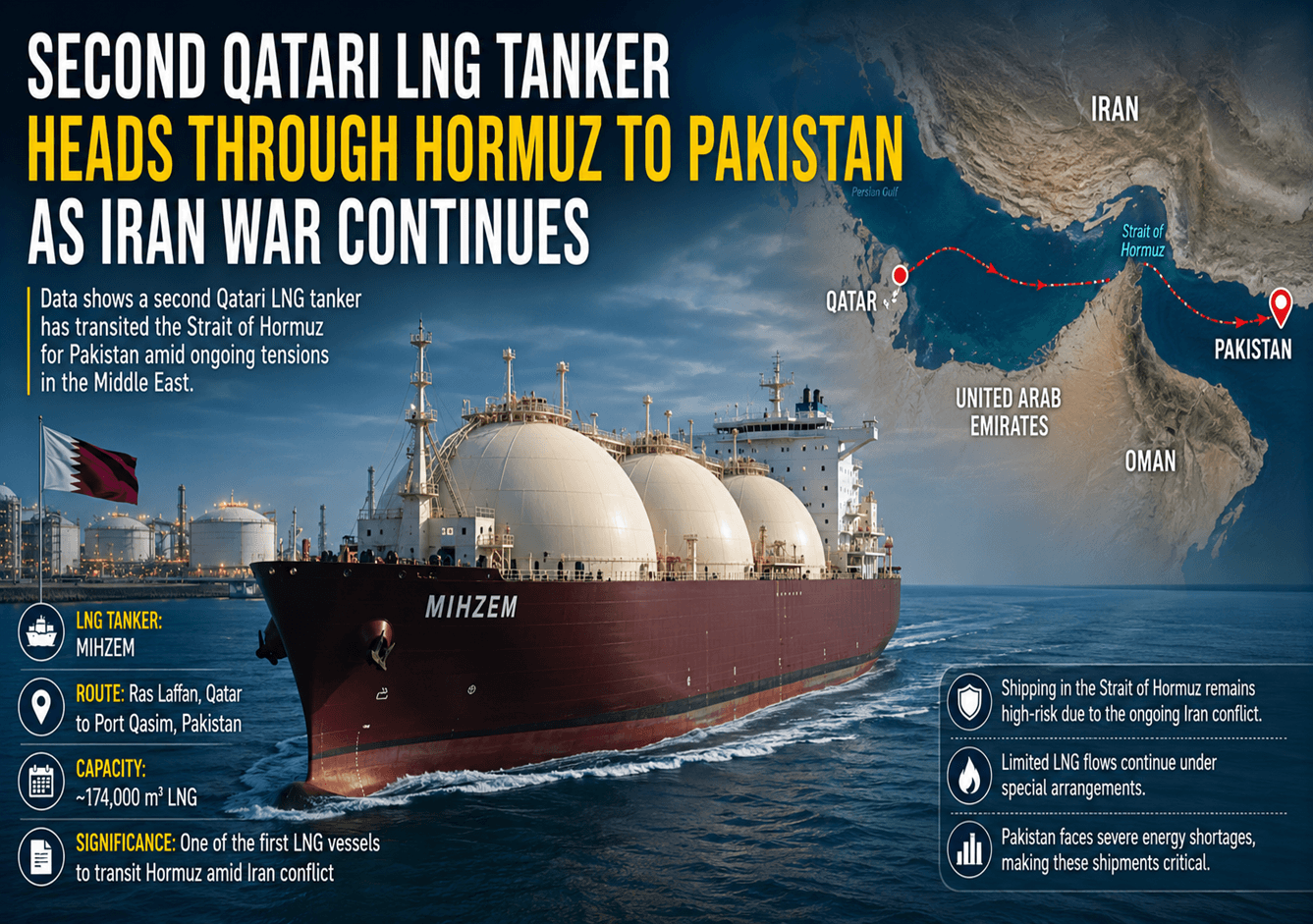
A second Qatari LNG tanker has reportedly transited the Strait of Hormuz toward Pakistan, signaling a cautious reopening of critical energy shipments despite continuing tensions linked to the ongoing Iran conflict. Ship-tracking data showed LNG carrier Mihzem, with carrying capacity of around 174,000 cubic meters, departing Qatar’s Ras Laffan terminal and proceeding toward Port Qasim, Pakistan.
The latest movement follows the earlier successful passage of another Qatari LNG tanker, Al Kharaitiyat, which became one of the first LNG vessels to cross Hormuz after months of severe disruption in Gulf shipping. According to reports, the cargo movement is part of a limited arrangement involving Pakistan, Qatar and Iran to facilitate essential LNG supplies amid Pakistan’s ongoing gas shortage and power demand concerns.
The Strait of Hormuz remains heavily impacted by the 2026 Iran war and subsequent maritime restrictions. Commercial traffic through the waterway has fallen sharply since February after Iran tightened control over vessel movement, increasing risks for shipowners, insurers and energy traders.
Industry reports indicate that several LNG carriers previously aborted attempts to transit Hormuz due to security concerns and lack of clearance from Iranian authorities. Earlier Qatari LNG tankers including Rasheeda and Al Daayen reportedly turned back after failing to obtain passage approval.
The recent successful crossings are therefore being closely monitored by global energy markets, as Qatar remains one of the world’s largest LNG exporters and a major supplier to Asian economies. Before the current crisis, nearly 20% of global LNG trade passed through the Strait of Hormuz annually.
Shipping analysts say the limited resumption of LNG movement could provide temporary relief to regional buyers, particularly Pakistan, which has faced severe fuel shortages and electricity supply pressure following disruptions to Qatari LNG deliveries. However, maritime risks in the Gulf continue to remain extremely high, with vessel operators still relying on special routing arrangements, military monitoring and diplomatic clearances for transit operations.
Popular Posts


Explore Topics



Comments