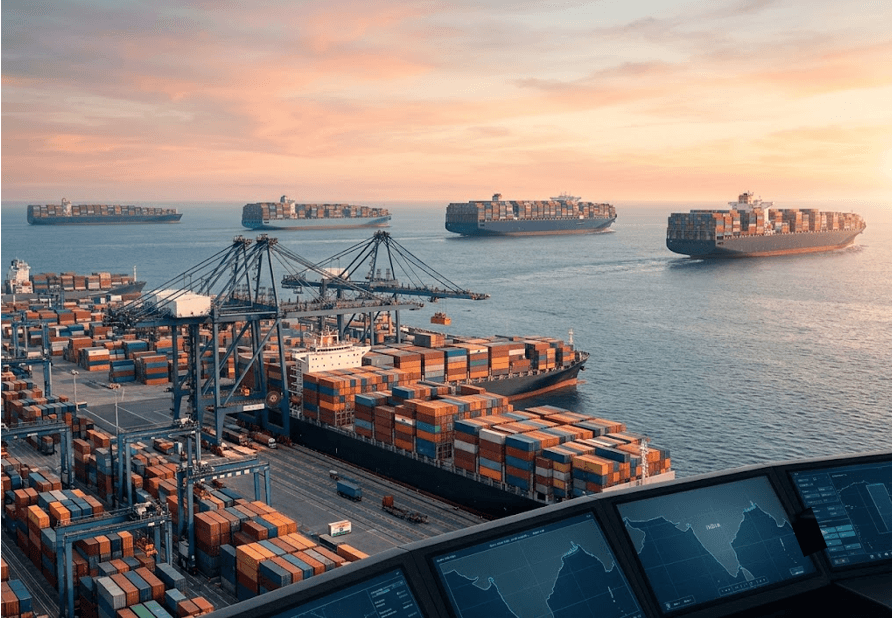
Maersk maintains Middle East cargo insurance amid regional disruptions as shipping risks remain elevated
Global container shipping continues to face operational challenges across the Middle East as security concerns in the Red Sea, Gulf of Oman and Strait of Hormuz force carriers to balance service continuity with heightened risk management.
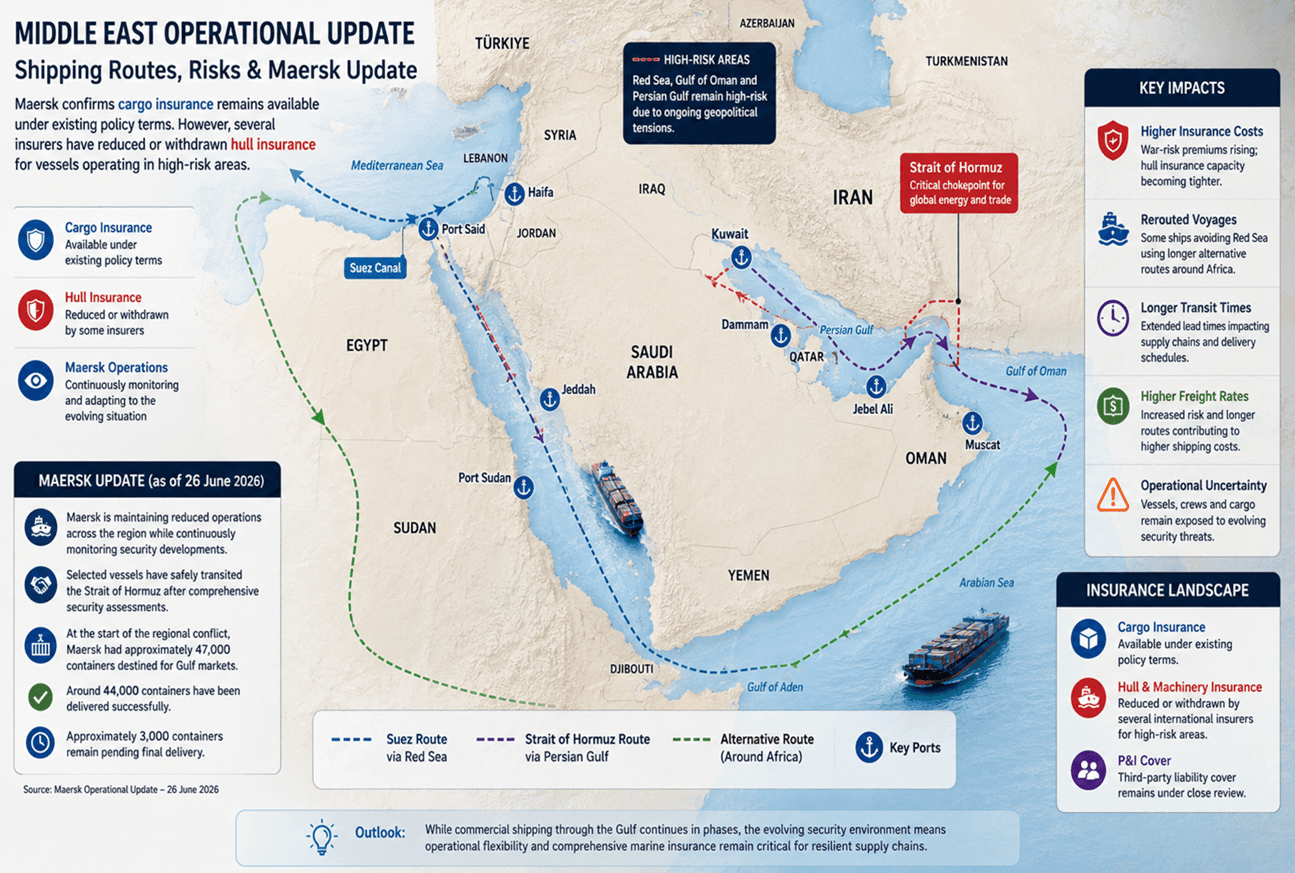
In its latest operational update issued on 26 June, Maersk confirmed that cargo insurance remains available for customers under existing policy terms. However, the company noted that several international insurers have reduced or withdrawn coverage for shipments transiting high-risk areas, particularly for hull insurance covering vessels operating in the Red Sea, Gulf of Oman and the Persian Gulf.
The advisory reflects the growing impact of geopolitical tensions on the marine insurance market. While cargo insurance continues to be offered, shipowners operating in conflict-affected waters are facing stricter underwriting requirements, higher war-risk premiums and reduced insurance capacity from some international insurers. These developments have increased operating costs and prompted carriers to continuously reassess voyage planning and network deployment.
Maersk stated that it is maintaining reduced operations across the region while closely monitoring security developments. The company has already completed the safe transit of selected vessels through the Strait of Hormuz following detailed security assessments and coordination with maritime security partners, while continuing to evaluate future sailings based on evolving risk conditions. At the start of the regional conflict, Maersk had approximately 47,000 containers destined for Gulf markets. The company has since delivered around 44,000 containers, with approximately 3,000 containers still awaiting final delivery.
The insurance situation highlights a growing divide between cargo insurance and hull insurance. Cargo insurance protects the financial value of goods transported by sea and remains available under policy conditions. Hull and Machinery insurance, by contrast, covers physical damage to vessels and has become increasingly challenging to secure in conflict zones as insurers reassess their exposure to war-related losses. Protection and Indemnity (P&I) cover for third-party liabilities also remains under close review across the industry.
For exporters and importers, the latest developments underline the importance of reviewing insurance arrangements, transit routes and contractual responsibilities before shipping cargo through the Middle East. Logistics providers may also need to account for longer transit times, revised sailing schedules and higher freight costs as carriers continue to adjust operations in response to regional security risks.
Although commercial shipping through the Gulf has resumed in phases, the evolving security environment means operational flexibility and comprehensive marine insurance remain critical for maintaining resilient supply chains. Until regional stability improves, shipping companies, insurers and cargo owners are expected to continue operating under enhanced risk management measures.
Popular Posts


Explore Topics


Comments