
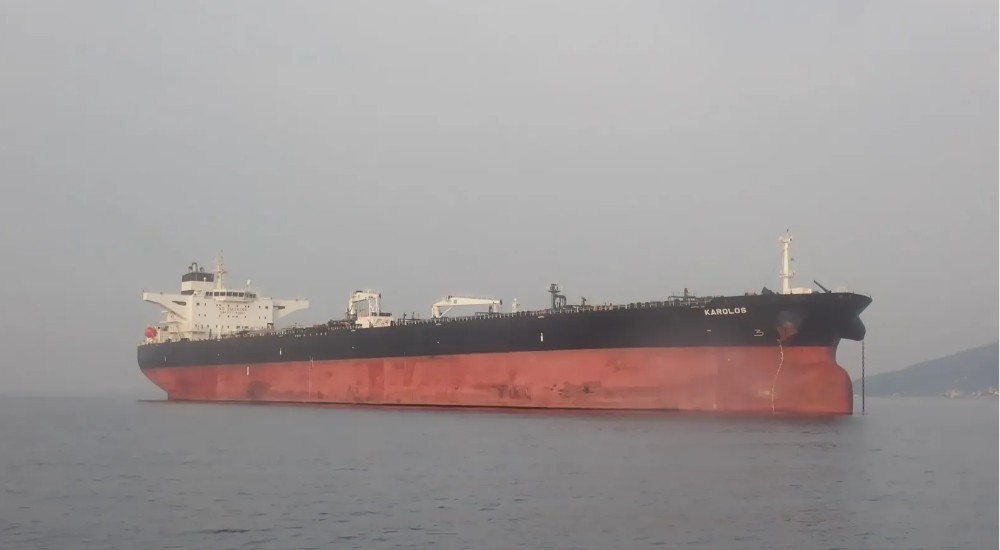
A Suezmax tanker - Karolos, carrying Iraqi crude oil has successfully moved toward India after transiting the strategically sensitive Strait of Hormuz, highlighting the continued resilience of regional energy supply chains despite ongoing geopolitical tensions in the Gulf. The development comes as commercial shipping activity through the waterway remains significantly below normal levels due to the prolonged Iran-related conflict.
The tanker identified in vessel-tracking data is the Karolos, a Suezmax-class crude carrier reportedly loaded with Iraqi crude at Basra between May 10 and 11. According to ship-tracking intelligence firm Kpler, the vessel was seen in the Gulf of Oman after crossing the Strait of Hormuz and heading toward India while fully laden. Satellite imagery from the European Union’s Sentinel-2 system reportedly confirmed a vessel matching Karolos at Basra loading buoys during the loading window.
The movement is significant because maritime traffic through Hormuz has dropped sharply during the ongoing regional crisis. Bloomberg vessel-tracking data cited in the report showed only five commercial ship transits on Friday compared with eleven the previous day. Although traffic slightly improved the following morning, shipping flows remain well below pre-conflict averages.
The Strait of Hormuz remains one of the world’s most critical oil chokepoints, handling a substantial share of global crude exports from Gulf producers including Iraq, Saudi Arabia, Kuwait, and the UAE. Any disruption directly impacts freight rates, marine insurance premiums, refinery sourcing strategies, and global crude benchmarks.
The report also highlighted additional tanker activity linked to Iraqi crude exports. The tanker Agios Fanourios I, previously halted by the United States while sailing from Iraq to Vietnam, remains in the Gulf of Oman. Another vessel, the VLCC Kiara M, reportedly completed a ship-to-ship cargo transfer off Oman after loading at Basra.
Shipping visibility in the region has become increasingly difficult because of widespread Automatic Identification System (AIS) interference and deliberate “going dark” practices adopted by vessels operating near high-risk waters. Analysts noted that some ships are disabling or manipulating tracking signals while approaching Hormuz to reduce operational risk.
For India, the successful arrival of crude-linked cargoes through Hormuz is strategically important because the country remains heavily dependent on Middle Eastern energy imports. Earlier this year, India also received crude cargoes through the corridor despite regional instability, reinforcing the importance of maritime continuity for Indian refiners and energy security.
The continued movement of tankers such as Karolos suggests that, despite military tensions and heightened maritime risks, critical crude supply routes between the Gulf and Asia remain operational, though under tighter monitoring and elevated uncertainty.
Popular Posts


Explore Topics



Comments