For most of March, the Strait of Hormuz wasn’t a trade route—it was a line people refused to cross.
Tankers idled outside the Gulf, insurers pulled back, and the world’s most critical energy artery slowed to a near halt. In that silence, a few ships moved. Quietly, deliberately, and with far more at stake than freight.
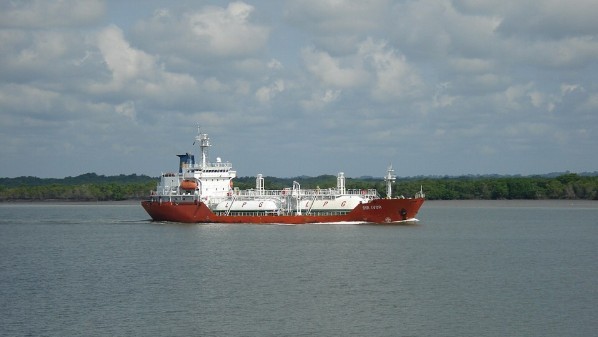
The latest to make that passage are the LPG carriers BW Elm and BW Tyr, now en-route to India with nearly 94,000 tonnes of cargo between them. Their movement would be routine in any other month. It isn’t now. Each mile through Hormuz is negotiated space—cleared, watched, and calculated.
They are not the first. Earlier in the week, Pine Gas and Jag Vasant crossed the Strait carrying LPG cargoes bound for Kandla and Mangalore, marking the first real breach in what had effectively become a maritime lockdown. Two more—Shivalik and Nanda Devi—followed, part of a staggered effort to restart supply without triggering escalation.
But for every ship that has moved, others remain in waiting. Vessels like Jag Vikram, Green Asha and Green Sanvi are still positioned near the western edge of the Strait, caught between clearance and risk, their timelines dictated not by schedules but by geopolitics.
What has emerged is not a reopening of Hormuz, but a controlled corridor. These ships are not sailing freely; they are being allowed through. Clearances are understood to be coordinated at multiple levels, with vessels hugging safer lanes closer to the Iranian coastline and naval monitoring intensifying once they exit the choke point.
The distinction matters. Because this is no longer about navigation—it is about permission.
India’s urgency is obvious. The country depends heavily on LPG imports, with a significant share routed through the Gulf. Any prolonged disruption does not just affect shipping schedules; it reaches directly into domestic energy supply chains. The movement of these carriers, therefore, is less about commerce and more about continuity.
What is equally telling is what isn’t moving. Crude tankers, container vessels, and non-essential cargo remain largely absent from the corridor. The early traffic is selective, almost surgical—prioritizing cargo that cannot wait.
This is how trade adapts under pressure. Not by resuming fully, but by finding narrow windows and pushing only what must move.
The bigger question is how long such a system can hold.
If tensions deepen, even these controlled transits could stall, leaving more vessels stranded and pushing freight and insurance costs into unmanageable territory. If, however, the current fragile understanding holds, Hormuz may not reopen—but it may function, in a limited way, under constant watch.
Either way, the old idea of the Strait as an open sea lane is gone for now.
What remains is something far more fragile: a passage that exists not by right, but by arrangement—and ships that cross it not as routine carriers, but as calculated risks.
Popular Posts

Explore Topics

Comments