Hapag-Lloyd slips into loss as Hormuz crisis and port disruptions pressure container shipping
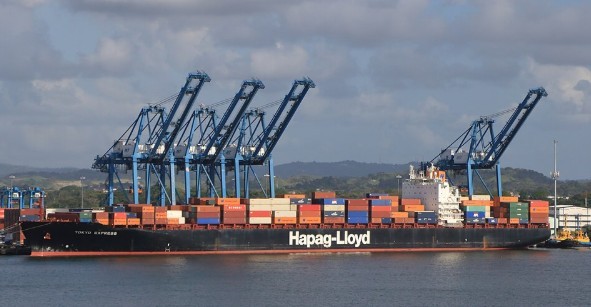
Hapag-Lloyd reported weak Q1 2026 results, with its liner shipping segment posting a negative EBIT margin of -3.6%, significantly below key rivals in the container market.
The company described the performance as “unsatisfactory” as rising geopolitical tensions, weather disruptions, and operational delays weighed heavily on earnings.
In comparison:
Maersk reported an Ocean segment EBIT margin of -2.3%
Ocean Network Express remained profitable at +1.8%
Market share pressure emerges
Hapag-Lloyd’s container volume declined -0.7% year-on-year, indicating possible market share loss during the quarter.
Industry comparisons show stronger growth among competitors:
Maersk: +9.3%
ONE: +4.1%
Orient Overseas Container Line: +1.7%
Global container market growth (CTS data): +4.4%
Freight rates also remained under pressure across the industry. Hapag-Lloyd’s average freight rate dropped -9.6%, largely in line with the broader market decline.
Gemini network shows mixed impact
Despite weak earnings, cost data suggests Hapag-Lloyd may have extracted some operational synergies from the Gemini cooperation network.
Transport expenses excluding bunker costs declined -1.7% per TEU, while comparable network costs at Maersk reportedly increased +3.2% per TEU.
This indicates the Gemini implementation may be improving parts of Hapag-Lloyd’s operating efficiency, although the benefits were not enough to offset wider disruptions.
Weather and Hormuz tensions hit operations
According to the company, business performance was heavily affected by operational disruptions across multiple seaports in Europe and North America.
Hapag-Lloyd stated that weather-related disruptions created vessel delays and disproportionate cost increases, directly impacting profitability.
At the same time, the ongoing Strait of Hormuz crisis added further uncertainty to global shipping operations.
Iran recently expanded claims over operational control around wider areas near the Strait of Hormuz, increasing concerns for carriers operating through one of the world’s most critical energy and container trade corridors.
The market is now facing:
Day 906 of the Red Sea crisis
Day 75 of the Hormuz crisis
Schedule reliability also weakened
Data from Sea-Intelligence showed Gemini alliance schedule reliability falling from nearly 90% last year to around 80% in early 2026 as weather disruptions intensified.
Interestingly, while Mediterranean Shipping Company saw similar declines, the Ocean Alliance and Premier Alliance experienced less severe deterioration.
This suggests that port selection, terminal congestion, and cargo flow management may also be contributing factors beyond weather alone.
Freight market could tighten further
Meanwhile, CMA CGM announced a major Peak Season Surcharge increase for cargo moving from Taiwan to Canada, raising charges to USD 2,000 per 40-foot container from May 15.
The move signals that carriers are preparing for tighter capacity conditions and rising operational risk across major trade lanes.
The latest Hapag-Lloyd results show how quickly geopolitical instability, weather disruption, and fragile port networks can pressure even the world’s largest container carriers.
For the global shipping industry, 2026 is increasingly becoming a year defined not by demand collapse — but by operational volatility.
Popular Posts


Explore Topics


Comments