
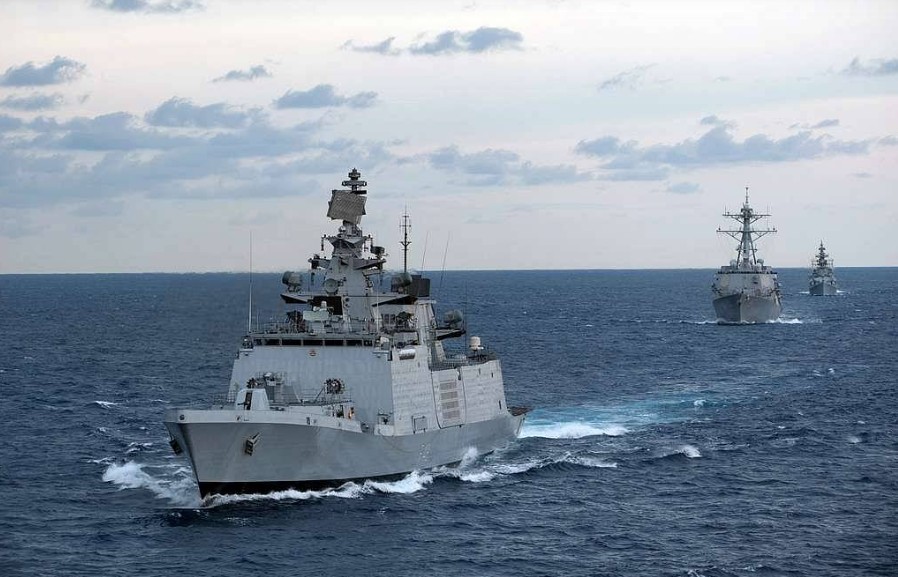
India has deployed naval assets near the Strait of Hormuz to safeguard merchant shipping as tensions in West Asia disrupt one of the world’s most critical energy corridors. The escort operations are conducted under Operation Sankalp, launched to protect Indian commercial vessels in the Persian Gulf region.
Recent Indian vessels involved in the passage include:
SCI Shivalik – LPG tanker carrying ~46,000 tonnes LPG
SCI Nanda Devi – LPG tanker carrying ~46,000 tonnes LPG
Jag Laadki – crude oil tanker carrying ~80,800 tonnes Murban crude
At least three Indian Navy warships were positioned in the Gulf of Oman to monitor traffic and escort merchant vessels through the high-risk zone. The naval presence also assisted the crude tanker Jag Laadki during its departure from the region. INS Sumitra, INS Teg, INS Kolkata.
Indian authorities estimate 36–38 Indian-flagged vessels with over 1,100 seafarers operating around the Persian Gulf during the crisis, many requesting naval protection while waiting for safe transit clearance.
The Strait of Hormuz handles roughly 20% of global oil shipments, making it the most important energy chokepoint in global shipping.
Shipping traffic has fallen sharply due to the security situation, with maritime intelligence reporting up to a 95% drop in vessel transits during the early days of the crisis compared with normal traffic levels.
Passage through the strait remains restricted but neutral commercial vessels transporting energy cargo are still being allowed under controlled monitoring, while navies from several regional countries are providing escort missions to prevent attacks on tankers.
For India, the escort operations are critical as the country imports more than 80% of its crude oil, with a significant share moving through the Strait of Hormuz toward western Indian ports such as Kandla and Mundra.
Popular Posts


Explore Topics



Comments