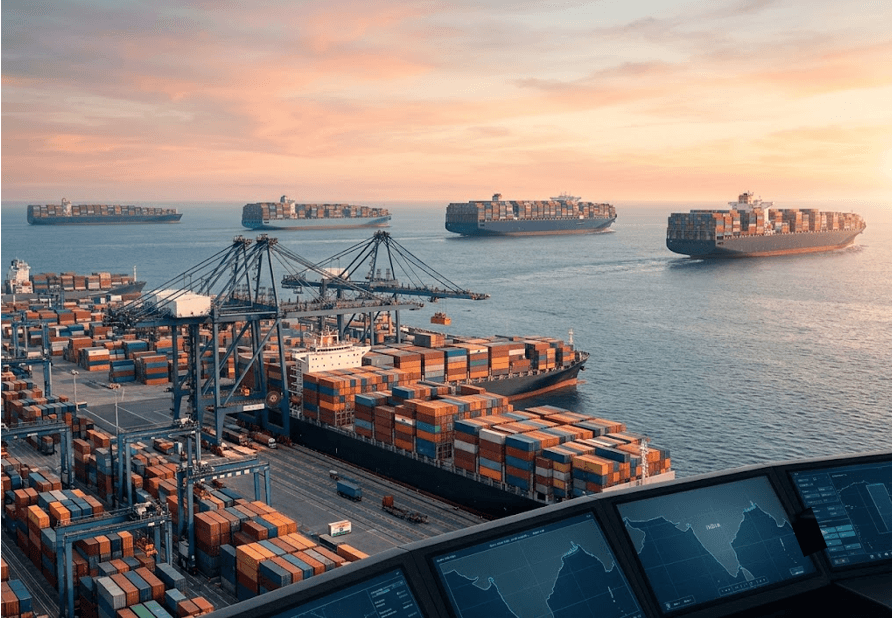

India is making one of its biggest long-term investments in inland water transport, positioning rivers as a strategic pillar of the country's logistics network to reduce freight costs, improve multimodal connectivity and strengthen supply chain resilience.
The Union Budget 2026-27 has announced the operationalisation of 20 additional National Waterways over the next five years, building on India's existing network of 111 National Waterways spanning more than 20,187 kilometres across 23 states and four Union Territories. Currently, 32 waterways are operational, with cargo movement reaching a record 145.84 million metric tonnes in FY 2024-25, reflecting the growing role of inland waterways in India's freight ecosystem.
The government's long-term objective is to increase the combined share of inland waterways and coastal shipping in India's freight movement from 6% to 12% by 2047, reducing dependence on road and rail while lowering logistics costs and carbon emissions. A key priority is the development of National Waterway-5 in Odisha, which will connect the mineral-rich regions of Talcher and Angul with the industrial hub of Kalinga Nagar and the ports of Paradip and Dhamra. The plan also includes Regional Centres of Excellence for maritime skills development and dedicated inland vessel repair facilities at Varanasi and Patna.
The inland waterways programme forms part of a broader maritime strategy led by the Government of India under Prime Minister Narendra Modi, with the Ministry of Ports, Shipping and Waterways driving investments in port modernisation, coastal shipping and river transport. Union Minister Sarbananda Sonowal has repeatedly described inland waterways as a critical component of India's ambition to become a global maritime hub while reducing logistics costs and supporting sustainable transport.
Recent policy measures reinforce that strategy. The Inland Waterways Development Council (IWDC 3.0) approved projects worth more than ₹1,500 crore to expand cargo terminals, green mobility, river tourism and multimodal infrastructure. The government is also extending initiatives such as the Jal Vahak cargo promotion scheme, promoting hybrid-electric vessels, strengthening Ro-Ro connectivity and investing heavily in the Northeast's inland water transport network.
India's inland waterway expansion is increasingly being viewed as an economic strategy rather than simply an infrastructure programme. Water transport is significantly more fuel-efficient for bulk cargo, requires less land acquisition than highways, reduces congestion on road and rail networks, and offers lower emissions per tonne of freight. These advantages are expected to benefit industries such as coal, cement, steel, food grains, fertilizers, containers and over-dimensional cargo.
For the logistics sector, the continued development of inland waterways is expected to improve multimodal connectivity between production centres, industrial corridors and seaports, supporting faster cargo evacuation, lower transportation costs and more resilient domestic supply chains. As India continues investing in ports, shipping and inland navigation simultaneously, waterways are expected to play an increasingly important role in achieving the country's long-term vision of becoming a globally competitive maritime and logistics hub.
Popular Posts


Explore Topics



Comments