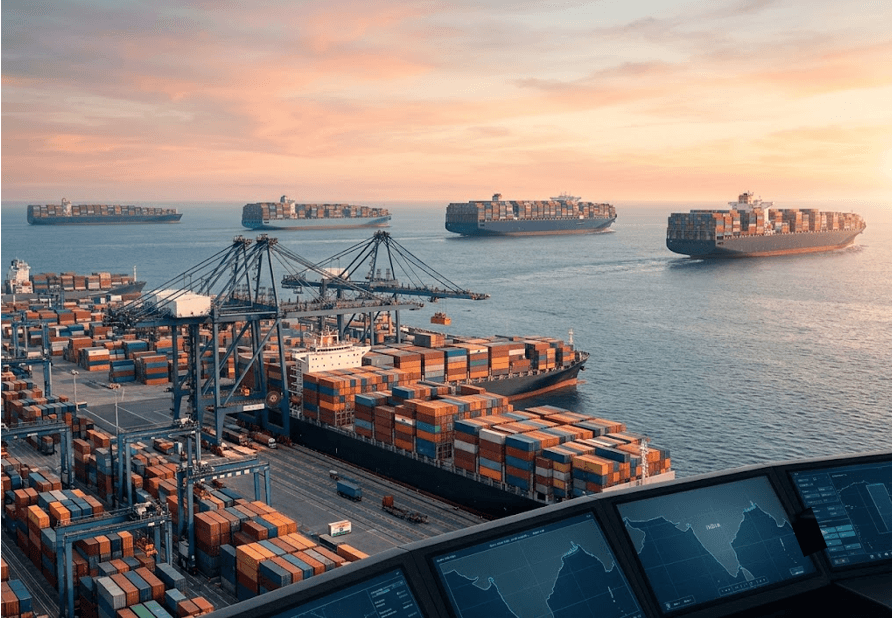
IMO approves world's first global carbon pricing for shipping: What it means for shipowners, freight rates and global trade

The International Maritime Organization (IMO) has approved the world's first global carbon pricing framework for international shipping, marking a significant shift in how greenhouse gas emissions from the maritime sector will be regulated. The agreement introduces a financial mechanism that will require ships exceeding prescribed greenhouse gas intensity limits to pay for their excess emissions, while encouraging the adoption of cleaner fuels and low-carbon technologies.
The framework, expected to take effect from 2028 following formal adoption, applies to large ocean-going vessels engaged in international trade. Instead of a conventional carbon tax, the IMO has established a compliance system under which ships with higher emissions will make financial contributions, while vessels operating on low or zero-emission fuels will benefit from lower compliance costs.
The decision represents the first globally coordinated carbon pricing mechanism covering an entire international industry. Unlike regional measures, such as the European Union's Emissions Trading System (EU ETS), the IMO framework establishes a common international approach aimed at reducing shipping emissions while maintaining a level playing field across global trade routes.
For shipowners, the regulation is expected to accelerate investment in dual-fuel vessels, alternative marine fuels, energy-efficiency technologies and fleet modernisation. Operators relying on conventional fuel oil may face higher operating costs unless emission intensity is reduced through technical upgrades or cleaner fuel adoption.
The new framework is also expected to influence freight markets. Compliance costs are likely to be incorporated into freight rates over time, particularly on long-haul container, tanker and bulk shipping routes. Cargo owners, exporters and importers may increasingly prioritise carriers with lower-carbon fleets as sustainability becomes a key factor in supply chain decisions.
For the logistics industry, the IMO decision extends beyond environmental regulation. It signals the beginning of a structural transformation in global shipping economics, where fuel choice, vessel efficiency and carbon performance will increasingly influence operating costs, chartering strategies and long-term competitiveness.
As implementation guidelines continue to evolve ahead of the 2028 launch, the IMO's carbon pricing framework is expected to become one of the most significant regulatory developments shaping international shipping over the coming decade.
Popular Posts


Explore Topics



Comments