
How middle east crisis could benefit Gangavaram port and Vizhinjam port - Crisis creating opportunity
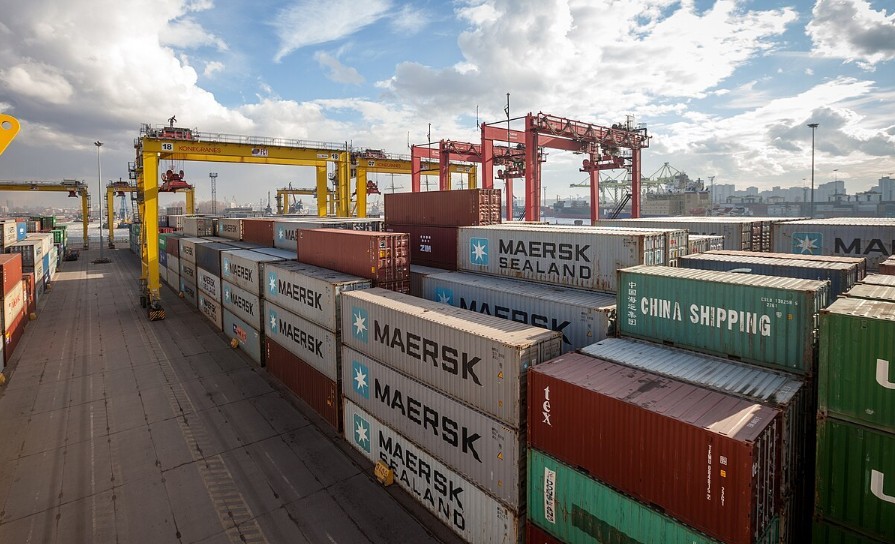
Recently, Gangavaram Port has achieved its highest-ever monthly container throughput in February 2026 of 12637 TEU. While the crisis is disrupting global trade, it could unexpectedly create new opportunities for emerging Indian ports such as Gangavaram Port and Vizhinjam International Seaport.
Visakhapatnam congestion could push traffic to Gangavaram
Due to the current crisis, containers that would normally move toward Gulf destinations are increasingly being discharged at alternative ports in India.
On the east coast, Visakhapatnam Port is one of the closest and safest gateways for such cargo. However, if diversion volumes increase, the port could soon face capacity pressure.
This is where Gangavaram Port, located just a few kilometres away from Visakhapatnam, could benefit.
Currently, only a limited number of container services — including those operated by Mediterranean Shipping Company — call at Gangavaram. But if Visakhapatnam becomes congested, shipping lines may be forced to shift additional services to Gangavaram.
Ports often grow not only because of long-term planning but also due to sudden shifts in cargo flows caused by disruptions elsewhere.
Vizhinjam could gain if Colombo becomes overloaded
A similar situation could emerge on India’s southwest coast.
India still depends heavily on Port of Colombo for container transshipment. However, if diversion cargo or regional disruptions push Colombo close to capacity, nearby ports could benefit.
The newly developed Vizhinjam International Seaport, located close to the major east-west shipping route, is designed specifically as a deep-water transshipment hub with natural depths of around 24 meters.
If congestion develops at Colombo, shipping lines could increasingly use Vizhinjam as an alternative hub for Indian cargo.
History shows disruptions can reshape port traffic
Shipping history shows that temporary disruptions at one port often trigger growth at another.
A notable example occurred in October 2013, when labour issues disrupted operations at the Jawaharlal Nehru Port terminal operated by Nhava Sheva International Container Terminal.
The disruption caused cargo delays and forced shipping lines to divert vessels, increasing traffic at alternative ports such as Mundra Port.
What started as a temporary shift eventually helped Mundra strengthen its position as a major container gateway.
A potential turning point for emerging Indian ports
The current Middle East crisis has already disrupted global shipping networks, with carriers suspending routes, rerouting vessels, and diverting cargo away from Gulf ports.
If these disruptions continue for weeks or months, secondary ports could suddenly become strategic alternatives.
For India, this could mean:
Gangavaram Port gaining new container services if Visakhapatnam becomes congested
Vizhinjam emerging as a stronger transshipment option if Colombo faces capacity pressure
In the shipping industry, crises often redraw logistics maps. The current turmoil in the Middle East may prove to be one such moment — potentially accelerating the rise of India’s next generation of ports.
Popular Posts

Explore Topics



Comments