The Middle East conflict has entered a decisive phase—not on the battlefield, but in the corridors of maritime law and naval positioning.
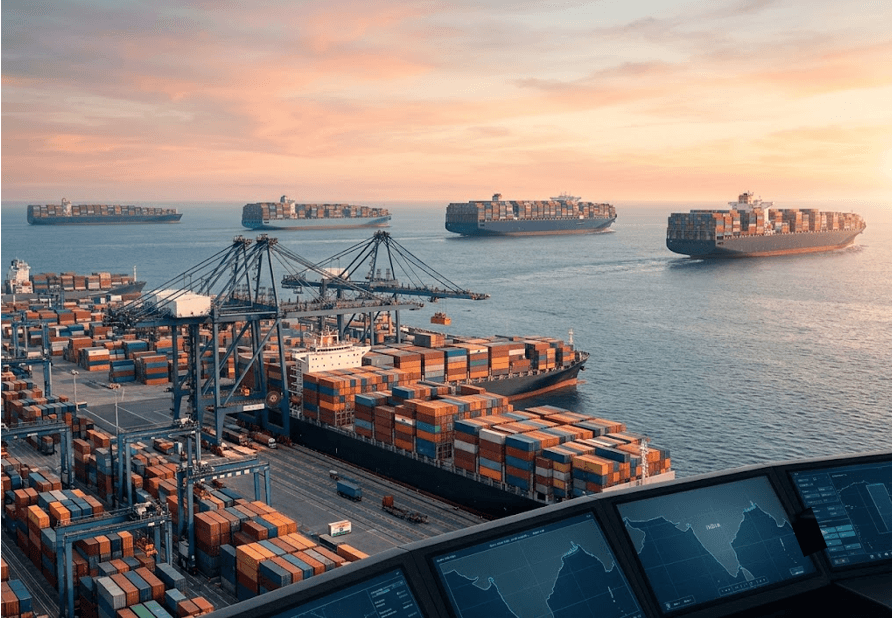
Bahrain’s push at the United Nations to authorize “all necessary means” to secure the Strait of Hormuz is more than diplomatic signalling—it is a formal attempt to legalize military intervention in one of the world’s most critical energy arteries.
The phrase itself is not casual. Under Chapter VII of the UN Charter, it effectively grants legitimacy to force—naval escorts, strikes on Iranian assets, even coalition-led intervention. Yet, as expected, resistance from France, and likely veto risks from Russia and China, expose the paralysis of multilateral enforcement.
This is the legal vacuum in which the current war is expanding.
A militarized sea: submarines, amphibious forces and choke point control
While diplomats debate language, militaries are positioning for outcomes.
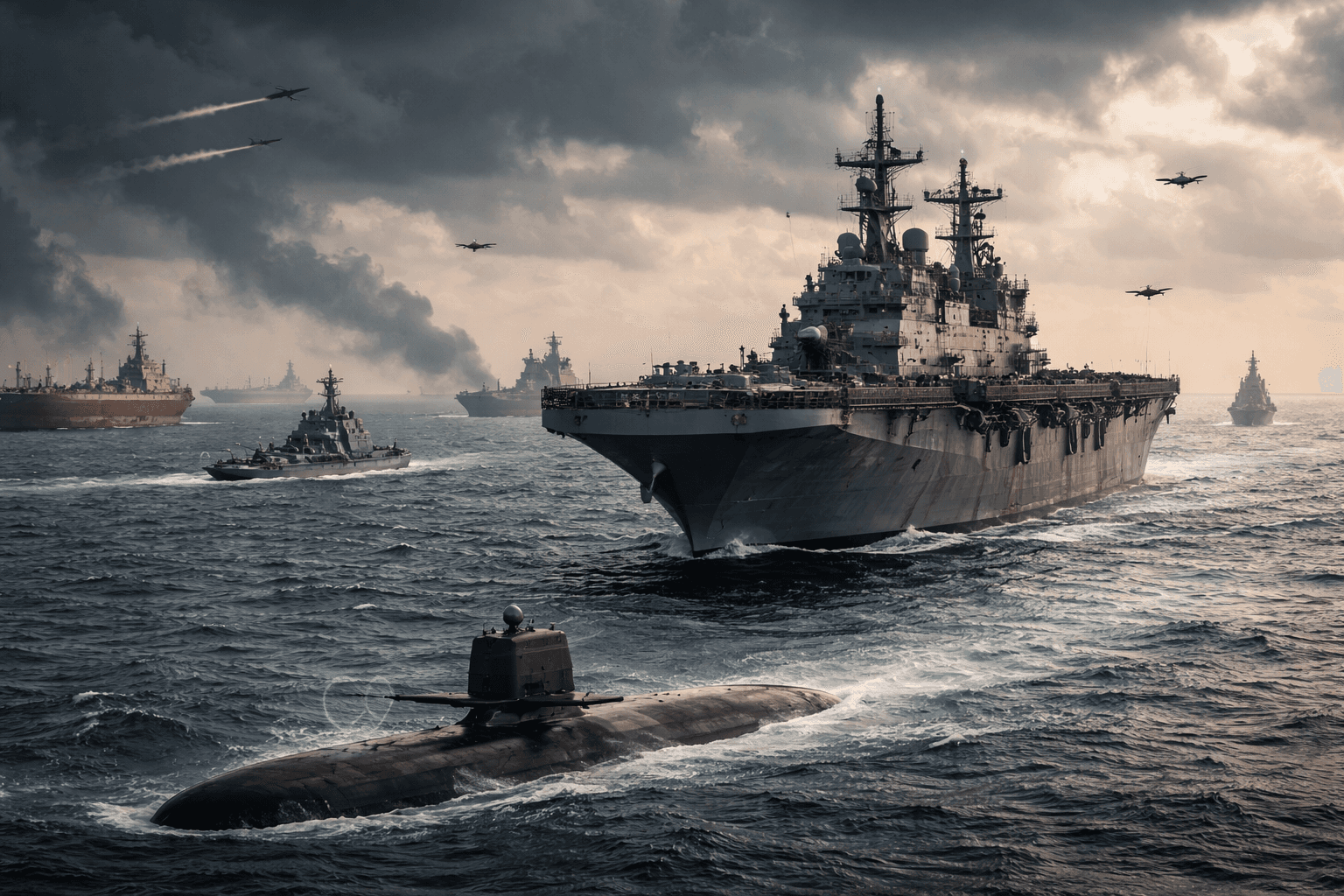
The arrival of the USS Tripoli with over 3,500 Marines signals readiness for amphibious or limited ground operations linked to reopening Hormuz.
Simultaneously, the UK has quietly deployed a nuclear-powered submarine—armed with Tomahawk cruise missiles—into the Arabian Sea.
This combination is not defensive. It reflects layered escalation capability:
Subsurface strike (UK submarine)
Air-sea dominance (US carriers and escorts)
Amphibious insertion (USS Tripoli)
The message is clear: if diplomacy fails, the Strait will be reopened by force.
Iran’s real leverage: not Hormuz, but the Houthis
The closure of Hormuz is only one dimension. Iran’s deeper strategic card lies elsewhere.
The entry of Houthi rebels into the conflict has transformed a regional war into a multi-chokepoint disruption strategy—targeting not just Hormuz, but also the Bab el-Mandeb and Red Sea shipping lanes.
This creates a dual-front maritime threat:
Hormuz - oil supply choke (20% global flow)
Red Sea - container and Europe-Asia trade disruption
In effect, even if Hormuz is reopened militarily, shipping risk persists elsewhere, making the Houthis Iran’s most effective asymmetric lever.
Legal fault lines: UNCLOS, freedom of navigation and war liability
From a legal standpoint, the crisis is already in violation territory.
The blockage of Hormuz challenges UNCLOS transit passage rights, which guarantee uninterrupted navigation through international straits.
Mining of sea lanes breaches Hague Convention VIII
Targeting merchant shipping risks classification as acts of maritime aggression
However, enforcement depends on UNSC authorization—currently stalled.
This creates a paradox:
The law exists, but enforcement depends on politics.
Economic shock already priced in
Even before formal war declaration:
Tanker traffic has collapsed by up to 70–100%
Over 150 vessels remain stranded outside the Strait
Oil prices have crossed $100–$120 with extreme volatility
Insurance markets—not navies—have effectively shut the Strait.
Two futures: escalation vs de-escalation
Scenario 1: War expands
If UNSC deadlock continues and coalition forces act unilaterally:
Direct naval confrontation in Hormuz becomes inevitable
Iranian retaliation expands via proxies (Houthis, Hezbollah)
Oil likely spikes toward $130–$150+
Global supply chains shift to crisis mode (Red Sea + Gulf disruption)
Legal precedent: normalization of coalition-led force without UN mandate
This would mark a shift from rules-based order to power-based maritime control.
Scenario 2: War contained / negotiated pause
If diplomatic pressure—possibly via intermediaries like Pakistan—holds:
Hormuz reopens under naval escort frameworks
UN may pass a diluted resolution (non-Chapter VII)
Oil stabilizes in the $90–$105 range
Houthis remain a persistent threat, keeping freight premiums elevated
A new doctrine emerges: permanent militarization of trade routes
In this scenario, the war doesn’t end—it becomes managed instability.
This is no longer just a Middle East conflict.
It is a test of:
International law vs unilateral force
Chokepoint control vs global trade continuity
State power vs proxy warfare
And in that equation, the Strait of Hormuz is not the only battlefield—
it is merely the most visible one.
Popular Posts

Explore Topics



Comments