
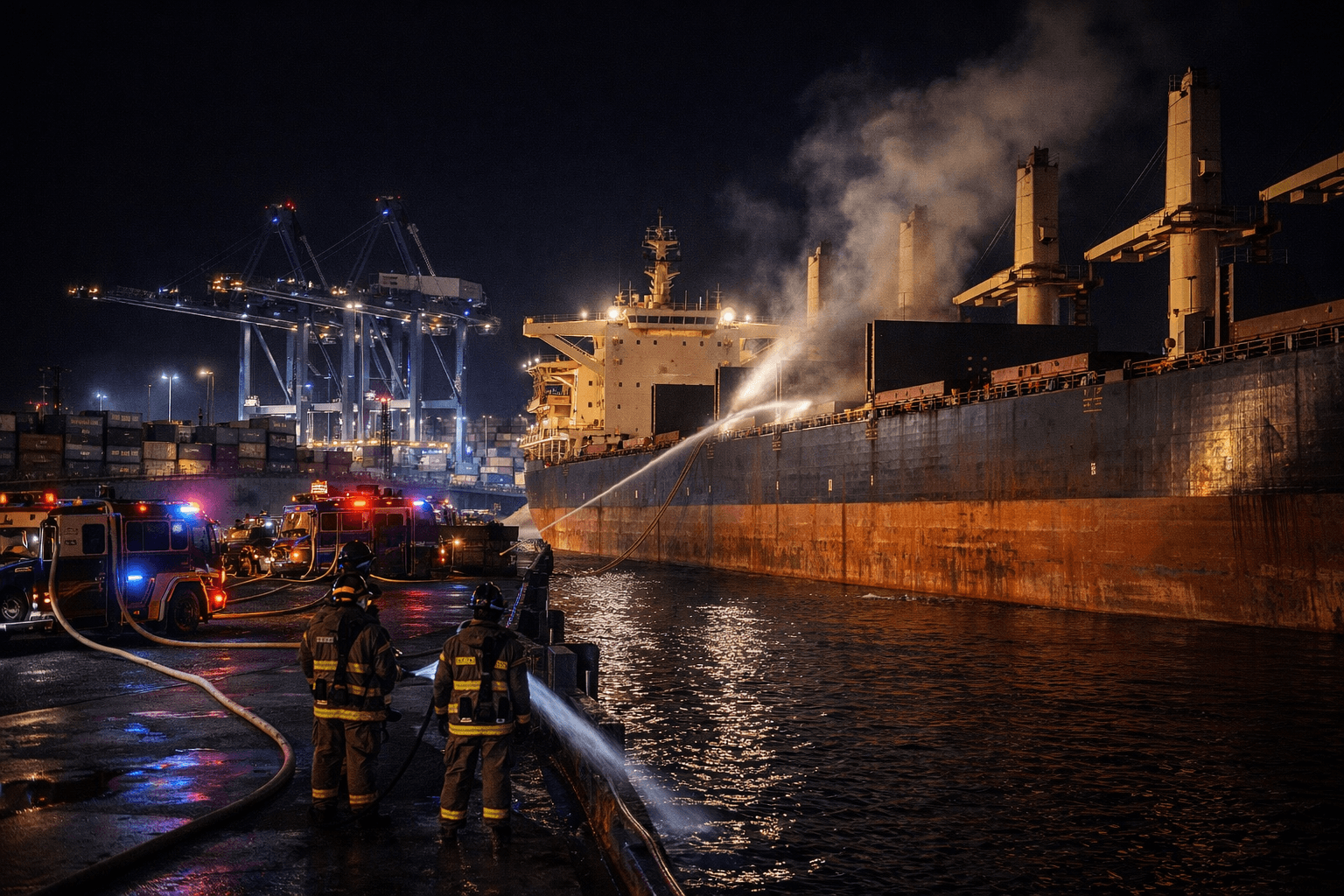
A cargo fire aboard a bulk carrier docked at the Port of Vancouver on the night of 18 February 2026 triggered a significant emergency response and highlighted ongoing marine fire risks in port operations. Fortunately, the blaze was brought under control with no reported injuries — but the incident raises important safety and logistical questions for the shipping industry.
Incidence -
Shortly after 9 p.m. local time, the Vancouver Fire Department responded to reports of smoke and flames coming from the cargo hold of a 656-foot bulk carrier that was in the process of discharging shredded metal when the fire broke out. Upon arrival, firefighters observed heavy smoke billowing from the affected hold while the crew had already activated onboard fire suppression systems and started internal firefighting efforts.
The fire was declared under control within approximately four hours, thanks to coordinated action between the ship’s crew and local firefighting authorities. All personnel onboard were reported safe and accounted for.
Why Scrap Metal Fires Are a Risk
Bulk carriers carrying scrap metal and shredded materials present unique fire hazards. Scrap metal loads often contain contaminants like oily residues, batteries, and other combustible materials that can ignite under certain conditions — especially if sparks, friction, or heat arise during handling or discharge operations.
Even seemingly inert cargo can conceal hidden fire risks when mixed with volatile substances. In many similar incidents globally, scrap fires have proven difficult to extinguish due to smoldering pockets within the pile.
Maritime Fire Response — Crew and Shore Cooperation
One reason this incident did not become a major disaster was the combined effort between the vessel’s own firefighting team and local authorities. Bulk carriers are equipped with fixed firefighting systems and trained crew members precisely for such emergencies. In this case:
Crew members activated onboard suppression equipment immediately.
Two hose lines were deployed in the affected hold.
External fire crews arrived with specialized gear for shipboard firefighting.
The outcome — fire controlled and extinguished without casualties — underscores the value of well-drilled emergency protocols and close coordination with port fire departments.
The Port of Vancouver bulk carrier fire was a serious event that could have had far graver consequences. Instead, it became an example of effective maritime emergency response, driven by trained crews and coordinated firefighting efforts.
For supply chain professionals and shipping operators alike, this incident reinforces the ongoing need for vigilant cargo risk assessment, rigorous onboard safety practices, and robust collaboration between ship and shore teams.
Popular Posts


Explore Topics



Comments