
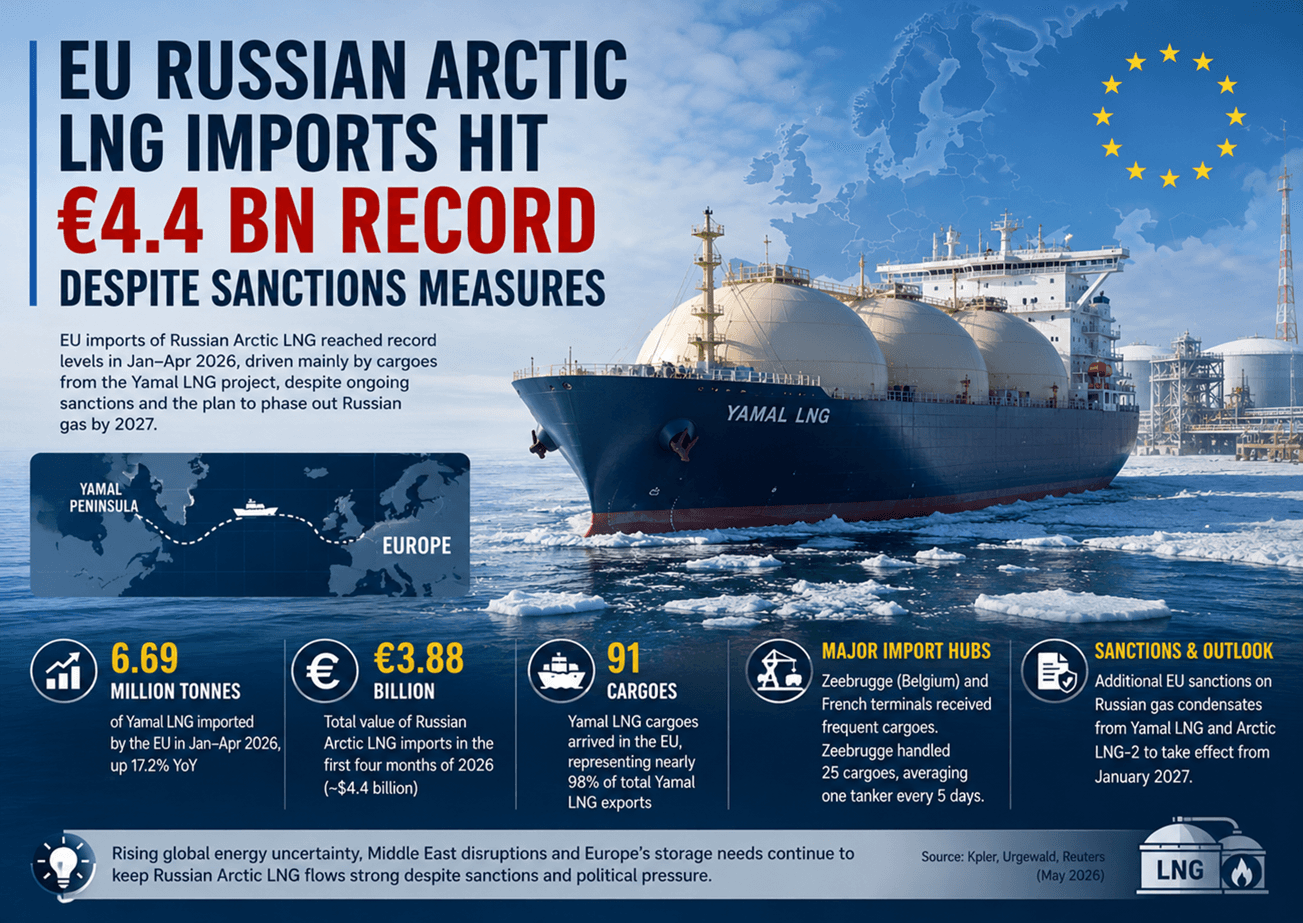
European Union imports of Russian Arctic LNG reached record levels during the first four months of 2026 despite ongoing sanctions measures and the bloc’s long-term plan to phase out Russian gas imports by 2027. New shipping data shows Europe remains heavily dependent on LNG supplies from Russia’s Yamal LNG project amid tightening global gas markets and disruptions in Middle East energy routes.
According to Kpler shipment analysis published by environmental group Urgewald, the EU imported around 6.69 million tonnes of LNG from the Yamal project between January and April 2026, marking a 17.2% increase compared to the same period last year. The cargo value is estimated at nearly €3.88 billion ($4.4 billion).
Data further showed that Europe received 91 Yamal LNG cargoes during the period, representing nearly 98% of all Yamal LNG exports reaching final destinations globally. For the third consecutive month, every Yamal LNG cargo reportedly ended up at European ports.
Major European import hubs included Belgium’s Port of Zeebrugge and French LNG terminals, which continued handling frequent Arctic LNG deliveries despite increasing political pressure to reduce Russian energy dependence. Zeebrugge alone reportedly received 25 Yamal cargoes in the January-April period, averaging one tanker call every five days.
Industry analysts say the sharp rise in imports has been driven partly by the ongoing Iran conflict and disruptions around the Strait of Hormuz, which significantly tightened global LNG supply availability and pushed European buyers toward Russian Arctic cargoes to stabilize inventories ahead of winter restocking requirements.
Although the EU has already approved phased restrictions on Russian LNG imports and spot-market contracts, long-term contracts continue allowing substantial volumes to enter Europe. Additional sanctions targeting Russian gas condensates linked to Yamal LNG and Arctic LNG-2 are expected to take effect from January 2027.
Meanwhile, overall Russian LNG exports rose 8.6% year-on-year during January-April 2026 to around 11.4 million tonnes, supported by growing production from the Arctic LNG-2 project despite Western sanctions and logistical challenges. Russian LNG exports to Europe alone increased more than 20% during the same period.
The latest trade figures highlight the complex balance between geopolitical sanctions, European energy security concerns and continued global dependence on Arctic LNG supplies during a period of severe maritime and energy market volatility.
Popular Posts


Explore Topics



Comments