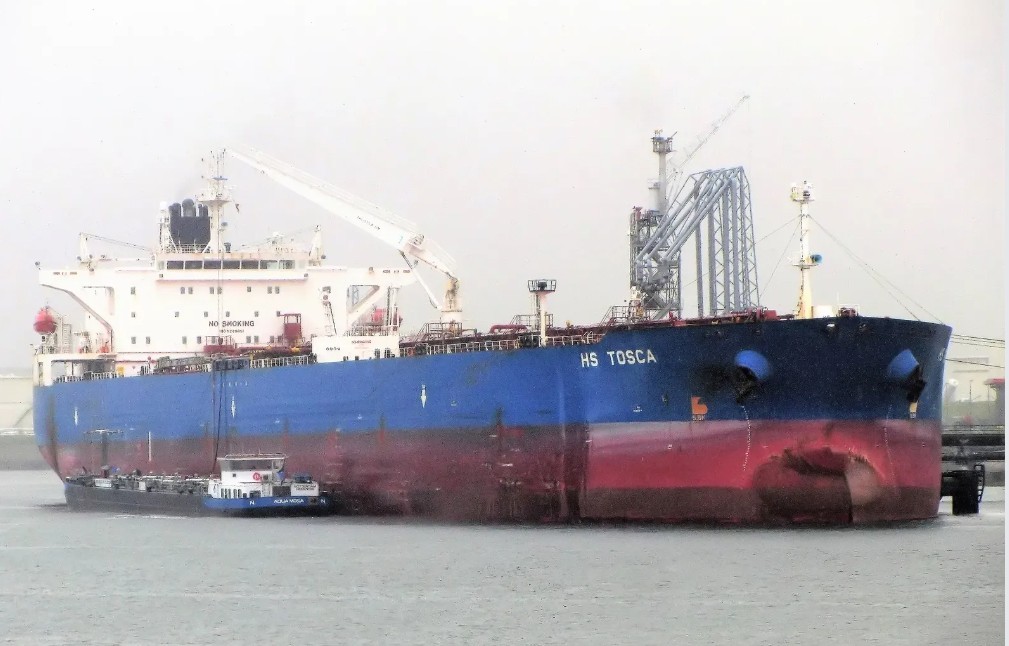
Recently Germany for the first time stopped an oil tanker , now France intercepted a sanctioned Russian oil tanker in the Mediterranean Sea on January 22, 2026.
On January 22, 2026, the French Navy intercepted the oil tanker Grinch, a vessel that had sailed from the Russian Arctic port of Murmansk, on suspicion of being part of Russia’s “shadow fleet,” a network of tankers used to evade international sanctions imposed after the 2022 Ukraine invasion.
The ship was suspected of sailing under a false flag (registered to the Comoros) to disguise its true ownership and status.
The operation took place in the Western Mediterranean between Spain and Morocco, in international waters, and was conducted with the support of allied navies including the United Kingdom.
French President Emmanuel Macron said the interception was carried out under the United Nations Convention on the Law of the Sea and stressed France’s determination to enforce sanctions and uphold international law.
The tanker is now being diverted to Marseille-Fos port for further investigation by French prosecutors, who will examine its documentation and suspected sanctions evasion.
The Grinch’s cargo is believed to be worth tens of millions of dollars, and the action reflects growing concern in Europe that Russia’s oil revenue continues to fund its war effort.
Although not identical to this high-seas interception, Germany also took action against a Russian-linked oil tanker in 2025:
In March 2025, German authorities confiscated the tanker Eventin, a vessel believed to be part of the shadow fleet, along with approximately 100,000 tons of crude oil valued at roughly €40 million (~$43 million).
This event occurred after the ship drifted into German waters off the island of Rügen and was detained by customs amid concerns over sanctions evasion.
However, a German court later ruled that the confiscation could not be upheld due to legal uncertainties, including whether the vessel had authorization to enter EU waters during an emergency.
These actions by European powers mark a shift from purely financial sanctions and trade restrictions toward direct maritime enforcement against vessels suspected of sanction evasion:
They signal stronger coordination among Western allies to clamp down on Russia’s so-called shadow fleet — an informal network of tankers that obscures ownership, changes flags frequently, and operates outside traditional insurance and regulatory frameworks.
Such operations aim to disrupt revenue streams that support Russia’s military and economic resilience, even as Moscow continues to sell oil to markets in India, China, and elsewhere at discounted rates despite sanctions.
The French interception of the Grinch, following Germany’s prior action against a shadow fleet tanker, highlights a more assertive enforcement phase in the broader sanctions regime, one that could reshape how economic penalties are implemented on the high seas amid geopolitical tensions.
Popular Posts

Explore Topics

Comments