
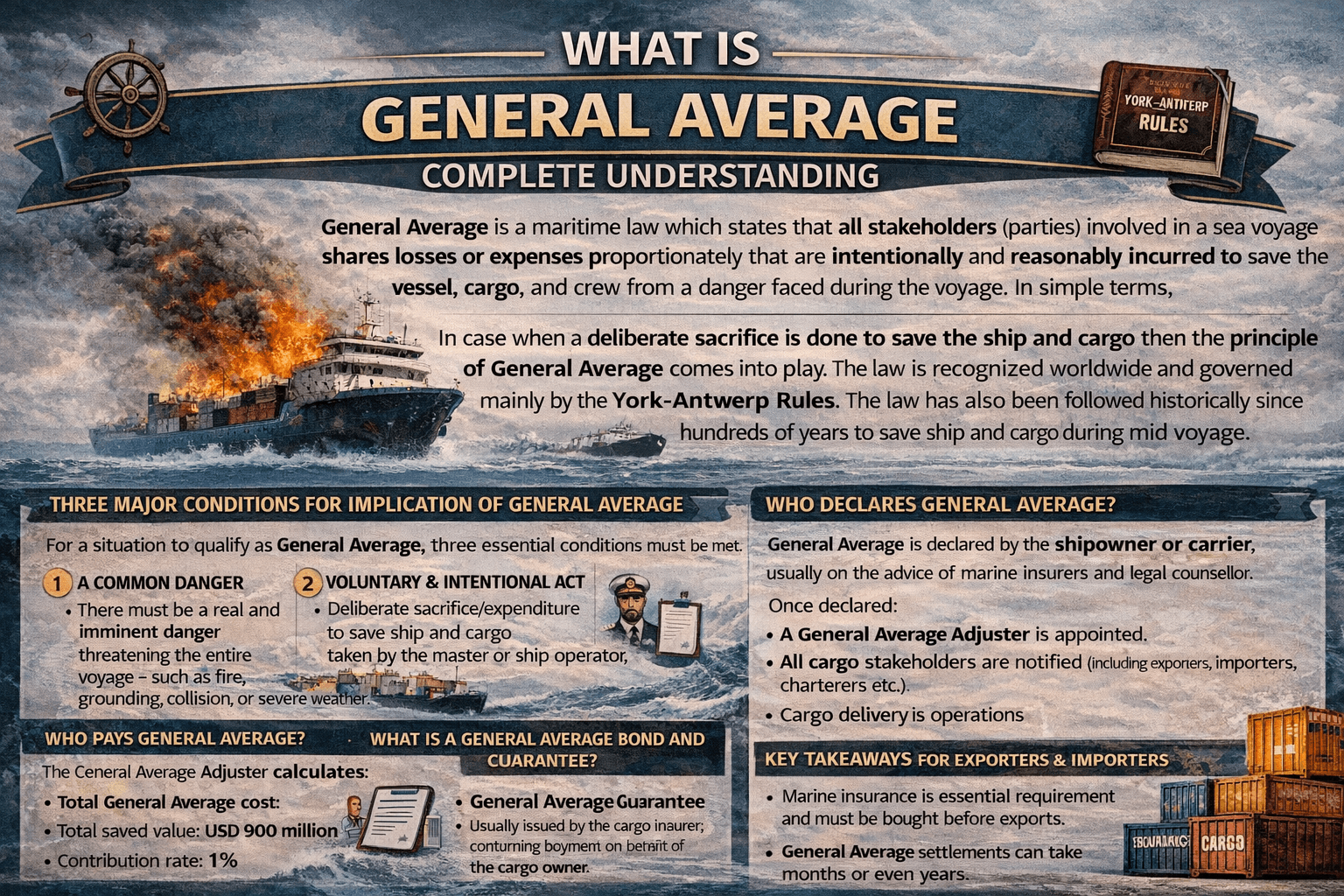
General Average is a maritime law which states that all stakeholders (parties) involved in a sea voyage shares losses or expenses proportionately that are intentionally and reasonably incurred to save the vessel, cargo, and crew from a danger faced during the voyage.
In simple terms in case when a deliberate sacrifice is done to save the ship and cargo then the principle of General Average comes into play.
This law is recognized worldwide and governed mainly by the York-Antwerp Rules. The law has also been followed historically since hundreds of years to save ship and cargo during mid voyage.
Despite being one of the oldest maritime laws, General Average continues to surprise cargo owners when they receive an unexpected demand for payment—often long after the vessel has safely arrived, thus it is very important to know and understand this law for all exporters and importers in maritime industry.
Three major Conditions for implication of General Average
For a situation to qualify as General Average, three essential conditions must be met:
A Common danger - There must be a real and imminent danger threatening the entire voyage—such as fire, grounding, collision, or severe weather.
Voluntary and Intentional Act - The sacrifice or expense must be a deliberate decision taken by the master or ship operator, not an accident.
Successful Result of the action - The action must contribute to the saving of the vessel and remaining cargo. If the ship is lost despite the actions, then General Average usually does not apply.
Common Examples of General Average
Cargo is deliberately thrown overboard to lighten the vessel during a storm or grounding.
Costs incurred in extinguishing a fire onboard, including damage caused by water used to fight the fire.
Payments made to professional salvors to rescue a vessel from imminent danger.
Costs related to entering an unscheduled port for emergency repairs—such as port charges, fuel, and crew expenses.
Temporary repairs needed to ensure the ship can safely continue the voyage.
Who Declares General Average?
General Average is declared by the shipowner or carrier, usually on the advice of marine insurers and legal counsellor.
Once declared:
A General Average Adjuster is appointed.
All cargo stakeholders are notified.(including exporters, importers, charterers etc)
Cargo delivery is done after the monetary amount is provided.
Who Pays General Average?
Shipowner - Contributes based on the value of the vessel saved.
Cargo Owners (exporters/importers) Contribution is based on the CIF value of their cargo.
Charterers (If Applicable) – Contribution is based as per the contract thus contribution can be and cannot be applicable.
Note - Each party pays in proportion to the total value of what was lost.(Example is shared below for better understanding)
How Is the Contribution Calculated?
The General Average Adjuster calculates:
Total expenses and sacrifices
Total value of the ship and cargo saved
Each party’s proportional contribution
For example:
Total General Average cost: USD 9 million
Total lost value: USD 900 million
Contribution rate: 1%
A cargo worth USD 100,000 would pay USD 1,000, even if it arrived undamaged.
What Is a General Average Bond and Guarantee?
Before cargo is released, cargo owners must provide:
General Average Bond - A legal undertaking to pay the assessed General Average contribution.
General Average Guarantee- Usually issued by the cargo insurer, confirming payment on behalf of the cargo owner.
The cargo is released only after, at least above two documents are provided.
Does Cargo Insurance Cover General Average?
Yes—if the cargo is insured under marine cargo insurance.
If cargo is uninsured, the cargo owner(exporter or importer) must pay General Average out of his/her pocket, which can be financially painful as the amount of loss can be much higher than the amount of cargo value.
Why General Average Still Matters Today
Although its centuries old law, General Average remains highly relevant due to:
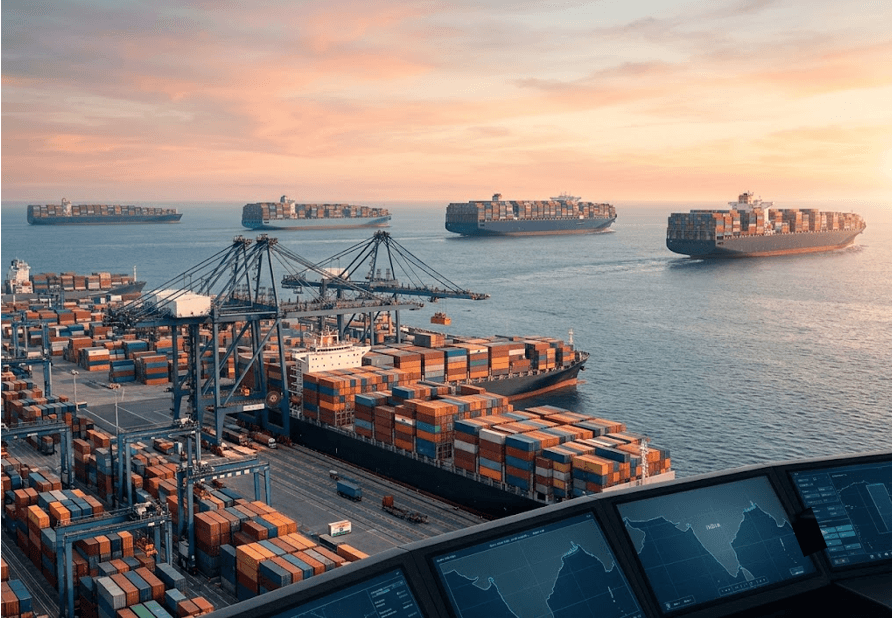
Large container vessels carrying thousands of cargo stakeholders.
Ship owners cannot take all the risk and bear all the losses during a voyage.
Complex salvage operations.
Key Takeaways for exporters & importers.
Marine insurance is essential requirement and must be bought before exports.
General Average settlements can take months or even years.
Popular Posts

Explore Topics



Comments