
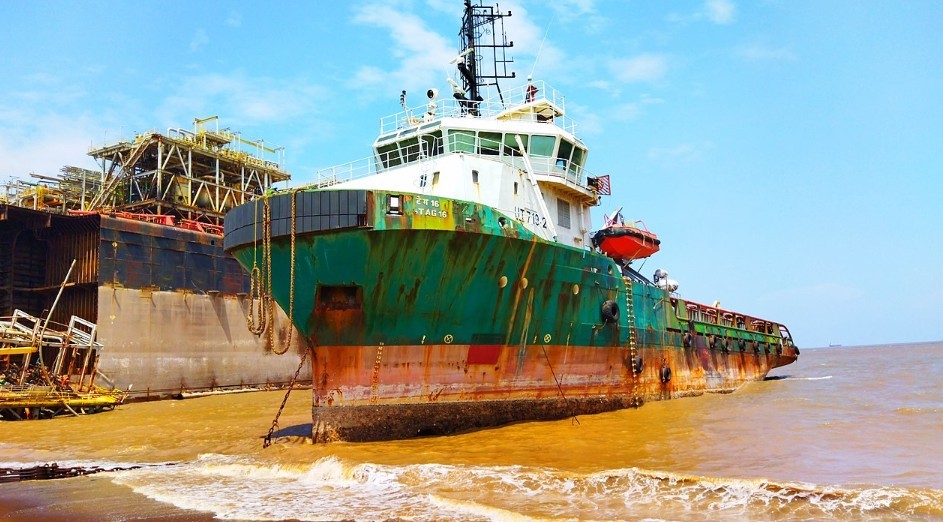
In recent weeks, a notable trend in the maritime world has taken shape along the beaches of Gujarat’s Alang shipbreaking yards: a surge of ageing, sanction-tainted oil tankers arriving for demolition. India is emerging role as the epicenter of ship recycling.
What Are Dark Tankers?
Dark tankers are typically older crude carriers that operate outside mainstream shipping registries and oversight. Many have:
Opaque ownership structures
Frequently changed names or flags
Been involved in transporting sanctioned oil cargoes
Some of these vessels were central players in sanctions-evasion trading networks, ferrying crude from countries like Russia, Iran, and Venezuela during times when traditional shipping lanes and payments channels were inaccessible. Their “dark” status stems from the lack of regular voyage reporting and deliberate efforts to avoid scrutiny — practices that once allowed them to thrive on the fringes of global seaborne trade.
The turning tide: Dark tankers are heading for scrap
Earlier this month, three U.S.-sanctioned dark tankers — including the 1993-built Woodchip — reached Alang, India, destined for demolition. This represents an unusually strong start to the year for the shipbreaking trade in India, which has recently become more receptive to handling such vessels amid a broader slump in new scrap tonnage.
Last year alone, Indian yards welcomed a record 15 sanction-linked ships, illustrating how dismantling these vessels is becoming an important avenue for owners seeking returns as operating opportunities dry up.
Why India? The Economics and the Reality
India’s shipbreaking industry — particularly at the famed Alang Ship Breaking Yard, one of the world’s largest — has long been a magnet for retired cargo ships and tankers due to:
Lower labour / dismantling costs
High global demand for recycled steel
A well-developed local supply chain around ship recycling
With more dark tankers approaching the end of their operational lives, India is benefiting from a surge in scrap sales, even as global markets shift away from older vessels.
For many shipmasters and cash buyers, selling a sanctioned vessel for recycling is now the most viable exit strategy. These ships, often decades old and increasingly expensive to operate or insure, fetch discounted prices at scrapyards, turning an economic corner for all parties involved.
Balancing opportunity with risk
However, this rising acceptance of dark tankers in Indian scrapyards isn’t without controversy. Critics argue that:
Environmental and safety standards can be compromised when older, poorly documented ships are broken on beaches rather than in regulated facilities.
Regulatory compliance under global treaties like the Hong Kong Ship Recycling Convention is harder to enforce for vessels with incomplete technical histories or ambiguous ownership.
Popular Posts

Explore Topics




Comments