
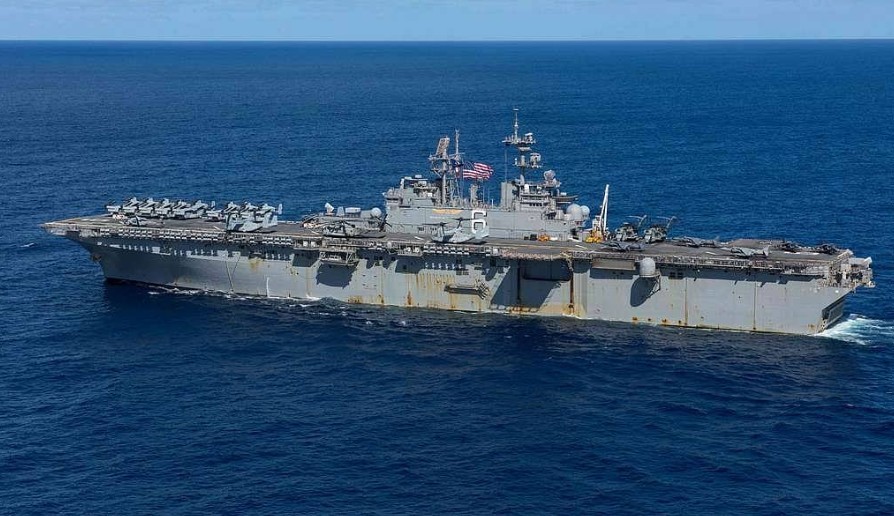
The arrival of the USS Tripoli in the Middle East marks a decisive escalation in the ongoing Iran-linked conflict, signalling potential ground-force readiness alongside naval dominance. Reports indicate deployment of nearly 3,500 US Marines, reinforcing fears that the conflict may transition from maritime disruption to full-spectrum warfare.
The military build-up coincides with a widening conflict theatre—Houthis entering the war, Red Sea attacks, and near-total disruption of the Strait of Hormuz, which handles ~20% of global oil flows.
Oil shock: from $70 to $110+ in weeks
Crude markets have reacted violently. Brent crude surged from ~$72 in late February to above $110 in March, with peaks near $126 during peak disruption phases.
Weekly volatility: $97 → $113 → sub-$100 → back above $108
March spike: ~55% increase month-on-month
Current range: ~$100–$112 with extreme intraday swings
The market is no longer reacting to demand fundamentals but to shipping risk, choke points, and military signals.
Beyond oil: cascading commodity impact
The war is triggering second-order shocks across supply chains:
Fertilizers, LNG, helium and petrochemicals disrupted
Aluminum, plastics and textile inputs seeing price distortions
Global food inflation risks rising due to fertilizer shortages
Energy infrastructure strikes—from Saudi refineries to Iranian gas fields—have amplified supply fragility.
Strategic dimension: energy security reset
Oil executives now warn disruptions could last months even after ceasefire, with 11–12 million barrels/day at risk.
This is accelerating:
Strategic reserve releases (300–400M barrels planned)
Diversion to alternative routes (Red Sea, pipelines)
Renewables being reframed as security assets, not just climate tools
Short-term future -
Oil likely to remain above $100 with geopolitical premium
High volatility driven by military announcements
Medium-term future -
Risk of $150+ spike if Hormuz remains shut
Inflationary spillover into food, logistics, and manufacturing.
The USS Tripoli deployment is not an isolated military move—it is part of a broader shift where war, energy, and logistics are now fully interconnected.
The conflict has moved beyond regional geopolitics into a global trade shock, redefining supply chains, pricing mechanisms, and energy strategy for the foreseeable future.
Popular Posts


Explore Topics



Comments