
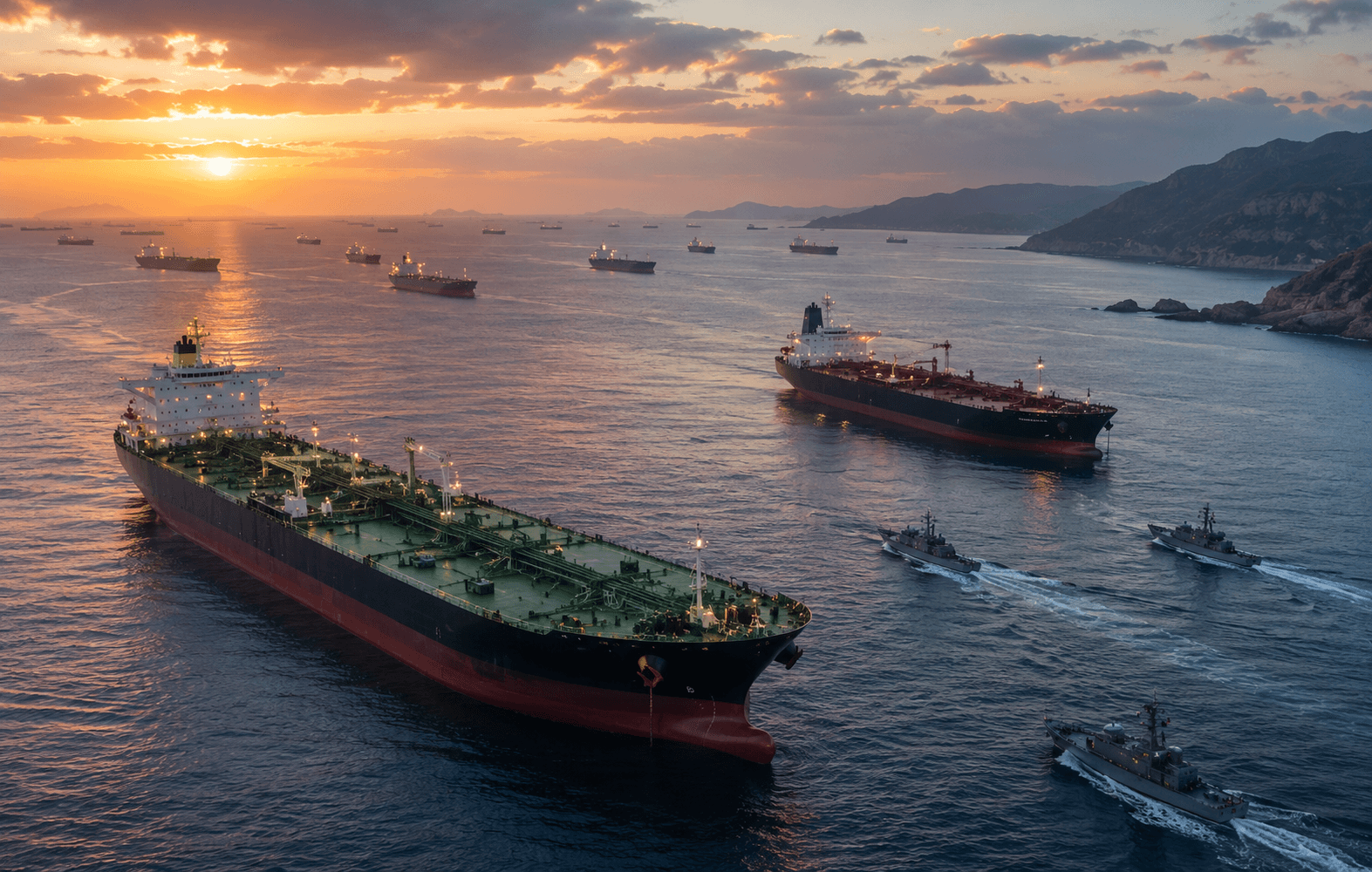
For decades, the Strait of Hormuz has been one of the world's most sensitive maritime chokepoints. Nearly every major crisis involving Iran, the United States, Israel, or Gulf nations eventually raises the same question: Will Hormuz be closed?
The latest escalation involving Iran, Israel, and the United States has once again brought global shipping into the spotlight. While diplomatic efforts are underway and discussions around reopening the strait continue, the broader conflict remains far from resolved. A lasting settlement appears difficult as tensions between Israel, Iran, and Hezbollah in Lebanon continue to simmer despite periodic ceasefire initiatives. Recent negotiations have focused heavily on restoring navigation through Hormuz, yet key regional disputes remain unresolved.
For the maritime industry, the most important fact is often overlooked: the Strait of Hormuz has historically been threatened many times, but it has rarely been completely and permanently closed. During the Iran-Iraq "Tanker War" of the 1980s, vessels were attacked, insurance costs surged, and naval escorts became common, yet international trade continued to move. Even today, maritime experts note that Hormuz is often disrupted economically rather than physically closed, as risk, insurance costs, and security concerns discourage vessel movements before any formal blockade occurs.
The current crisis demonstrates exactly that phenomenon. Tanker movements have been disrupted, war-risk premiums have surged, and shipowners have reassessed routing decisions. Before the recent conflict, more than 20% of global oil trade passed through Hormuz. Any disruption immediately affects energy markets, bunker costs, vessel operating expenses, and freight rates worldwide.
The impact extends far beyond crude oil. Container shipping, dry bulk trades, petrochemicals, fertilizers, LNG cargoes, and refinery supply chains all depend on stable Gulf shipping routes. When uncertainty rises, freight markets respond instantly. Charter rates increase, insurance premiums rise, vessel availability tightens, and shippers begin building inventory buffers. History has repeatedly shown that supply chains react to perceived risk long before an actual closure occurs.
India has significant exposure to developments in Hormuz. A substantial portion of the country's crude oil imports, LNG supplies, petrochemical feedstocks, and Gulf trade flows depend on uninterrupted navigation through the region. Any prolonged disruption increases import costs, raises freight bills, and ultimately affects manufacturers, exporters, and consumers. For Indian exporters, higher ocean freight rates can erode competitiveness in global markets at a time when supply chains are already under pressure.
There is also a broader strategic lesson. Maritime trade depends on predictability. Whether the conflict involves Israel, Iran, Lebanon, or external powers, uncertainty itself becomes a cost. Every missile launch, naval warning, or political escalation is eventually reflected in freight invoices, insurance premiums, and shipping schedules.
The latest diplomatic efforts offer hope that commercial traffic will gradually normalize. However, shipping executives know that reopening a waterway is easier than restoring confidence. Hundreds of vessels have remained cautious despite announcements of agreements, and a return to normal operating patterns may take weeks rather than days.
The lesson for logistics professionals is clear. The Strait of Hormuz is not merely a geopolitical flashpoint; it is a critical artery of global commerce. Every crisis reminds the industry that supply chains are only as resilient as the maritime routes that support them. As long as tensions in the Middle East persist, Hormuz will remain one of the most closely watched waterways in the world—and one of the most important indicators for future freight market volatility.
Popular Posts

Explore Topics



Comments