For weeks, the world’s attention was fixed on the Strait of Hormuz—the narrow passage through which nearly a fifth of global oil moves. That focus now looks incomplete.
With Yemen’s Houthi forces entering the conflict, the war has found its second choke point: the Bab el-Mandeb. This is not a symbolic escalation. It is structural.
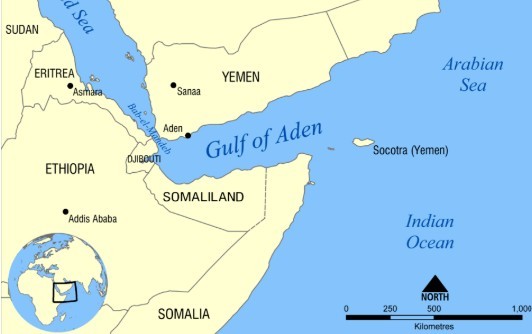
The Bab el-Mandeb strait, connecting the Red Sea to the Gulf of Aden, handles roughly 6 to 7 million barrels of oil per day—close to 10% of global seaborne crude and refined product flows. More importantly, it is a critical artery for container trade linking Asia to Europe via the Suez Canal. Nearly 12% of global trade and a significant share of container traffic pass through this narrow corridor each year.
Until now, the disruption of Hormuz threatened supply. The entry of the Houthis threatens movement itself.
Missile and drone launches attributed to Houthi forces toward Israeli-linked targets have already forced shipping companies to reassess Red Sea routes. The implications are immediate. Unlike Hormuz, which is largely about oil exports from the Gulf, Bab el-Mandeb is about continuity of global trade—energy, containers, and bulk cargo moving in both directions.
This is where Iran’s strategy becomes clearer. Hormuz is leverage. The Houthis are reach.
By activating a proxy force positioned along the Red Sea, Iran—or those aligned with it—has effectively extended the battlefield across two maritime choke points that rarely face simultaneous disruption. Even if naval forces secure one, the other remains exposed.
For Israel, the impact is both direct and indirect. Directly, Houthi missile activity opens a southern front, stretching defensive systems already engaged elsewhere. Indirectly, disruptions in the Red Sea affect Israeli ports like Eilat, which rely on access through Bab el-Mandeb. Any sustained instability here effectively isolates part of Israel’s maritime trade.
For the United States, the challenge is strategic. The US Navy has long maintained presence in both the Gulf and the Red Sea, but simultaneous pressure across these zones forces a redistribution of assets. Protecting Hormuz, escorting vessels, countering drones, and now securing Red Sea lanes stretches operational bandwidth. More critically, it raises the cost of maintaining what has long been assumed: open sea lanes.
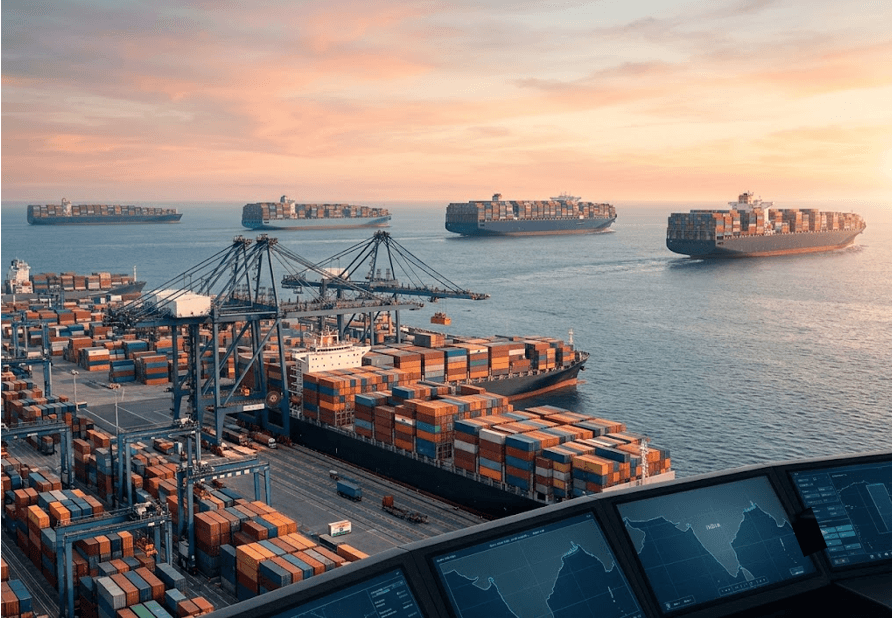
The shipping industry is reacting faster than governments. Early signals are already visible—route diversions, rising war-risk premiums, and growing reluctance among operators to transit high-risk zones without naval assurance. If Bab el-Mandeb becomes consistently contested, vessels may increasingly reroute around the Cape of Good Hope, adding 10–15 days to voyages and significantly increasing fuel and freight costs.
This is where the real economic shock begins—not in oil prices alone, but in time.
Because global trade is built on predictability. When two of the world’s most critical choke points—Hormuz and Bab el-Mandeb—are both under threat, predictability disappears.
What emerges instead is a fragmented maritime map, where movement depends not just on geography, but on risk tolerance, military presence, and political alignment.
There are now two possible paths forward. If the conflict escalates further, Bab el-Mandeb could see sustained disruption, forcing a structural rerouting of global trade and pushing energy and freight markets into prolonged volatility. If, however, pressure leads to containment, the strait may remain open—but under constant threat, with permanently elevated costs and military oversight.
Either way, the shift has already happened.
This is no longer a war defined by borders. It is a war defined by corridors.
And with the Houthis now in play, those corridors have doubled.
Popular Posts


Explore Topics


Comments