By the LogisticsWall Editorial Team
The global shipping industry is facing an unprecedented transparency challenge. What was once a relatively small network of vessels transporting sanctioned cargo has evolved into a vast "shadow fleet" that now plays a significant role in global oil transportation.
According to multiple industry estimates, more than 1,300 vessels are currently linked to shadow fleet operations, accounting for roughly 20% of the world's tanker capacity. The majority are involved in transporting Russian, Iranian, and Venezuelan crude outside traditional Western shipping, insurance, and financial systems.
What exactly is the shadow fleet?
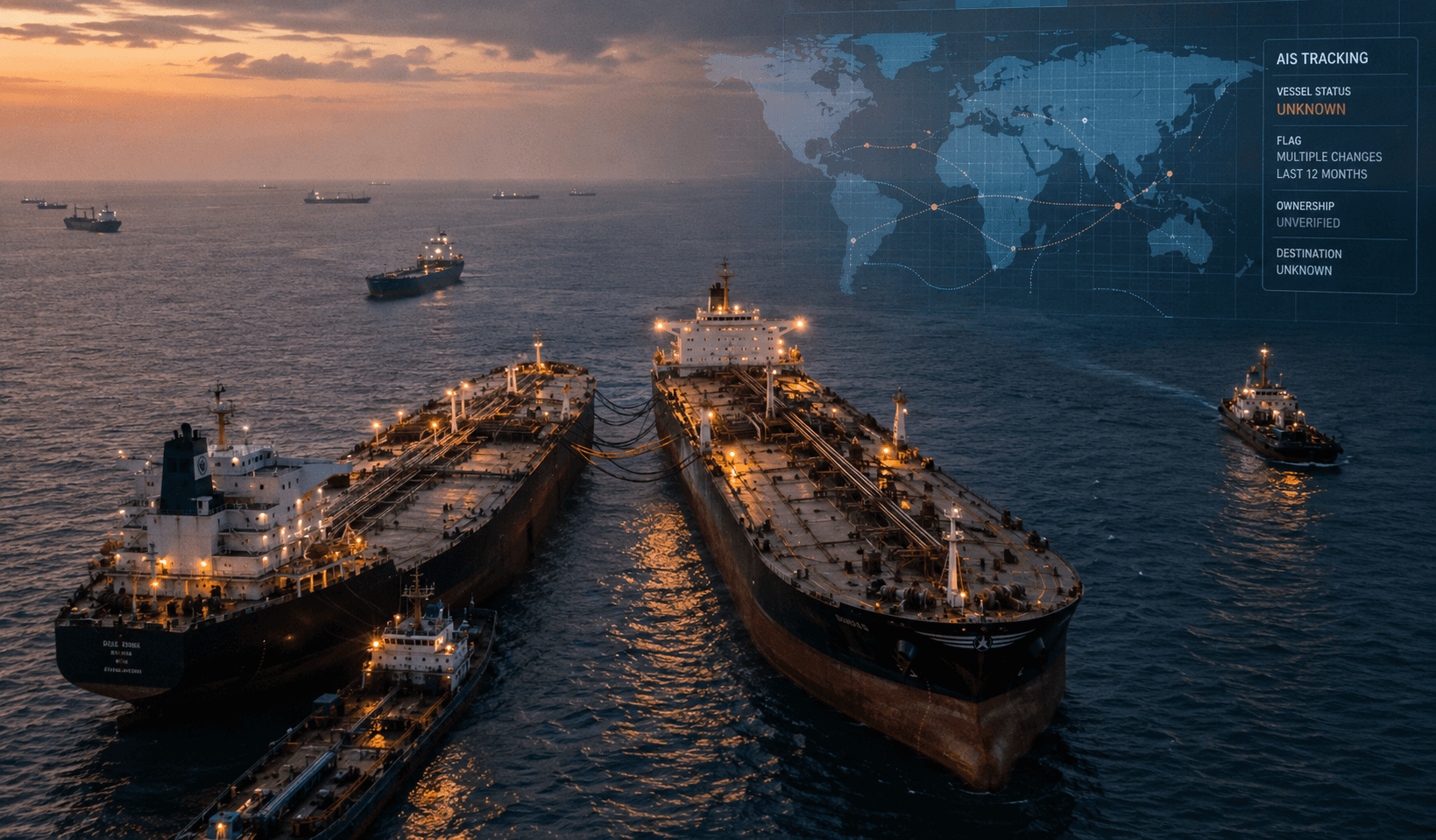
A shadow fleet vessel is typically characterized by opaque ownership structures, frequent flag changes, non-standard insurance arrangements, AIS tracking manipulation, or ship-to-ship cargo transfers designed to conceal cargo origins.
MarineTraffic's compliance methodology identifies several warning signs, including AIS spoofing, false flag usage, unknown ownership structures, lack of recognized insurance coverage, and suspicious dark activities detected through satellite monitoring.
In simple terms, these vessels operate in the grey areas of global maritime regulation.
Why has the fleet expanded so rapidly?
The primary catalyst was the sanctions imposed on Russian oil exports following the Ukraine conflict. As Western insurers, banks, and shipping companies withdrew from sanctioned trades, alternative transportation networks emerged to fill the gap.
Industry data indicates the fleet has more than doubled since 2022, growing from roughly 600 vessels to well over 1,300 ships by early 2026.
Instead of stopping oil flows entirely, sanctions have largely reshaped how oil moves around the world. Cargoes continue to reach buyers, but often through longer routes, multiple transfers, and more complex ownership structures.
The safety and environmental concern
The biggest concern for regulators is not sanctions evasion alone.
Many shadow fleet vessels are more than 15-20 years old and have already exited mainstream tanker employment. Industry analysts warn that a substantial portion of these ships are approaching or exceeding the age at which commercial tankers are typically recycled.
The risk is straightforward: older vessels operating with limited oversight increase the possibility of collisions, groundings, machinery failures, and oil spills.
Insurance is another major issue. Many shadow fleet vessels operate without coverage from internationally recognized Protection and Indemnity (P&I) clubs. In the event of a serious pollution incident, liability and compensation could become highly complicated.
Regulators are responding
Authorities are becoming increasingly aggressive in their enforcement efforts.
Throughout 2025 and 2026, European governments, coast guards, and maritime agencies intensified inspections and investigations of suspected shadow fleet vessels. Several ships have been detained or boarded as regulators attempt to strengthen sanctions enforcement.
At the same time, maritime intelligence platforms are using satellite imagery, AIS analytics, and ownership screening tools to identify suspicious vessel behavior more accurately than ever before.
What it means for the shipping industry
For compliant shipowners, the rise of the shadow fleet has created a two-tier tanker market.
On one side are vessels with transparent ownership, recognized classification societies, and international insurance coverage. On the other are ships operating through opaque structures and higher-risk trading networks.
As enforcement tightens, charterers, traders, ports, and financial institutions are increasing their due diligence requirements. Vessel screening has become a standard part of commercial decision-making, particularly in crude oil transportation.
LogisticsWall perspective
The shadow fleet is no longer a niche sanctions story. It has become a structural feature of the global tanker market.
The key challenge for regulators is balancing sanctions enforcement with maritime safety. While authorities continue targeting opaque shipping networks, the industry must also address the growing risks posed by aging vessels, uncertain insurance arrangements, and increasing environmental exposure.
For shipping professionals, one conclusion is clear: transparency is becoming as important as tonnage. The companies that can demonstrate compliance, traceability, and operational integrity will remain best positioned as regulators intensify scrutiny across global energy supply chains.
Popular Posts

Explore Topics



Comments