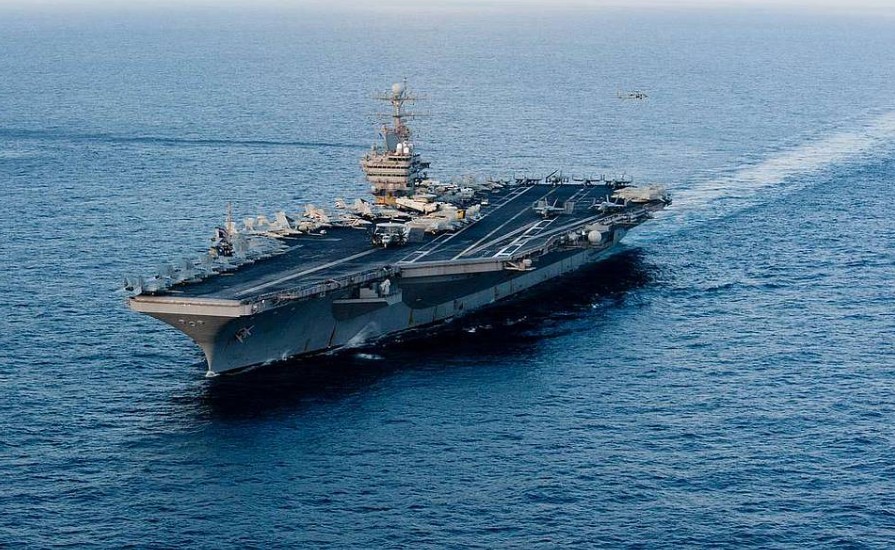
Recently the USS Abraham Lincoln — appeared to vanish from tracking maps. Its transponders were turned off while sailing toward the Middle East, leaving digital ship-watchers to dub it a “ghost ship.”
It symbolizes more than military strategy; it reflects how modern conflicts, much like history, are evolving in unpredictably way.
Why did the Ghost Mode happen?
Turning off transponders (means the AIS means Automatic Identification Systems) - is a standard practice for warships once they leave busy commercial zones and enter operational areas. This protects operational security, preventing potential adversaries from easily tracking exact location, speed, or heading.
In this case, the Lincoln, a Nimitz-class aircraft carrier was rerouted from the Pacific toward the Persian Gulf amid mounting tensions between the United States and Iran. Its presence reinforces U.S. naval power in a region.
A Glimpse Into the Past: The art of strategic silence
Silence as strategy is not new.
In World War II, Allied ships would operate under radio silence to avoid detection from Axis forces. Submarines prowled vast oceans, not by stealth weapons alone, but by withholding signals. In the era of sail, fleets would drop anchor in fog and stillness, awaiting dawn and the advantage that came with it.
In aviation history, an eerie precedent comes from Iran Air Flight 655, shot down in 1988 after misidentification during a tense naval encounter. This tragic incident, linked to radar and identification protocols, underscored how clarity of signal and awareness of position can mean life or death.
Today, instead of radio silence, the Lincoln’s transponder silence serves a similar purpose: control of information in a rapidly shifting geopolitical environment.
The Lincoln is not merely sailing; it’s positioning.
Looking forward, the situation could unfold in several ways:
Diplomacy over conflict
Escalation into limited engagements
New forms of warfare
Popular Posts

Explore Topics



Comments