Liberia, Marshall Islands and Panama Unite: Why Flag States Are Reinventing Global Maritime Governance
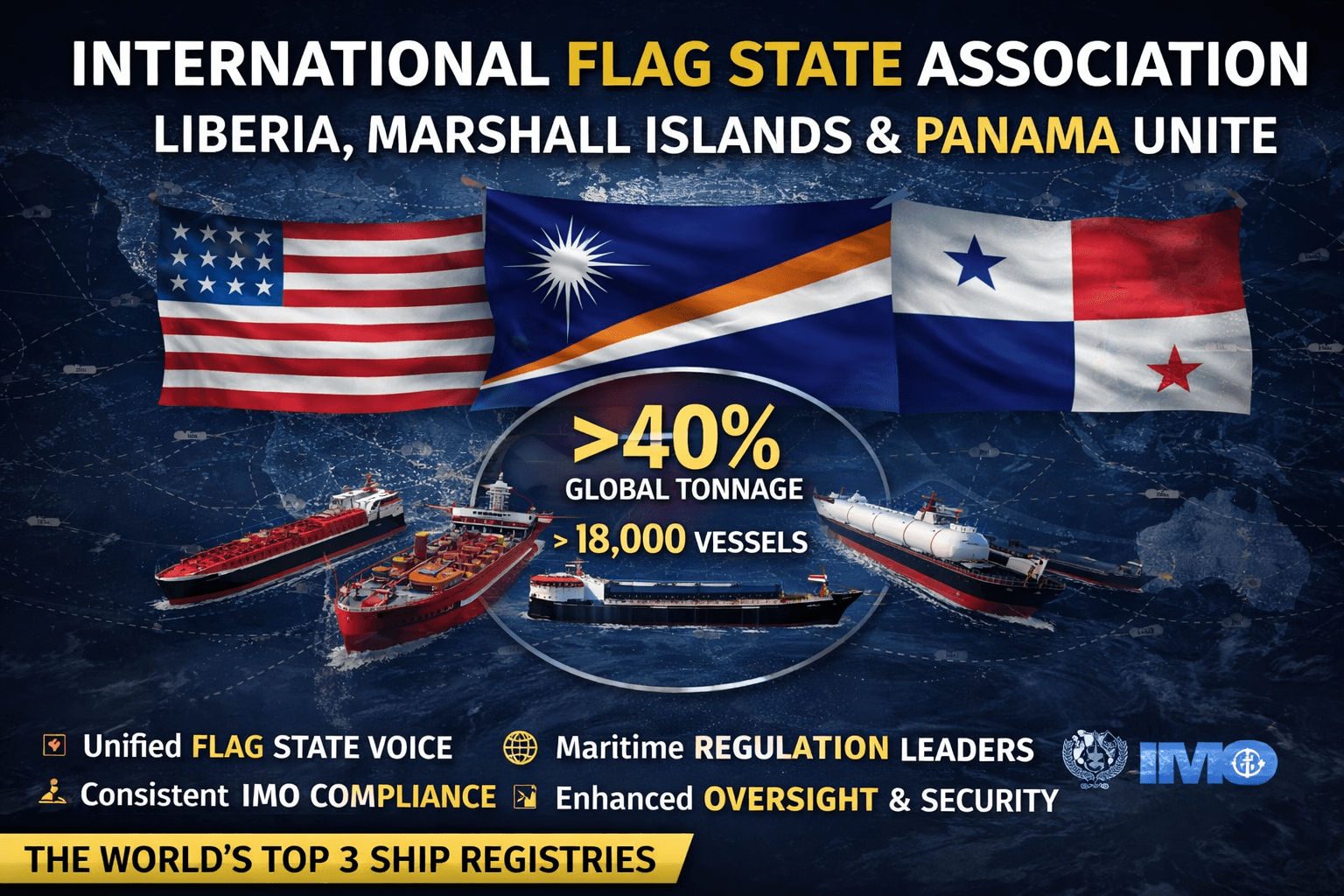
In a significant move for global shipping governance, the world’s three largest flag states of vessel owners, Liberia, the Marshall Islands, and Panama, have formalized their cooperation under a new International Flag State Association (IFSA). Together, these registries account for over 40% of the world’s merchant fleet by gross tonnage, giving the alliance a strong influence over maritime regulation, safety, and compliance.
This development signals a shift in how major open registries intend to collectively respond to rising regulatory pressure.
Why these three countries have most of the vessel flag registered?
Efficient open registry systems
Strong alignment with IMO conventions
Competitive fee structures in comparison to other countries
Reputation for technical and regulatory competence
Their fleets include a large share of the world’s tankers, bulk carriers, container ships, and LNG vessels, making their policy coordination highly consequential for shipowners and operators.
The newly formed association aim?
Present a unified flag state voice at the International Maritime Organization (IMO)
Counter growing criticism of flags of convenience
Strengthen enforcement against substandard shipping
Rather than competing independently, the three registries now seek to collaborate on their joint intentions.
Decarbonization and Environmental Pressure
Shipping is under intense pressure to meet IMO climate targets, including:
Carbon Intensity Indicator (CII)
Energy Efficiency Existing Ship Index (EEXI)
Net-zero ambitions by 2050
For these types of countries with huge fleet under their flag an inconsistent enforcement and competition could damage credibility whereas A joint approach allows these registries to harmonize implementation and protect their fleets from uneven treatment.
Image credit - AI
Popular Posts
Explore Topics



Comments