
By Logisticswall Team
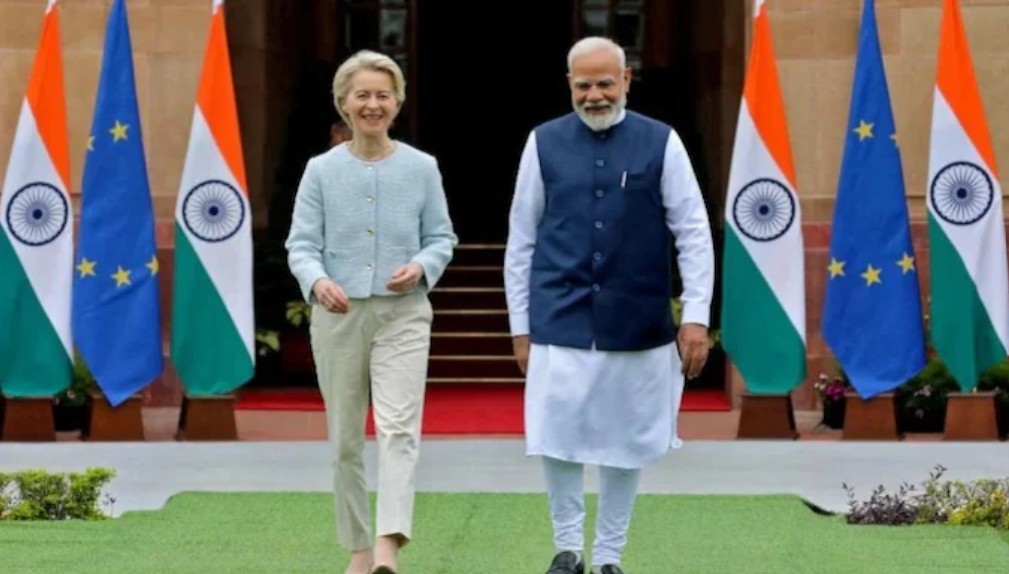
On January 26, 2026, India and the European Union (EU) officially concluded negotiations for a long-pending Free Trade Agreement (FTA) - a deal that has been more than 18 years in the making. India’s Commerce Secretary Rajesh Agrawal described the outcome as balanced and forward-looking, setting the stage for stronger economic integration between two major global economies.
Importance
The India-EU FTA is poised to reshape trade between the two regions:
EU is India’s largest goods trading partner with bilateral trade valued around $136.5 billion in FY 2024-25.
India’s exports to the EU: $75.85 billion.
EU imports to India: $60.68 billion.
Trade surplus from India: ~$15.17 billion.
The EU market accounts for ~17 % of India’s total exports and ~9 % of EU’s global shipments.
Source of above data – The week
Negotiation timeline & key milestones Chronology
Year | Events |
2007 | FTA negotiations began. |
2013 | Talks stalled due to disagreements. |
2022 | Negotiations relaunched. |
2025 Nov | High-level talks in New Delhi & Brussels to accelerate deal. |
Jan 2026 | Negotiations concluded. Legal scrubbing underway. |
2026 (Projected) | Signing and entry into force (expected early next year). |
Deal coverage
1. Trade in goods
One of the most eye-catching components is India’s commitment to significantly reduce tariffs on EU automobiles. Under discussion:
Current tariffs of 70-110 % on European cars could be cut to ~40 % initially and further reduced over time.
This measure is expected to reshape India’s auto sector — traditionally protected — by opening doors to manufacturers such as BMW, Mercedes-Benz, and Volkswagen.
2. Services & investment
While detailed terms are still under legal review, the deal is intended to improve access for:
Services like telecommunications, transport, accounting, and auditing
Investment flows between Indian service outfits and EU markets
Regulatory cooperation between both partners
3. Long-Term strategic goals
The FTA is being viewed not just as a trade pact but a strategic anchor that:
Diversifies India’s trade away from over-dependence on single markets
Strengthens supply chain resilience for key sectors
Enhances bilateral cooperation in investment and technology engagement
This aligns with earlier high-level dialogues, including visits by Commerce Minister Piyush Goyal to Brussels to accelerate talks.
Areas Still Pending
Despite the historic breakthrough, certain sectors remain sensitive and not fully liberalized, including:
Agriculture and dairy products.
High-level regulatory harmonization.
Environmental and labour compliance thresholds.
Game changer implications
Global trade diversification
With ongoing protectionism and rising tariffs in other markets (e.g., the U.S.), India’s new FTA with the EU provides:
Lower barriers for Indian exports
Improved access to massive European markets
Enhanced appeal for foreign direct investment (FDI)
This diversification strategy aligns with India’s trade policy objectives to boost exports and reduce vulnerability to tariff shocks — a priority underscored in multiple PIB releases over 2025.
Popular Posts


Explore Topics



Comments