
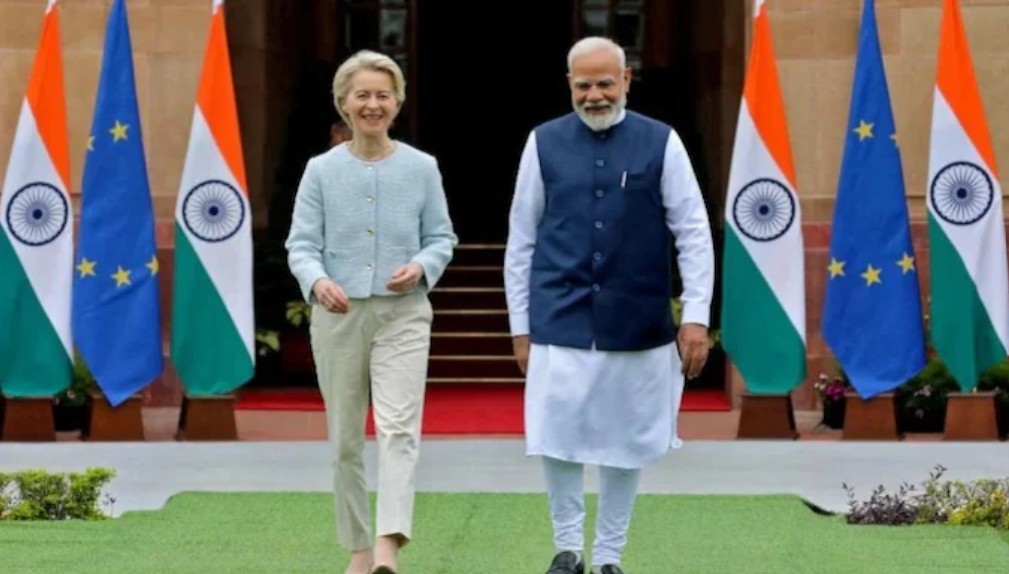
India and the European Union (EU) are on the brink of concluding one of the most significant trade deals in recent history - a comprehensive Free Trade Agreement (FTA) expected to be finalized soon, potentially at the India - EU Summit in New Delhi. This historic pact, often called the “mother of all deals,” could expand bilateral trade, enhance market access, and realign global commerce amid rising economic tensions and protectionist pressures.
Trade data: Current status (goods & services)
Bilateral trade snapshot (FY 2024–25)
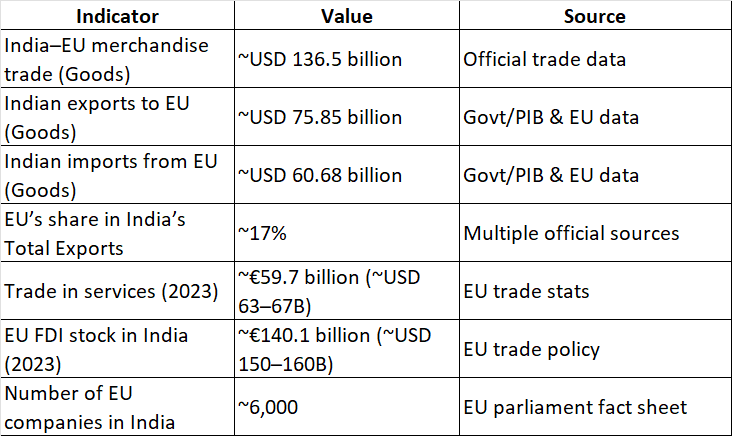
Key point: The EU is India’s largest trading partner in goods, surpassing the U.S. and China, and trade has grown dramatically over the past decade.
Why the FTA matters — Economic and strategic impact
1. Unlocking market access
The proposed FTA aims to:
Reduce or eliminate tariffs on a wide range of goods and services.
Open up services and public procurement markets in both economies.
Protect geographical indications (GIs) and intellectual property rights.
Make trade rules enforceable and predictable.
This means Indian manufacturers - from textiles and pharmaceuticals to IT services and automotive components - will gain easier access to a €18–22 trillion EU market, while European companies get better entry points into India’s rapidly growing consumer and industrial base.
Possible economic gains
Official projections and expert assessments suggest the deal could:
Boost total bilateral trade (goods + services) to $200–250 billion within a decade.
Increase Indian export competitiveness in sectors such as textiles, jewelry , pharmaceuticals, and IT services.
Reduce tariffs on European cars and machinery, encouraging more European investment in India’s manufacturing ecosystem.
Potentially expand luxury EV imports as duty barriers fall over time.
These changes promise to reshape supply chains and trade flows, benefitting consumers, producers, and investors on both sides.
Trade growth over time of a decade
Official data reveal significant growth:
EU–India goods trade increased nearly 90% over the last decade.
Services exports from India to the EU more than doubled from ~€19 billion in 2019 to ~€37 billion in 2024.
India’s trade surplus with the EU — historically positive in goods — suggests room for expansion in services and high-value sectors.
Despite these gains, there remains untapped potential, especially in sectors where tariffs and non-tariff barriers still restrict access.
Why now?
The deal’s momentum is shaped by:
Global trade shifts
U.S. tariff uncertainties and trade policy volatility have pushed both India and the EU to diversify partnerships.
EU aims to reduce supply-chain dependence on China by strengthening ties with fast-growing markets like India.
Extended negotiations
Negotiations were relaunched in 2022 after being stalled for years, following disagreements over tariffs, agriculture, and regulatory standards.
The current phase sees high-level engagement and sustained commitments from India’s Commerce Ministry and EU leadership.
Economic complementarity
India’s strength in services and digital industries complements the EU’s advanced manufacturing base, creating opportunities for mutual growth.
Challenges ahead
A few sensitive issues still require resolution:
Carbon Border Adjustment Mechanism (CBAM): EU’s environmental tariff may impact Indian exports of steel, aluminum, and cement.
Non-Tariff Barriers and Services Rules: Regulatory differences and market access limitations remain sticking points.
Agriculture and Food Products: While some agricultural tariffs may be excluded to protect domestic sectors, they will remain politically sensitive.
Looking ahead - strategic implications
Once concluded and ratified:
The FTA would cover all 27 EU member states, giving India unified access to the largest single market globally.
European firms would gain better predictability and legal protection for investments in India.
India’s manufacturing and exports - especially under “Make in India” - could gain from technology transfers and preferential market access.
Both parties view this as more than a trade deal - it is a strategic alliance that could define the economic landscape of the coming decades.
The India–EU Free Trade Agreement stands on the brink of conclusion after nearly two decades of negotiations. With $136+ billion in bilateral trade today, strong growth trends, and strategic imperatives driving both sides, this pact — often called the “mother of all deals” — could unlock immense economic potential.
By lowering barriers, expanding market access, and facilitating deeper economic integration, the FTA promises not just increased trade volumes, but stronger resilience and global connectivity in an era of rising geopolitical and economic uncertainty.
Popular Posts


Explore Topics



Comments