
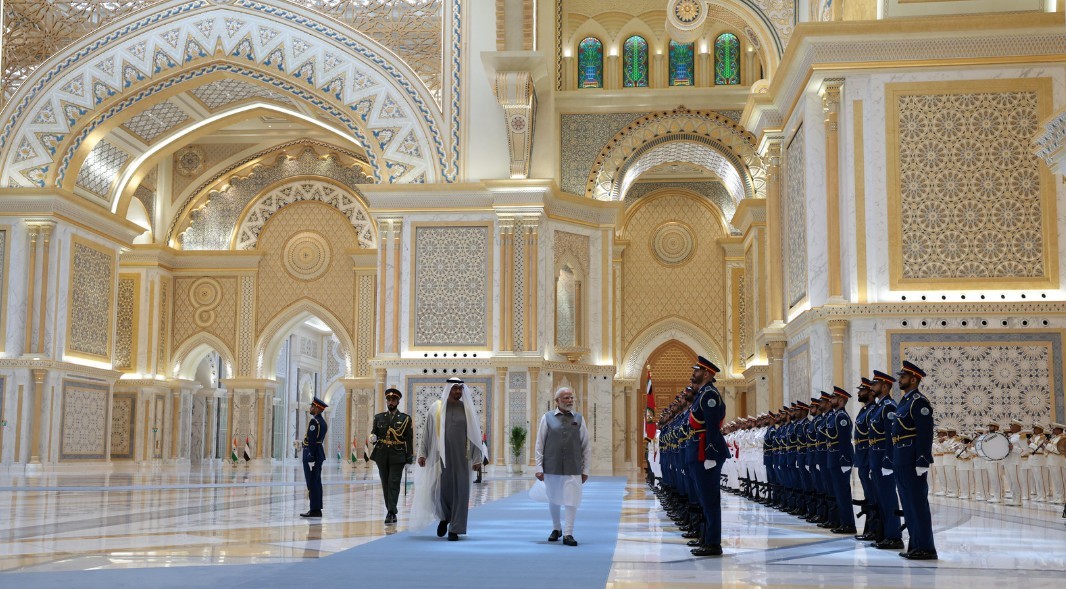
A Shifting Gulf Chessboard
In recent years, India’s diplomatic and strategic footprint in the Gulf has grown significantly, driven by economic interests, energy security, diaspora considerations, and evolving geopolitical alignments. While New Delhi has traditionally maintained balanced relations across key Gulf powers, including Saudi Arabia and the United Arab Emirates (UAE), emerging regional tensions are forcing a recalibration of that approach.
A question increasingly discussed by analysts is whether India’s deepening ties with the UAE, particularly in defence and strategic cooperation, risk drawing New Delhi into the broader rivalry taking shape between Riyadh and Abu Dhabi — a dynamic that could have profound implications for India’s wider foreign policy and security landscape.
Why the UAE matters to India
Economic and energy dimensions:
India has steadily grown its economic integration with the UAE. Trade between the two nations has surged, with efforts underway to double bilateral commerce to roughly $200 billion by 2032. Meanwhile, energy cooperation remains central: in early 2026, India signed a multibillion-dollar liquefied natural gas (LNG) supply agreement that positions the UAE as an increasingly important energy partner.
Strategic cooperation:
Recent agreements have also expanded cooperation beyond economics into defence, space, and emerging technologies, marking a qualitative shift in the India–UAE relationship. Joint military exercises, defence-related letters of intent, and naval cooperation signal India’s intent to go beyond transactional ties.
This deeper engagement aligns with India’s broader “Act West” and “Link West” diplomatic thrusts, aiming to secure trade routes, energy flows, and strategic influence across West Asia.
The Saudi UAE rift: A new strategic challenge
For much of the past decade, Saudi Arabia and the UAE cooperated closely as leading powers within the Gulf Cooperation Council. However, recent developments have exposed serious fractures in that relationship.
The competition now spans Yemen, where Saudi Arabia and the UAE have supported opposing factions, as well as broader efforts to extend influence in the Red Sea and Horn of Africa. In Yemen, for example, Saudi airstrikes have targeted UAE-linked forces, highlighting deep divisions over strategy and goals.
These tensions have implications far beyond the Arabian Peninsula. They raise the possibility of competing power structures emerging in the Gulf — not just between Riyadh and Abu Dhabi, but involving external partners like Pakistan, Turkey, and even India.
India’s strategic tilt toward the UAE — Risk or rational policy?
Strategic autonomy vs. drift
India has long pursued a policy of strategic autonomy in West Asia — engaging with multiple powers without becoming entangled in bilateral disputes. But the recent strengthening of ties with the UAE — especially in defence — raises the question of whether New Delhi might inadvertently be perceived as aligning against Saudi interests.
Balancing gulf interests:
New Delhi also maintains significant ties with Saudi Arabia, a major energy supplier and investor. Saudi leaders have signed agreements enhancing visa facilitation for Indian diplomats and officials, signalling ongoing cooperation. Moreover, Riyadh is an important partner in initiatives like the India–Middle East–Europe Economic Corridor (IMEC), a multilateral framework involving both Saudi Arabia and the UAE.
However, in a context where Riyadh is strengthening defense ties with Pakistan and asserting its own regional agenda, India’s increasingly visible cooperation with Abu Dhabi could be interpreted by some as a tilt — potentially complicating New Delhi’s diplomatic balancing act.
Economic and strategic stakes:
From New Delhi’s perspective, expanding cooperation with the UAE makes strategic sense: India’s energy security, investment inflows, and technological collaboration all benefit from a strong partnership. Yet, avoiding a position where India is perceived as part of a bloc aligned with one Gulf power over another is important to maintain India’s long-standing role as a neutral but engaged partner.
What Lies Ahead: A tightrope walk
India’s foreign policy in the Gulf today resembles a high-stakes strategic game. Strengthening ties with the UAE offers clear economic and security benefits, but it also demands careful diplomatic messaging to ensure that India’s broader regional interests — including its relationships with Saudi Arabia, Iran, and other Gulf partners — are not jeopardized.
In this rapidly shifting geopolitical landscape, India’s strategic choices in the Gulf will be watched closely — not just in Riyadh and Abu Dhabi but also by global powers invested in the region’s future stability. Navigating these dynamics without sacrificing autonomy or strategic flexibility will be both a challenge and a hallmark of India’s rising global role.
Popular Posts

Explore Topics



Comments