
Daesun’s Shipyard Sale Signals a Structural Shift in South Korea’s Mid-Sized Shipbuilding Sector
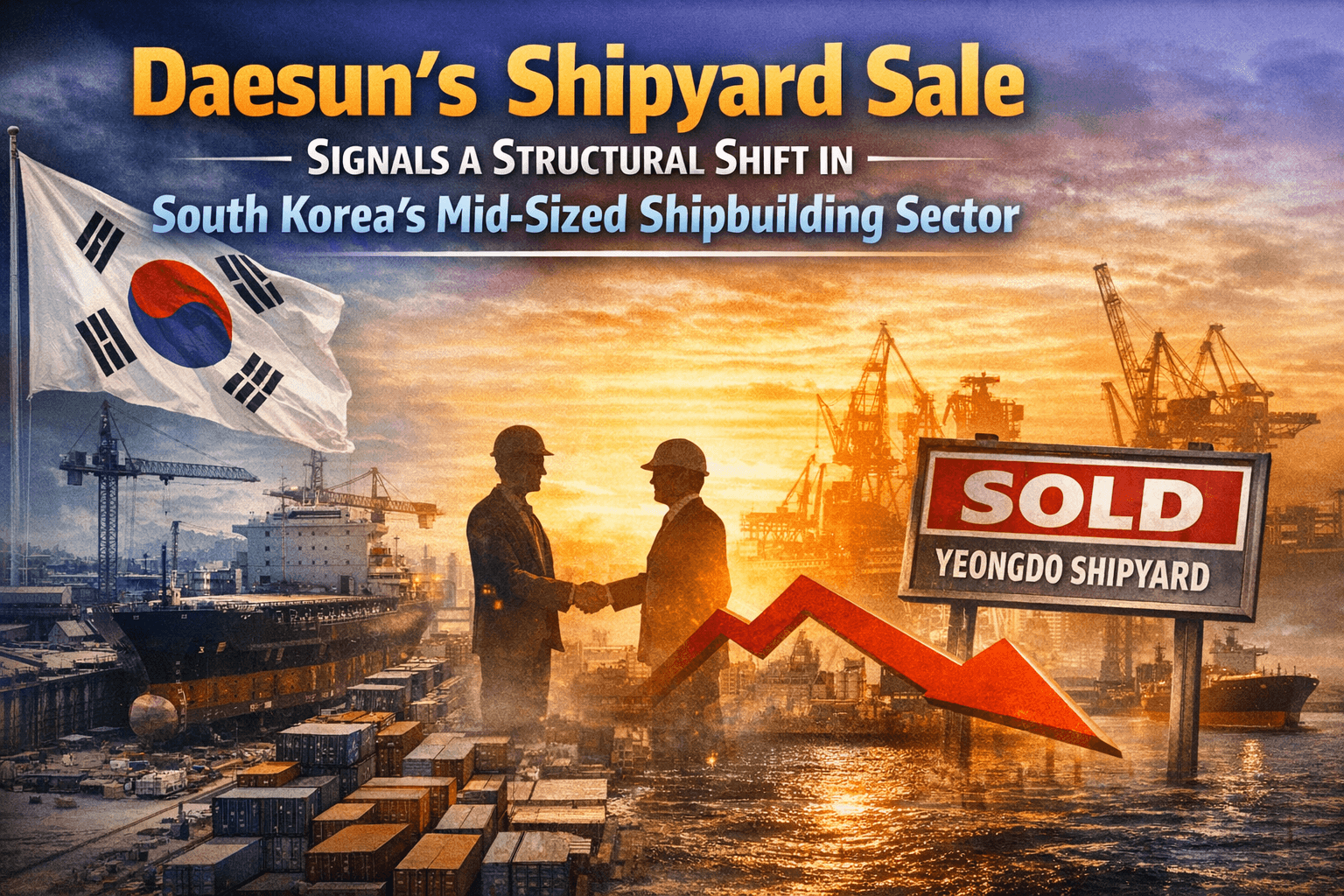
Its seems to be an industry shake-up for South Korea’s mid-tier shipbuilding sector as Daesun Shipbuilding has completed the sale of its primary shipyard — marking the end of a long chapter in the company’s history.
A Historic Yard Changes Hands
Founded in 1945, Daesun Shipbuilding was one of South Korea’s oldest shipyards. However, persistent financial challenges over recent years led the company to seek restructuring and ultimately sell its main facility. On December 26, 2025, Daesun finalised the sale of its Yeongdo shipyard in the Busan region to Hanla IMS, a marine equipment manufacturer that has been expanding its footprint in ship maintenance, repair, and marine engineering.
The reported and expected sale price was around $74 million, and Daesun will now consolidate its operations at its Dadaepo yard, focusing on producing hull sections, ship equipment, and other components as a subcontractor to larger builders. The company also aims to complete its debt restructuring before potentially returning to full shipbuilding activities in the mid-to-long term.
Why This Matters -
Over the past decade, South Korea’s mid-sized shipbuilder landscape has shrunk dramatically. Once home to more than 20 companies, the market has now consolidated to just a few survivors. Daesun’s exit from full shipbuilding adds to this trend, alongside other legacy yards that have either restructured or been acquired.
Mid-sized builders have historically filled gaps between giant conglomerates like HD Hyundai and Samsung Heavy Industries and smaller bespoke yards. They provided flexibility in niche markets and capacity relief during global order surges — especially when giant yards were fully booked.
How Hanla IMS has become a new player in a growing segment
The buyer, Hanla IMS, has been on an expansion trajectory — earlier acquiring a shipyard in Gwangyang and commissioning a 7,000-ton floating dry dock in 2024. With this latest acquisition, Hanla is clearly positioning itself as a key player in ship repair, maintenance, and marine technology manufacturing, sectors that are growing as global fleets age and demand for lifecycle services rises.
While big shipyards continue to dominate LNG carrier, containership, and offshore vessel orders, mid-tier yards like HJ Shipbuilding and Daehan have recently reported solid backlogs and profitability — indicating a vibrant albeit smaller niche ecosystem.
Meanwhile, consolidation continues among mid-tier Korean yards, with some still exploring ownership changes or strategic partnerships to remain competitive in a global shipbuilding market dominated by large players and increasing Chinese capacity.
The completion of Daesun’s shipyard sale is more than just a corporate transaction — it highlights the ongoing transformation of South Korea’s shipbuilding industry, where consolidations are reshaping how capacity and expertise are deployed.
Lets see what future brings.
Popular Posts

Explore Topics



Comments