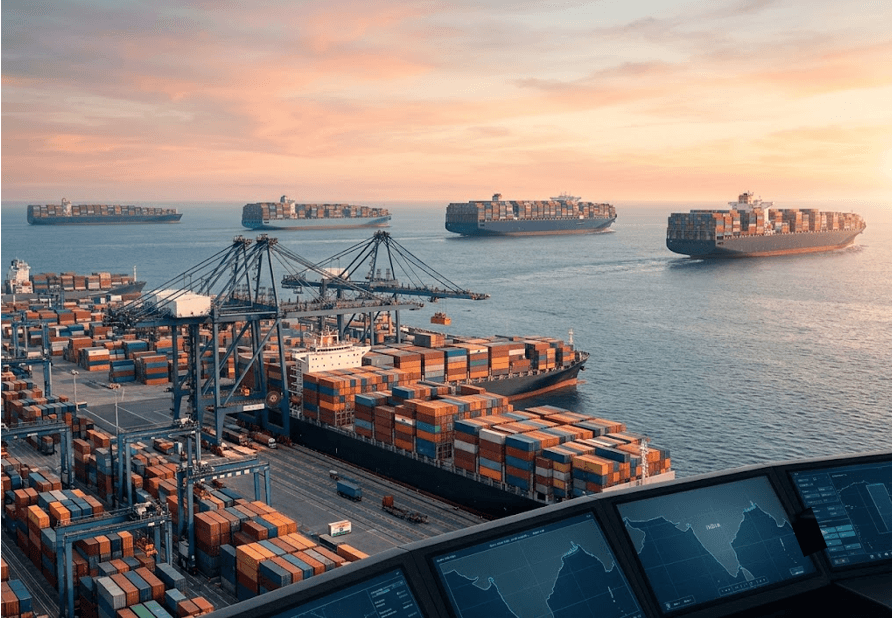
Container Ocean freight rates rise even as fuel costs decline

Global container freight rates continued their upward trajectory during the latest week, demonstrating that shipping prices remain driven more by capacity constraints and operational disruptions than by bunker fuel costs. While marine fuel prices have eased, freight rates across several major east-west trade lanes have increased further, reflecting continued pressure on vessel availability and carrier capacity management.
The latest market assessment shows that the World Container Index (WCI) increased by 7% week-on-week, reaching US$3,527 per 40-foot container. Although the index remains significantly below the extraordinary highs recorded during the pandemic years, it is still well above long-term pre-2024 averages, indicating that container shipping markets remain elevated compared with historical norms.
The strongest rate movements continue to be concentrated on the Asia–Europe and Transpacific trades. Capacity shortages, schedule adjustments, blank sailings and continued vessel diversions have tightened available space, allowing carriers to implement successive General Rate Increases (GRIs) and Peak Season Surcharges (PSS). As a result, spot market rates have continued to strengthen despite the decline in fuel prices.
One of the most notable developments is the disconnect between bunker costs and freight pricing. Normally, lower fuel prices reduce voyage operating costs and eventually place downward pressure on freight rates. However, current market conditions have prevented that relationship from materialising. Instead, carriers are maintaining pricing discipline through capacity management, while geopolitical uncertainty and network disruptions continue to support higher freight levels.
The ongoing security situation in the Middle East also remains a key market driver. Although crude oil prices have softened following signs of improving regional stability, shipping companies continue to factor security risks into network planning. Vessel routing decisions, insurance costs, schedule reliability and operational flexibility remain more influential than bunker prices in determining freight levels.
Port operations across several regions continue to experience periodic congestion, resulting in longer vessel turnaround times and reduced schedule reliability. These delays effectively remove vessel capacity from the market, tightening available supply even without an actual reduction in fleet size. Shippers continue to report longer booking lead times on selected trade lanes, particularly for exports originating in Asia.
Carrier capacity management has become another important factor supporting rates. Blank sailings and network optimisation programmes have helped shipping lines balance supply with demand, preventing the sharp rate corrections that often follow periods of weaker cargo volumes. As long as carriers maintain disciplined capacity deployment, significant declines in spot rates are likely to remain limited.
Despite recent increases, freight rates vary considerably by trade lane. Routes connecting Asia with Northern Europe and the Mediterranean continue to experience stronger pricing than several backhaul trades, while Transpacific services remain sensitive to seasonal cargo demand and retailer inventory planning. The market is therefore being shaped by regional supply-demand dynamics rather than a single global trend.
Looking ahead, market participants will closely monitor peak season cargo demand, vessel deployment strategies, port congestion levels and geopolitical developments. Any improvement in schedule reliability or increase in effective vessel capacity could moderate the pace of rate increases. Conversely, further supply chain disruptions or additional capacity withdrawals could provide carriers with further pricing support.
For exporters, importers and freight forwarders, the latest market signals suggest that freight procurement decisions should not be based solely on falling fuel prices. Current container shipping costs continue to reflect a combination of operational constraints, network efficiency, carrier capacity discipline and geopolitical uncertainty. Until these structural pressures ease, ocean freight rates are likely to remain firm even if bunker prices continue to soften.
Popular Posts


Explore Topics



Comments